 Wow! eBook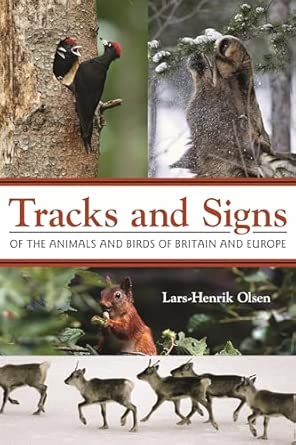
Tracks and Signs of the Animals and Birds of Britain and Europe
Author(s): Lars–henrik Olsen (Author)
- Publisher: Princeton University Press
- Publication Date: 2 July 2013
- Edition: Illustrated
- Language: English
- Print length: 272 pages
- ISBN-10: 0691157537
- ISBN-13: 9780691157535
Book Description
Editorial Reviews
Review
From the Back Cover
“This is an excellent, engaging field guide to the tracks and spoor of the mammals and birds of Northern Europe. The photos and species accounts are outstanding, and I quite like the style of artwork, which is realistic enough to highlight the important characteristics, but stylistic enough to convey the general look of what can be a variable subject.”–Roland W. Kays, coauthor of Mammals of North America
About the Author
Excerpt. © Reprinted by permission. All rights reserved.
Tracks and Signs of the Animals and Birds of Britain and Europe
By Lars-Henrik Olsen, Mark Epstein
PRINCETON UNIVERSITY PRESS
Copyright © 2013 Princeton University Press
All rights reserved.
ISBN: 978-0-691-15753-5
Contents
Preface…………………………………………………………..5Mammal tracks……………………………………………………..6Antlers…………………………………………………………..18Bird tracks……………………………………………………….22Scat……………………………………………………………..35Feeding signs on trees……………………………………………..46Fray marks on trees………………………………………………..57Holes in trees, ant heaps, etc………………………………………59Gnawed branches……………………………………………………62Feeding signs on mushrooms………………………………………….64Feeding signs on turnips……………………………………………65Feeding signs on spruce cones……………………………………….66Feeding signs on pine cones…………………………………………68Feeding signs on hazelnuts………………………………………….68Feeding signs on walnuts……………………………………………71Feeding signs on rose hips………………………………………….72Feeding signs on cherry stones………………………………………73Feeding signs on apples…………………………………………….74Nests and dens…………………………………………………….76Pellets…………………………………………………………..82Round nests……………………………………………………….92Feathers………………………………………………………….96Raptor feeding signs……………………………………………….100Trails……………………………………………………………104Brown Bear………………………………………………………..106Wolverine…………………………………………………………109Wolf and domestic dog………………………………………………111Lynx……………………………………………………………..115Iberian Lynx………………………………………………………117Wildcat…………………………………………………………..118Arctic Fox………………………………………………………..120Red Fox…………………………………………………………..122Raccoon Dog……………………………………………………….127Raccoon…………………………………………………………..130Eurasian Badger……………………………………………………132European Beaver……………………………………………………136North American Beaver………………………………………………142Coypu…………………………………………………………….143Muskrat…………………………………………………………..144Northern Water Vole………………………………………………..147Southern Water Vole………………………………………………..151Water Shrew……………………………………………………….151Otter…………………………………………………………….154American Mink……………………………………………………..157European Mink……………………………………………………..160Western Polecat……………………………………………………161Pine Marten……………………………………………………….163Beech Marten………………………………………………………165Stoat…………………………………………………………….167Weasel……………………………………………………………169Brown Hare………………………………………………………..171Mountain Hare……………………………………………………..174Rabbit……………………………………………………………176Red Squirrel………………………………………………………179Grey Squirrel……………………………………………………..183Flying Squirrel……………………………………………………184Alpine Marmot……………………………………………………..185European Souslik…………………………………………………..187Black Rat…………………………………………………………188Brown Rat…………………………………………………………189House Mouse……………………………………………………….192Yellow-necked Mouse………………………………………………..195Wood Mouse………………………………………………………..199Striped Field Mouse………………………………………………..200Harvest Mouse……………………………………………………..202Northern Birch Mouse……………………………………………….204Common Dormouse……………………………………………………205Garden Dormouse……………………………………………………207Edible Dormouse……………………………………………………209Bank Vole…………………………………………………………211Field Vole………………………………………………………..213Common Vole……………………………………………………….215Norway Lemming…………………………………………………….216Wood Lemming………………………………………………………218Grey-sided Vole……………………………………………………219Root Vole…………………………………………………………220Common Mole……………………………………………………….221Western Hedgehog…………………………………………………..223Algerian Hedgehog………………………………………………….226Common Shrew………………………………………………………226Bats……………………………………………………………..229Horses……………………………………………………………231Cattle……………………………………………………………232Wild Boar…………………………………………………………233Elk………………………………………………………………237Red Deer………………………………………………………….241White-tailed Deer………………………………………………….246Fallow Deer……………………………………………………….247Sika Deer…………………………………………………………250Reeve’s Muntjac……………………………………………………251Roe Deer………………………………………………………….253Reindeer………………………………………………………….258Musk Ox…………………………………………………………..261Mouflon…………………………………………………………..263Chamois…………………………………………………………..265Domestic sheep…………………………………………………….266Goats…………………………………………………………….267Seals…………………………………………………………….268Sea turtles……………………………………………………….269Photo credits……………………………………………………..270Index of species…………………………………………………..271
CHAPTER 1
Mammal tracks
Most wild animals are very shy. Manymammals are nocturnal and rarely seen, butyou can find their footprints. To determinethe identity of the animal that left thesetracks, size and shape are of course important,but also understanding the series oftracks in its entirety, the type of movement,length of stride, and the ‘splay’ of the feet,as well as the distance between the printsof the hind and forelegs. All of these willprovide additional information about thekind of animal we are dealing with.
If you know something about the animal’sdistribution and behaviour, the placeand the surroundings where the trackswere found will also provide a lot of information.If you follow one set of tracks youwill often also find other signs: food remains,signs of chewing or digging, carrion,nests and other structures, droppings, andso forth—there is a lot to see.
Antlers
Approx. one-quarter actual size
Each species of deer has a specific antlershape which is easily recognisable. FemaleReindeer also have antlers, but they aresignificantly smaller than those of males.
An antler consists of large bone material.It grows each year from the foreheadin an area referred to as the pedicle. Whilegrowing it is covered by a loose skin containingits own blood vessels, the velvet.An antler grows very fast, about 1 cm aday. Once the antler is fully developed,the velvet dies off.
Deer shed velvet by rubbing their antlersagainst bushes and small trees—antler-rubbing,or ‘rubbing off the velvet’. Rubbingoff the velvet is also used to mark a male’sterritory. The deer normally eat the shedvelvet, which is why it is only rarely foundin the field.
After the mating season,deer shed their antlers,and a new, often larger settakes their place. The shedantlers do not remain preservedfor long. Numerousanimals, especially mice,feed on them to getcalcium. The discardedantlers will gradually disappearover time.
Horns are hollow and develop like claws and hoovesthrough a transmutation of outer skin layers. Horns consistof a hollow shell on top of bone ‘cones’ on the head.They are usually curved or twisted, but they are neverforked like antlers. They are not shed but continue togrow from the base year in, year out. This is why sectionsof horn closest to the skull are the most recent, whilethose at the tip are the oldest.
Bird tracks
Bird footprints can be difficult to identify, but differentfamilies do leave distinctive prints. We can see five bird-footshapes here, which in addition to their characteristicmarks also reveal behavioural and ecological relationships.The footprints of herons, bitterns, storks,and cranes are very similar—and all arelarge.
You can see the tracks of Grey Heronson soft ground at the shores of lakes andon the banks of slow-flowing streams oraround fishponds. The prints are 15–17cm long, and the imprint of the middletoe is about 9 cm. In contrast to otherwading birds, Grey Heron has a long hindtoe which helps it hold onto branches, soGrey Herons are able to build their nestsin trees. The hind toe is 6–7 cm long andslightly offset from the front middle toe.The two toes that turn outwards are connectedby webbing. Herons have powerfulclaws, which can be clearly identified inthe footprints.
The tracks of Night Herons are similar,but 3–6 cm shorter. The toes of Bitternsare shorter and slimmer than those ofNight Herons.
The tracks of storks can be found inwet meadows and fields and in the softmud or sand around ponds and lakes.Since it is a heavy bird, the footprints areusually very clear. The prints of the toesare shorter and broader than those of aheron, about 14–15 cm long. The middletoe is 7–8 cm long. The hind toe is only2–2.5 cm long and can often only be seenas a small dot in the print.
The footprints of cranes show no hindtoe. Cranes are large and heavy birds, andtheir footprints can be seen very clearly onsoft ground. The inner of the three fronttoes is shorter than the outer; the print isup to 16 cm in length.
Geese and swans are also heavy birdsand leave clear footprints. Both specieshave webbing between the toes. The hindtoe is very small; consequently you neversee it in a print. Swans’ footprints arelarger than those of geese, and the printsof both geese and swans are much largerthan those of ducks, gulls, and terns.
The footprint of a swan is 11–20 cmlong. The track of a Mute Swan is thelargest and may reach 20 cm, thoughthe average is about 16 cm. The track ofa Whooper Swan measures 14.5 cm onaverage, that of Tundra Swan, 11.5 cm.
Goose footprints are about 6–12 cmlong. Domestic geese leave the largesttracks; often longer than 12 cm. The footprintsof Greylag Geese are 10–12 cmlong. The prints of other species of gooseare shorter and narrower. The footprint ofa Canada Goose is about 10 cm long, thatof a Bean Goose about 8 cm, and that ofBrent Goose about 6 cm.
Ducks, gulls, and terns also have webbingbetween their three front toes, likeswans and geese. Ducks normally movewith their toes pointed inward, whereasthe footprints of gulls are normally prettymuch straight or parallel. The prints of aduck’s hind toes are often visible, but thisis rarely the case with gulls and terns.
Ducks’ toes are narrower than those ofgeese, and the longer and more pointedclaws are clearly visible. The duck’s strideis shorter than that of a goose. The hindtoe of dabbling ducks leaves only a small,narrow print. The hind toe of a divingduck has a spur, and as a result leaves alarger print. The outer toe of diving ducksis longer and more curved than the middletoe. The middle toe of dabbling ducks isthe longest. Mallard footprints are about7.5–8 cm long.
Dabbling ducks sit high in the water,and their tails are always above the surface.Diving ducks sit deeper in thewater, and their tail dips into the water.Dabbling ducks go ashore more regularlyin search of food, and as a result you seetheir tracks more often.
Dabbling ducks rarely dive, findingit sufficient to dip their head under thewater, at which point their tail sticks upin the air. Diving ducks often dive to thebottom and can stay submerged for a longtime. Diving ducks take off directly fromthe surface of the water, whereas dabblingducks have to run on the surface beforetaking off.
The tracks of Coots are very distinctive.They have lobes on each of thethree front toes. The print is about 12 cmlong and about 10 cm wide. The hind toeleaves a small print.
Moorhen has long, small toes and ahind toe that is 1.5 cm long, and whichoften points inward. The print is about9.5 cm long and 8 cm wide.
Grebes have restricted webbing betweentheir feet, but do have long, widelobes on the three front toes. The hindtoe print is almost never visible. A GreatCrested Grebe footprint is about 7.5 cmlong and about 6.5 cm wide.
Gulls have webbing that extends up tothe claws of the three front toes. The hindtoe usually leaves no print. Gulls and ternsscurry around, and this is the reason you encountermany overlapping tracks. Ducksmove in a more goal-oriented manner andtherefore have a longer stride. The footprintof Black-headed Gull is about 4.5 cm long,Common Gull about 5 cm, Lesser Black-backedGull 6.5–7 cm, and that of Herringand Great Black-backed Gulls about 9 cm.
In terns, the webbing between the threefront toes is more restricted. The footprintsare really small, since these are very lightbirds. The footprints’ length is about3.5–4.5 cm.
A Cormorant has webbing between itsthree front toes, and its hind toe is also connectedto the three front ones. The outer toeis longer than the three other toes.
The length of the footprint is up to 13cm, the width up to 12 cm. Cormorantsnormally don’t go ashore. They mostlystand, relax, and dry their feathers onstumps or other man-made structures awayfrom the shore. Cormorants’ footprints areoften close together since they hop arounda little at take-off. You often find tracks of anumber of Cormorants in the same place.
The tracks of waders can be seen onmuddy surfaces and on beaches with fine,wet sand. The footprints of the large Curleware about 5.5 cm long, those of Woodcocksand Oystercatchers about 4.5 cm, those ofRuff about 4 cm, those of Lapwings, Snipe,and plovers are all about 3.5 cm. The footprintsof Dunlin, Common Ringed Plover,Sanderling, and Ruddy Turnstone are 3 cmin length or less.
You will often find small holes in the immediatevicinity of wader footprints; this iswhere birds have poked their beaks into thesand searching for crustaceans, worms, andother food. Occasionally you may also findthe remains of a bird’s meal as well as thebird’s droppings.
Capercaillie is a large, heavy bird withstrong legs; its tracks can be found on softground in woodland and forest. Its clawsare long and leave clear prints. The hindtoe is small, only about 2.5–3 cm long,but it leaves a clear impression. The threefront toes are longer. The male’s footprintis about 8–12 cm long and7–11 cm wide. In winteryou can see the printsof stiff, brush-like furbetween the bird’s toes. Thefemale’s footprint is only abouttwo-thirds the size of the male’s.You can find the prints best in winter,usually between trees in coniferous forest.
The tracks of Black Grouse resemblethose of Capercaillie, but they are smaller,7–8 cm long and 6–7 cm wide; the printscan usually be found at woodland edges, onmoorland or heathland, or at lake shores,wherever grouse have their leks.
The Pheasant is a relatively heavy birdwith strong legs. As is the case with othergame birds, the toes have powerful clawswhich are used to dig in the earth. Thehind toe print is very small and positionedobliquely inward relative to the front middletoe. The hind toe print is just 1–2 cmlong. The footprint is 6.5–7.5 cm long and6–6.5 cm wide. Pheasants walk or run, andthis explains why you only rarely see pairedprints.
Partridge tracks are similar to thoseof Pheasants, but are only 4.5 cm long.They are less frequently found in summer,but when birds gather in small groupsin winter, you can find prints as deep rowsrunning in a straight line.
Lapwings leave tracks on sandy soil andother soft terrain. The hind toe leaves noprint since it is situated fairly high up. ALapwing’s toes are spaced well apart; thefootprint is 3.5–4 cm long and slightlybroader than it is long.
Willow Ptarmigan have toes coveredwith feathers, and this means their footprintsare somewhat blurred. The overalltrack is 4.5 cm long, and the tracksequence may be seen as a winding band,especially when fresh in snow.
Crows and jays have a hind toe that isalmost exactly as long as the front middletoe. The footprint is really narrow, and alltoes are equipped with long claws. Thefootprints of Carrion Crows are about6.5 cm long and 3.5 cm wide; the hind toeis about 2.5 cm long. Crows often moveby hopping; that is why the prints are seentogether, in pairs.
You will regularly find Magpie tracks,since the birds are common in urbanareas. The print is about 5 cm long and3 cm wide; the toes are ‘calloused’ on theunderside, and occasionally prints of thecallouses are visible.
Pigeons have relatively powerful legswith which they can hold onto branchesthe way crows and jays do, but theirclaws are not as long, and their footprintsare some what shorter and wider. Thefootprint of the Wood Pigeon is about 6cm long and 5 cm wide; the hind toe islonger than that of any game-bird speciesand shorter than that of crows and jays. Itis placed at an angle to the middle toe.
Occasionally, on soft ground, you canfind the tracks of a male dove that hascircled a female during courtship.
The tracks of small birds are almost unidentifiable.Most of these passerines havea long hind toe, so they can hold onto thebranches of bushes and trees. Birds oftenhop, but some walk. ABlackbird’s tracks are 5.5 cmlong and 3 cm wide, those ofsparrows 2.5–3 cm long andabout 1.5 cm wide.
Owl prints are easily recognised,since the birds havetwo front and two hind toes,and the tracks are very largeand clear. You will frequentlysee claw marks. The footprintof an Eagle Owl, notincluding the claws, measuresabout 10.5 cm.
Scat
Scat is normally clear and easily seen asthe sign of the presence of a mammal,and it is widespread in the wild. Comparedwith other more subtle signs, scatis often distinctive and easy to attributeto a particular species. You will discover agreat deal about an animal’s diet by analysingscat, as well as information aboutits behaviour and the habitats in whichit lives.
Carnivores
Meat is protein rich and can be digestedpretty efficiently by carnivores. This iswhy carnivores leave behind less copiousamounts of scat than do herbivores, andwhy the scat is usually more solid. Carnivorescat is normally cylindrical, and oneend is often pointed. Based on shape,colour, size, and content, you can oftenidentify the scat of individual species. Scatcan contain significant quantities of hair,feathers, teeth, and bone from the animalsthat were consumed; thus you may also beable to determine the prey species eatenby the carnivore.
However, it is not always true that theanimals whose remains you find in thescat were killed by the carnivore, sincemost carnivores are opportunistic and willalso consume carrion.
Many carnivores use their scat as a wayto mark territory, a clear sign to membersof their own and sometimes other species,and the scat may be left in a conspicuousplace for this very reason; the scat is oftenpungent, too.
Many carnivores will also eat plants,especially fruit and berries in summer andautumn, and when they do, their scat maybe softer and generally more shapeless.
Carnivore scat may be confused withowl pellets (cf. p. 83), but carnivore scat isusually segmented and often twisted. Hairslie lengthwise in carnivore scat, and it isalmost always pointed at one end.
(Continues…)Excerpted from Tracks and Signs of the Animals and Birds of Britain and Europe by Lars-Henrik Olsen, Mark Epstein. Copyright © 2013 Princeton University Press. Excerpted by permission of PRINCETON UNIVERSITY PRESS.
All rights reserved. No part of this excerpt may be reproduced or reprinted without permission in writing from the publisher.
Excerpts are provided by Dial-A-Book Inc. solely for the personal use of visitors to this web site.


