 Wow! eBook
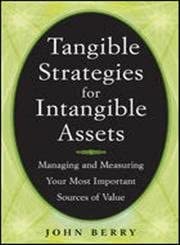
Tangible Strategies For Intangible Assets: How to Manage and Measure Your Company's Brand, Patents, Intellectual Property, and Other Sources of Value
Author(s): John Berry (Author)
- Publisher: McGraw-Hill Professional
- Publication Date: 1 Nov. 2004
- Language: English
- Print length: 325 pages
- ISBN-10: 0071412867
- ISBN-13: 9780071412865
Book Description
Intangible assets such as brands, patents, and intellectual capital are the new measures of corporate wealth. But one can't manage what one can't measure. And while assigning accurate valuations is a stringent requirement under new FASB accounting guidelines, it is far from easy.
This book explains the latest thinking and techniques in measuring and managing intangibles. Innovative management disciplines like Balanced Scorecard are explained, while real-world examples from Amazon, eBay, and other firms demonstrate how companies are getting maximum advantage from all their intangible assets.
Editorial Reviews
From the Back Cover
Techniques for measuring, managing, and enhancing the value of a firm's intangible assets
While guidelines now exist for the financial valuation of intangible assets, managing them for maximum value is new territory for many organizations. Tangible Strategies for Intangible Assets provides an insightful, in-depth examination of methods for measuring and managing the value of intangibles in an organization and maximizing opportunities for realizing their full value.
Management consultant John Berry introduces six critical intangible asset classes--information technology, intellectual property, knowledge, brand, customers, and employees--and demonstrates specific management techniques for each class that offer real potential to deliver value to an organization. These asset classes form the foundation for a detailed analysis that reveals such principles as:
- The nature of intangible assets in today's transforming global economy--what they are, what they are not, and what they mean to you
- Top-to-bottom strategies for treating employees as a driver of value and improving retention to capture that value
- Open Market Innovation (OMI) techniques for enhancing your firm's financial performance through the sale and acquisition of intellectual property
Intangible assets are today's drivers of corporate wealth creation. Tangible Strategies for Intangible Assets reveals what companies must do to gain a stronger understanding of how these assets interact with other assets in an organization to provide unique sources of competitive strength while providing specific management techniques to assist in leveraging their powerful value-creating potential.
What is the financial value to a pharmaceutical manufacturer of a promising yet still-developing vaccine, or an important right-of-way to a municipality, or even a highly skilled chef to a Thai restaurant? Each would be considered an intangible asset, with a fluid and intrinsic value; yet each is virtually impossible to measure, manage, and maximize over time without a set of powerful tools managers can apply.
Tangible Strategies for Intangible Assets integrates the latest thinking and practical techniques on this important question into a comprehensive guidebook for understanding and deriving value from a company's intangible assets. Combining thought-provoking insights with hands-on recommendations, it examines key topics such as:
- Three methodologies for measuring your workforce as an asset instead of a cost and then leveraging that asset for financial and strategic objectives
- Methods for creating a fluid rather than rigid organizational structure to enhance knowledge management and sharing
- Techniques for improved measurement of the value of information technology
- How the cutting-edge Knowledge Object TheoryTM can increase sharing of knowledge among your employees and the subsequent value of that knowledge
In today's increasingly idea-based economy, ownership of intangible assets can account for 90 percent or more of a company's market value. But because they remain relatively ill-defined as assets, and because widely accepted measurement and management systems are still emerging, intangibles are too often managed inconsistently or not at all--and fail to live up to their value-creating potential.
Tangible Strategies for Intangible Assets reviews how leading organizations including Microsoft, Hewlett-Packard, Convergys, and others are creating the systems and methods that will soon be the standard for accurately measuring and managing intangible value. It provides today's most reasonable and balanced exploration of the intangibles question and provides solutions designed to improve the competitive position of virtually any organization, regardless of its industry or position in that industry.
About the Author
John Berry has served as a consultant and analyst for organizations such as the Gartner Institute and the U.S. Internet Council, and is a columnist for InternetWeek.


