“Overall, this is a very useful book in bringing together many of the aspects associated with JA toxicology testing of pharmaceuticals for the first time, especially for those new to this growing field, with the chapters on study design considerations being especially useful.” (British Toxicology Society New, 1 November 2012)
“The book is an essential reference for international regulatory personnel, toxicologists, pharmacokineticists, scientists working in the pharmaceutical industry, academics and physicians and pharmacists concerned about the safe use of medicines in children.” (Pharmaceutical Journal, 11 September 2012)
“No other single resource combines pediatric drug development considerations with the most recent regulatory requirements and the approach to selecting and testing in nonclinical models. This is a unique and comprehensive reference that will inform and guide readers through the challenges and approaches to the safe and effective use of medications in children.” (Doody’s, 17 August 2012)
Enables readers to successfully perform non-clinical drug testing, meeting international requirements
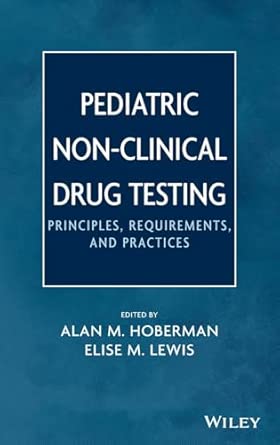
Although the non-clinical and clinical testing needs of drugs for pediatric populations have been discussed and debated for more than forty years, many ethical, political, and practical issues remain unresolved, making pediatric drug testing and labeling a challenge for pharmaceutical and toxicology professionals. Written and edited by a team of leading international experts, this book explains both the importance and the practice of non-clinical pediatric drug testing. Moreover, it guides readers through the complex set of international rules and regulations governing the practice today.
Following the authors’ clear advice, readers will be able to meet FDA guidelines for non-clinical pediatric drug testing, from initial study design to submission of results for approval. Moreover, the authors describe key differences between the FDA guidelines and European Medicines Agency (EMA) legislation, enabling readers to devise and conduct studies, analyze the results, and then compile appropriate information for submission to both agencies.
Pediatric Non-Clinical Drug Testing offers clear guidance for managing the key challenges of non-clinical testing models, helping readers overcome the difficulties associated with:
-
Lack of fully comparable models
-
Inadequate historical experience
-
Specific needs and effects associated with testing animals
-
Practical problems using the clinical route of exposure in animal models
The book’s appendix features a sample juvenile toxicity testing protocol that readers can use as a template for their own experimental designs.
In addition to toxicologists and pharmacokineticists, this book is recommended for drug regulators who need to develop and enforce drug testing standards to protect children. It is also recommended as a textbook for toxicology and pediatric medicine courses.
From the Back Cover
Enables readers to successfully perform non-clinical drug testing, meeting international requirements
Although the non-clinical and clinical testing needs of drugs for pediatric populations have been discussed and debated for more than forty years, many ethical, political, and practical issues remain unresolved, making pediatric drug testing and labeling a challenge for pharmaceutical and toxicology professionals. Written and edited by a team of leading international experts, this book explains both the importance and the practice of non-clinical pediatric drug testing. Moreover, it guides readers through the complex set of international rules and regulations governing the practice today.
Following the authors’ clear advice, readers will be able to meet FDA guidelines for non-clinical pediatric drug testing, from initial study design to submission of results for approval. Moreover, the authors describe key differences between the FDA guidelines and European Medicines Agency (EMA) legislation, enabling readers to devise and conduct studies, analyze the results, and then compile appropriate information for submission to both agencies.
Pediatric Non-Clinical Drug Testing offers clear guidance for managing the key challenges of non-clinical testing models, helping readers overcome the difficulties associated with:
-
Lack of fully comparable models
-
Inadequate historical experience
-
Specific needs and effects associated with testing animals
-
Practical problems using the clinical route of exposure in animal models
The book’s appendix features a sample juvenile toxicity testing protocol that readers can use as a template for their own experimental designs.
In addition to toxicologists and pharmacokineticists, this book is recommended for drug regulators who need to develop and enforce drug testing standards to protect children. It is also recommended as a textbook for toxicology and pediatric medicine courses.
About the Author
ALAN M. HOBERMAN, PhD, DABT, Fellow ATS, is Executive Director of Site Operations and Toxicology at Charles River Preclinical Services, Horsham, PA.
ELISE M. LEWIS, PhD, is Director of Reproductive and Neurobehavioral Toxicology at Charles River Preclinical Services, Horsham, PA.
 Wow! eBook