Wow! eBook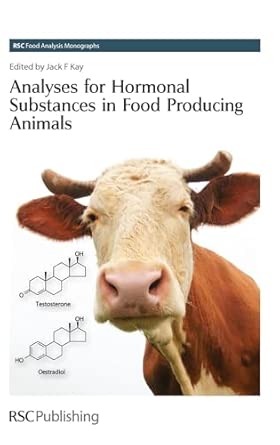
Analyses for Hormonal Substances in Food Producing Animals: Volume 8
Author(s): Peter S Belton
- Publisher: Royal Society of Chemistry
- Publication Date: 26 Nov. 2009
- Edition: First Edition
- Language: English
- Print length: 236 pages
- ISBN-10: 0854041982
- ISBN-13: 9780854041985
Book Description
This unique and definitive reference on hormone abuse in food producing animals is for scientists, regulators and consumers.
Editorial Reviews
From the Back Cover
About the Author
Jack F. Kay is an Honorary Senior Research Fellow in the Department of Statistics and Modelling Science at the University of Strathclyde. His interests lie in the consideration of sampling criteria to veterinary drug surveillance issues. He also has a full time position with the Veterinary Medicines Directorate (VMD) in the UK and has recently been appointed an expert advisor to the UN Food and Agriculture Organisation. The work for VMD also includes membership of the Analytical Sub-Group of the Pesticides Residues Committee, a UK FSA expert group on antimicrobial testing of milk, and membership of the FAPAS Advisory Committee. He contributed to the European Commission Decision that established performance criteria for analytical laboratories undertaking analyses for veterinary drug residues. He is also an ISO trained technical assessor, an active member of the Codex Committee on Residues of Veterinary Drugs and co-chair of the ad hoc Working Group on Methods of Sampling and Analysis, CCRVDF. Dr Kay facilitated the establishment of the UK “mirror group” to the European Technology Platform for Global Animal Health and chairs the UK National Reference Laboratories discussions on issues arising in their residue surveillance programmes. He has also co-organised three international meetings on veterinary drug residue analyses and is currently preparing for the SaskVal meeting in 2011.
Excerpt. © Reprinted by permission. All rights reserved.
Analyses for Hormonal Substances in Food-Producing Animals
By Jack F. Kay
The Royal Society of Chemistry
Copyright © 2010 The Royal Society of Chemistry
All rights reserved.
ISBN: 978-0-85404-198-5
Contents
Chapter 1 The Use of Hormomally Active Substances in Veterinary and Zootechnical Uses – The Continuing Scientific and Regulatory Challenges Leonard S. Levy, 1,
Chapter 2 Presence and Metabolism of Endogenous Steroid Hormones in Meat-producing Animals James Scarth and Christine Akre, 48,
Chapter 3 Hormone Use for Growth Promotion and National Programmes for Regulation of Hormone Use in Food-producing Animals Jack F. Kay and James D. MacNeil, 97,
Chapter 4 Current Analytical Methods Used for the Detection of Contents Hormone Residues Matthew Sharman, Leen van Ginkel and James D. MacNeil, 129,
Chapter 5 Current Research into New Analytical Procedures Ed. Houghton, Phil Teale, Emmanuelle Bichon and Bruno Le Bizec, 171,
Subject Index, 210,
CHAPTER 1
The Use of Hormomally Active Substances in Veterinary and Zootechnical Uses – The Continuing Scientific and Regulatory Challenges
LEONARD S. LEVY
Institute of Environment and Health, Cranfield University, Cranfield, Bedfordshire, MK43 OAL, U.K.
1.1 Introduction
“Those who cannot learn from history are doomed to repeat it.”
(George Santayana, 1863–1952)
“What experience and history teach is this – that people and governments never have learned anything from history, or acted on principles.”
(George Wilhelm Hegel, 1770–1831)
The scientific, regulatory and political debate surrounding the use or banning of hormones or hormone-like substances in the production of meat and meat products and for veterinary use is, for me, the quintessential example of the limitations of all three of these facets of risk assessment/management inputs in producing unequivocal answers. It is thus a salutary lesson to scientists, regulators and policy-makers, politicians and risk assessors to understand all strands of this tangled issue. Whether or not it helps us to make better decisions in the future, for this and other continuing debates in risk assessment, will depend on which of the two above apparently contradictory quotations regarding the utility in understanding the past you subscribe to.
1.1.1 Recent Historical Perspective
A range of hormonally active substances, such as diethylstilboestrol (DES), had been used for growth promotion in cattle and sheep since the early 1950s. This latter use is termed zootechnical as opposed to veterinary or therapeutic use. Concerns about a possible risk of cancer from residues of such substances had been expressed in the early 1970s and eventually the European Community (EC) introduced a ban on the use of DES in 1987 and, in addition, banned the use of all hormonally active substances as growth promoters in food-producing animals in 1988. A similar condition was placed on all countries, so-called “Third Countries”, wishing to export meat from such animals to the EC.
The United States and Canada objected to this ban to the World Trade Organization (WTO). As a result, in 1997, the WTO Expert Panel found that the ban was not based on science – for example, on a risk assessment or on relevant international standards.
The European Commission appealed against this ruling. In February 1998, the Appellate Body upheld the WTO Expert Panel’s view, in that they found that the ban had been imposed without credible evidence to indicate that there were health risks posed by eating hormone-treated meat. As a result, the European Commission was given 15 months to remove the ban or produce a risk assessment.
As a response to this ruling, in early 1998, the European Commission (EC) sponsored 17 research studies to help clarify the findings in the Appellate Body report. These covered toxicological and carcinogenicity aspects, residue analysis, potential abuse and control problems and environmental effects of hormone use.
At the end of 1998, the EC’s Scientific Committee on Veterinary Measures relating to Public Health (SCVPH) was asked to carry out an assessment of the risk to human health from the use of the six hormonally active substances, particularly from residues from bovine animals where such substances were administered for growth promotion. These substances were: 17β-oestradiol, testosterone, zeranol, progesterone, trenbolone acetate and melengestrol acetate. In April 1999, the SCVPH produced its first Opinion on the subject.
The SCVPH concluded that the risks from hormone-treated meat were “higher than previously thought”. Further, it proposed that there was a significant body of scientific evidence suggesting that 17β-oestradiol should be considered a complete carcinogen. It also concluded, with different standards of evidence, that there were risks to consumers from the other five hormones examined.
Most importantly, the SCVPH concluded that no threshold concentrations could be defined for the hormones – this precluded the setting of Acceptable Daily Intakes (ADIs) or Maximum Residue Limits (MRLs). However, they were unable to estimate the extent of any risk.
In the UK, the then Minister of Agriculture, Fisheries and Food asked the Veterinary Products Committee (VPC) to assess the evidence in the SCVPH Opinion. The VPC is an independent scientific committee that has the remit to give scientific and veterinary advice on veterinary medicines and other products used for animal production and husbandry to the Veterinary Medicines Directorate (VMD). The VMD has statutory duties in relation to veterinary medicines and products in the UK. The VPC set up a Sub-Group to do this, which reported in October 1999. At the same time, the Safety Working Group of the Committee for Veterinary Medicinal Products (CVMP) – the European Commission’s own organisation with responsibility for advising on the safety of veterinary medicines – also examined the SCVPH Opinion.
Following detailed deliberations, the VPC Sub-Group was unable to support the SCVPH’s conclusion that the risks associated with eating hormone-treated meat “might be higher than previously thought”. The Sub-Group also found that it had sufficient concerns about the scientific reasoning in a number of key areas, to throw serious doubt on the conclusions of the SCVPH. However, the Group identified a number of areas where additional expert evidence should be sought to add to the data and help prevent selective scientific conclusions being drawn in the future.
The CVMP also produced a report in 1999 in response to the SCVPH Opinion (EMEA/CVMP/885/99). The CVMP was unconvinced by the SCVPH data and arguments, and concluded that its (the CVMP’s) previous recommendations with regard to the ADIs and MRLs of the five hormones examined were still applicable (17β-oestradiol, altrenogest, progesterone, flugesterone acetate and norgestomet). The CVMP also noted that its conclusions were practically the same as the FAO/WHO Joint Expert Committee on Contaminants and Food Additives.
The UK Government accepted the view of the VPC-that they were unable to support the conclusion of the SCVPH of a “higher risk than previously thought” from eating hormone-treated meat. The UK has, however, always fulfilled its obligations to enforce the EU ban and continues to do so.
In May 2000, the SCVPH produced a review of its Opinion after having examined the reports of both the VPC and CVMP. The SCVPH noted that these two independent evaluation reports showed a high degree of consensus on the possible risks. However, it did not seek to answer the questions raised in the reports, but concluded that they did not provide convincing data and arguments that demanded revision of the SCVPH’s previous conclusions. The SCVPH review acknowledged that there were obvious gaps in the present understanding on the hormones in relation to animal metabolism and residue deposition but it anticipated that the EC’s research programmes the EC had instigated would provide additional data on these topics.
Following the completion of these 17 studies sponsored by the EC, the SCVPH was asked to review their previous Opinions of 1999 and 2000, the data from the 17 studies and other recent scientific literature from any source. In April 2002, the SCVPH released yet another Opinion. In this, it reconfirmed the views in the previous SCVPH Opinion and concluded that no amendments to these were justified.
In September 2003, the European Parliament and Council of Ministers passed Directive 2003/74/EC. This Directive put further restrictions on the use of veterinary medicinal products containing oestradiol or its ester-like derivatives. Originally, the intention was for all uses of 17β-oestradiol to be banned and restrictions tightened on other hormones; however, the UK and other Member States expressed concerns about the potential loss of a number of valuable veterinary therapeutic products.
This Directive required that oestradiol and its derivatives should not be used for oestrus induction/synchronisation in cattle, horses, sheep or goats after October 2006. These substances were still allowed to be authorised for the treatment of foetus maceration or mummification and the treatment of pyometra in cattle, or oestrus induction in cattle, horses, sheep or goats. However, the Directive required the European Commission to present a report by October 2005 on the possible alternatives to oestradiol for these therapeutic uses. A new Directive 2008/97 now bans the use of oestradiol in cattle, etc. The key conclusions of the SCVPH Opinion are reproduced below:
“The review of the 17 studies launched by the European Commission and a recent scientific literature allows the following conclusions:
Ultra-sensitive methods to detect residues of hormones in animal tissues have become available, but need further validation.
Studies on the metabolism of 17β-oestradiol in bovine species indicate the formation of lipoidal esters, disposed particularly in body fat. These lipoidal esters show a high oral bioavailability in rodent experiments. Thus, the consequence of their consumption needs to be considered in a risk assessment.
Experiments with heifers, one of the major target animal groups for the use of hormones, indicated a dose-dependent increase in residue levels of all hormones, particularly at the implantation sites. Misplaced implants and repeated implanting, which seem to occur frequently, represent a considerable risk that highly contaminated meats could enter the food chain.
There is also a dose-dependent increase in residue levels following the oral administration of melengestrol acetate at doses exceeding approved levels, with a corresponding increased risk that contaminated meats could enter the food chain.
Convincing data have been published confirming the mutagenic and genotoxic potential of 17β-oestradiol as a consequence of metabolic activation to reactive quinones. In vitro experiments indicated that oestrogenic compounds might alter the expression of an array of genes. Considering that endogenous oestrogens also exert these effects, the data highlight the diverse biological effects of this class of hormones.
No new data regarding testosterone and progesterone relevant to bovine meat or meat products are available. However, it should be emphasised that these natural hormones are used, only in combination with 17β-oestradiol or other oestrogenic compounds in commercial preparations.
Experiments with zeranol and trenbolone suggested a more complex oxidative metabolism than previously assumed. These data need further clarification as they might influence a risk assessment related to tissue residues of these compounds.
Zeranol and trenbolone have been tested for their mutagenic and genotoxic potential in various systems with different endpoints. Both compounds exhibited only very weak effects.
Data on the genotoxicity of melengestrol acetate indicate only weak effects. However, pro-apoptotic effects were noted in some cell-based assays, which were attributed to the impurities in commercial formulation. Further experiments should clarify the toxicological significance of these impurities.
Model experiments with rabbits treated with zeranol, trenbolone or melengestrol acetate, mirroring their use in bovines, were designed to study the consequences of pre- and perinatal exposure to exogenous hormones. All compounds crossed the placental barrier easily and influenced to varying degrees the development of the foetus, at the doses used in the experiments.
Epidemiological studies with opposite-sexed twins suggest that the exposure of the female co-twin in utero to hormones results in an increased birth weight and consequently an increased adult breast cancer risk.
Several studies were devoted to the potential impact of the extensive use of hormones on the environment. Convincing data were presented indicating the high stability of trenbolone and melengestrol acetate in the environment, whereas preliminary data were provided on the potential detrimental effects of hormonal compounds in surface water. In conclusion, after re-appraisal of the data from the 17 studies and recent scientific literature, the SCVPH confirms the validity of its previous Opinions (in 1999 and 2000) on the Assessment of Potential Risks to Human Health from Hormone Residues in Bovine Meat and Meat Products, and that no amendments to those Opinions are justified.”
Due to this new SCVPH Opinion, in 2002 the VPC was again asked to examine the scientific evidence for a ban on the use of hormones in food-producing animals and to advise on whether therapeutic uses posed any risk to consumers. A new VPC Working Group was formed with the following Terms of Reference:
“to evaluate the latest Opinion of the Scientific Committee on Veterinary measures relating to Public Health (SCVPH) dated April 2002 and advise on its conclusions and;
to advise on whether the latest Opinion of the SCVPH, and the research studies on which it is based, addresses the conclusions reached in the report by the VPC Sub-Group published in October 1999.”
1.1.2 The Role and Remit of the VPC 2002 Working Group
The Working Group (WG) was set up in November 2002 and consisted of members of the VPC plus a number of additional invited experts required covering the specialisation required to address all the relevant scientific and veterinary areas. It was agreed by the WG that, in addition to a critical evaluation of the SCVPH Opinion and the 17 EC-funded studies, other recent relevant scientific publications would be sought, evaluated and included, based on the knowledge and expertise of WG members. In some cases, only the study reports of some of the 17 studies submitted to the EC were available. In other cases, peer-reviewed publications were available, based on results within some of the study reports.
The WG also agreed that, apart from a scientific evaluation of existing data, it was important to highlight significant gaps in knowledge and areas where uncertainty existed. This was felt to be particularly relevant as the WG was aware that it had no mandate to make, or even propose, on policy in this area; thus, it was crucial for the report to express uncertainties where they existed in the science base which would inform policy makers and other stakeholders.
Another issue of concern within the WG was to ensure that the reader understood the various uses to which hormonal substances had been, or could be, used in bovine meat production and ensuing meat products. Their use as growth promoters may be regarded as zootechnical. This was the original use for which the EU ban was intended. Oestrus induction in cattle and horses is also a zootechnical use whereas other veterinary uses such as the treatment of pyometra are regarded as therapeutic.
It was noted by the WG that, although the toxicological evidence of the substances under discussion would be based on studies on specific laboratory animals, the actual risk assessment to humans would be dependent on the dose used, the time of administration relative to slaughter, the pharmacological formulation and route of application to these meat-producing animals, and information on human consumption; questions of whether risks, however minimal, should be permitted – depending on whether the use is zootechnical, hence commercial or therapeutic, and so to the benefit of the health and welfare of the animal – were beyond the mandate of the WG. In other words, such an expert group can only provide a scientific opinion, not make policy.
The WG noted that illegal or improper use of growth-promoting substances, in the form of implants and/or in feed, might present an added exposure to humans who consumed meat or meat products from animals so treated. However, they also noted that this would be no different, in terms of risk management, from the illegal or inappropriate use of any other veterinary products and, as such, would be beyond the remit of the WG.
1.2 Biological Effects of Hormones and Endpoints of Health Concern
1.2.1 General Properties of Hormones
Hormones are vital in normal development, maturation and physiological functioning of many vital organs and processes in the body. However, like any other chemicals of natural or synthetic origin, hormones can be toxic to living organisms under certain circumstances. The toxicity may be due to an excess of its normal (“physiological”) action. This may be the result of excessive exposure to the substance, for example following absorption of a large dose, or because the physicochemical nature of the substance gives it greater (more “potent”) or more prolonged activity of the same type, or because the hormonal action (endocrine effect) occurs at an abnormal time during development or adult life, or is an action on an organism of the inappropriate sex. Hormones, like other chemicals, may also exert direct toxic actions not related to their endocrine (“physiological”) effects.
(Continues…)Excerpted from Analyses for Hormonal Substances in Food-Producing Animals by Jack F. Kay. Copyright © 2010 The Royal Society of Chemistry. Excerpted by permission of The Royal Society of Chemistry.
All rights reserved. No part of this excerpt may be reproduced or reprinted without permission in writing from the publisher.
Excerpts are provided by Dial-A-Book Inc. solely for the personal use of visitors to this web site.