 Wow! eBook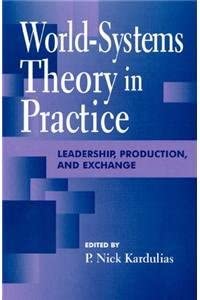
World-Systems Theory in Practice: Leadership, Production, and Exchange
Author(s): Nick P. Kardulias (Editor), Rani T. Alexander (Contributor), Gary M. Feinman (Contributor), Andre Gunder Frank (Contributor), Thomas D. Hall (Contributor), Robert J. Jeske (Contributor), P Nick Kardulias (Contributor), Lawrence A. Kuznar Indiana University – Purdue University Fort Wayne (Contributor), Darrell LaLone (Contributor), George Modelski (Contributor), Ian Morris (Contributor), Peter Peregrine (Contributor), Edward M. Schortman Kenyon College (Contributor), Mark T. Shutes (Contributor), Gil Stein (Contributor), William R. Thompson (Contributor), Patricia A. Urban (Contributor), Peter Wells (Contributor)
- Publisher: Rowman & Littlefield
- Publication Date: 14 Mar. 1999
- Language: English
- Print length: 352 pages
- ISBN-10: 0847691039
- ISBN-13: 9780847691036
Book Description
Editorial Reviews
Review
Stylistically, the papers hang together very well and the level is appropriate for advanced undergraduates, graduates, and scholars in the fields of anthropology/archaeology and world history. Historians will find this work useful both as a crib source for both lecture detail and, more importantly, as a theoretical overview to their World Civilizations survey courses. ―
International Social Science ReviewPerhaps this is the most useful contribution of archaeology to World-Systems Theory. ―
Journal of World HistoryUnsurprisingly, most of the book’s authors adopt diverse intermediate positions. In this sence, the book works wonderfully well as an update in both the fundamental concepts of WST, and in the plethora of invigorating archeological responses to it.The central paper of the volume, both literally and conceptually, is Gill J. Stein’s ‘Rethinking World-Systems’. The editor, P. Nick Kardulias, should be commended for corralling between a single book’s covers not only many of the most vocal participants in current debates about WST (Thomas D. Hall and Chris Chase-Dunn among them), but also a broad spectrum of archaeologists, historians, and social scientists with an interest in seeing if WST works for them. Nonetheless, as a primer on where wenow stand with WST, one could hardly have hoped for a more thorough and stimulating collection of papers.. — John F. Cherry, University of Michigan ―
American AntiquityUnsurprisingly, most of the book’s authors adopt diverse intermediate positions. In this sence, the book works wonderfully well as an update in both the fundamental concepts of WST, and in the plethora of invigorating archeological responses to it. The central paper of the volume, both literally and conceptually, is Gill J. Stein’s ‘Rethinking World-Systems’. The editor, P. Nick Kardulias, should be commended for corralling between a single book’s covers not only many of the most vocal participants in current debates about WST (Thomas D. Hall and Chris Chase-Dunn among them), but also a broad spectrum of archaeologists, historians, and social scientists with an interest in seeing if WST works for them. Nonetheless, as a primer on where we now stand with WST, one could hardly have hoped for a more thorough and stimulating collection of papers. — John F. Cherry, University of Michigan ―
American Antiquity…very useful teaching materials… The more general papers by Thomas Hall and Andre Gunder Frank are also potentially useful as they provide stern critiques of the theory and how it is evolving into what seems like a paradigm. — Alexius Pereira ―
Network–Newsletter Of The British Sociological Assn., No.74


