 Wow! eBook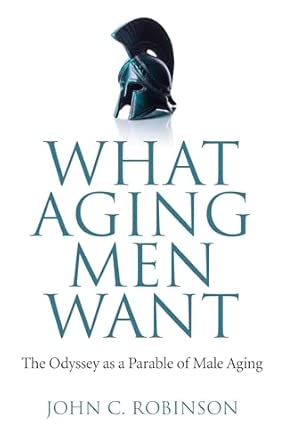
What Aging Men Want: The Odyssey as a Parable of Male Aging
Author(s): John C. Robinson (Author)
- Publisher: Psyche Books
- Publication Date: 26 April 2013
- Edition: Reprint
- Language: English
- Print length: 169 pages
- ISBN-10: 178099981X
- ISBN-13: 9781780999814
Book Description
Editorial Reviews
About the Author
Excerpt. © Reprinted by permission. All rights reserved.
What Aging Men Want
The Odyssey as a Parable of Male Aging
By John C. Robinson
John Hunt Publishing Ltd.
Copyright © 2012 John C. Robinson
All rights reserved.
ISBN: 978-1-78099-981-4
Contents
Preface Why I Wrote this Book………………………………………1Introduction The Odyssey: DNA of Aging Men…………………………..6Chapter 1 The War Years……………………………………………13Chapter 2 Longing for Home…………………………………………20Chapter 3 Early Mistakes…………………………………………..28Chapter 4 Transformational Experiences………………………………45Chapter 5 Reaching Home……………………………………………70Chapter 6 Final Challenges…………………………………………99Chapter 7 Review and Final Lessons………………………………….110Chapter 8 Spiritual Realizations……………………………………119Chapter 9 Men Mentoring Men: Turning Growth into New Life……………..124Chapter 10 Rekindling Passion………………………………………135Chapter 11 So What Do Aging Men Really Want?…………………………142Chapter 12 Poems for Aging Odysseans………………………………..146Appendices Starting an Older Men’s Mentoring Group……………………151Ritual for an Elder’s Initiation…………………………………….153References………………………………………………………..161
Excerpt
CHAPTER 1
The War Years
Our story really begins with the mythical Trojan War, aprolonged battle between two fierce and determined armies thatdragged on for ten awful years. Described by Homer in hisprevious epic, The Iliad, this contest displays masculinity in itsmost vain, violent, and arrogant forms, and the reason for thiswar is so trivial and yet, in the world of men, so incendiary. Ibriefly summarize this background story because it is part of alarger human struggle we desperately need to understand andsomeday resolve.
The Story. Zeus, the king of gods, has arranged a wedding high on Mt.Olympus between a goddess and a mortal. When Discord, anothergoddess, is excluded from this wedding (for obvious reasons!), shetosses a golden apple over the fence into the celebration inscribed withthe words, “For the Fairest”. A hand grenade would have been lessexplosive, for suddenly each goddess in attendance desperately wantsthis choice nickname. The field is finally reduced to three – Aphrodite,Hera, and Athena – and each claim the title. They ask Zeus to be thefinal judge. Wisely declining such a risky job, he refers them instead toParis, a man known for his honesty.
When Paris cannot reach a decision, the goddesses try their best tobribe him. Hera offers riches and power, Athena promises wisdom andmilitary success, and Aphrodite bids the love of the most beautifulwoman on Earth, Helen of Sparta. Paris chooses Helen, makingAphrodite the winner, and in the process makes enemies of Hera andAthena. Unfortunately Helen is already married to the king of Sparta,Menelaus, an inconvenient matter Aphrodite forgot to mention.Undiscouraged, Paris kidnaps Helen and brings her to Troy.
Menelaus is not the only one upset by this abduction. Because ofHelen’s great beauty, Odysseus (whom we will meet very soon) hadwisely advised Menelaus to require an oath from all competing suitorsto support and defend the eventual winner of her hand. When Helenvanishes, Menelaus invokes this oath and soon Greece mobilizes for war.Paris’ outrageous act also affronts the pride of all Greeks who now rallyto avenge it.
The Iliad begins in the tenth year of the Trojan War, when conflictbreaks out among the ranks of Greek military leaders. Their greatestwarrior, Achilles, refuses to go on fighting. Once again, this turningpoint is based on a personal affront, for Agamemnon, the Greekcommander-in-chief, has stolen Achilles’ mistress. To make a long storyshort, Agamemnon eventually apologizes and Achilles returns to battle.Then, driven by enormous rage triggered by the murder of his bestfriend, Patroklos, Achilles exacts a many-fold revenge on the Trojanarmy, eventually killing and humiliating Hector, Troy’s greatestwarrior. In the end, the Greeks win. Ironically, Paris, who ignited thiswar, now strikes Achilles’ heel with a divinely guided arrow, taking hislife.
Interpretation. Like a long-running soap opera, The Iliad thriveson intrigue, surprise, cowardice, heroism, sex, violence, andhard-won lessons. Women compete in a rigged beauty contest,one man publicly humiliates another, a country inflames inpatriotic fervor, war is declared, warriors compete for leadershipand glory, and an Armageddon ensues taking thousands of livesin a seemingly endless bloodbath. What does this remind you of?Sounds a lot like the “modern” world to me (think: reality shows,political campaigns, business practices, professional sports,video games, block-buster action thrillers, porn, bar-room fights,endless wars …). It’s so pervasive we take it for granted. Sex andaggression – Freud wasn’t far off the mark.
The Iliad dramatizes the timeless and unfortunate fact that,despite our amazing intelligence, we men are still hardwired tobe pack animals driven by deeply ingrained instincts to competefor the alpha male position (and the sexual dominance thatcomes with it). Add ego, money, power, and some awesomemilitary weaponry, and the human species has becomedangerous to all living things, and the Earth herself. Honor,glory, defeat, revenge, power, violence, secrecy, insult, war,revenge, honor – these recycling themes describe the same never-endingstory of testosterone and ego. That Paris, who started thisconflagration with his affront to Menelaus and the Greeks, takesthe life of the nearly-immortal Achilles, Troy’s greatest warrior,underscores the utter futility of this whole enterprise, and itsirony – Achilles name is now primarily associated with hisweakness.
But the thrill of battle is powerful for men – the sound andfury, power and ritual, spectacle and pageantry, suspense andadrenaline. It’s intoxicating: hand-to-hand, body-to-body, man-to-man,in the trenches, fields, and airplanes, down and dirty, all-out,eardrum-busting bomb-exploding action. It’s the heroismyoung men imagine, it’s what they long for, it’s who they are, it’swhat makes us men. In the end, this witch’s brew of ego andinstinct foments the endless clash of nations, civilizations andideologies, of my god versus your god, my team versus yourteam, and the thrill and excitement of the next big contest. Thisopiate of powerful chemicals awash in male physiology ishypnotic, seductive, sexy, and addictive, infusing men withenergy, purpose, and self-importance.
The Iliad, however, symbolizes more than actual warfare. It’sabout the battles men fight everyday at school, work, and in life.It’s still war, only now sublimated in the workplace and drivenby the invidious comparisons in income, status, power,appearance, wealth, achievement, cars, and women. This is thewar of competitive masculinity; only in “civilized” society wekill each other with clever words and job-stealing manipulations.Has our nature really changed in the past twenty-five hundredyears?
Discussion. You don’t have to look hard for examples of thiseveryday war. Beyond the Super Bowl and Mixed Martial Arts,our aggressive behavior includes inner city gang members killingeach other over perceived disrespect; CEO’s demanding obscenebonuses while line workers barely make a living wage; workersat all levels competing for promotions and wages; stressfulrelationships with difficult bosses and scheming co-workers;politicians seeking election for ego, money, and power instead ofservice; and demagogues demeaning other nationalities, ethnicgroups, or political positions for personal gain. Even in the mostsophisticated settings – the university, the Vatican, theboardroom, the ruthless climb to the top infects everyone.
Every man has his own story of when he went to war, wherethis war took him, the wounds he sustained, and how heeventually stopped caring about winning. Men recall early warexperiences in junior or senior high school – bullying, hazing,drinking, fighting, risk-taking, rule breaking, or chasing women– all to fit into the emerging social hierarchy. They remember thelife-long game of comparison and competition over grades,athletic ability, clothes, looks, girls, cars, colleges, jobs,advancement, income and material wealth. Later they describebrutal bosses, competition for status, and salary on the job, andthe awful reality that any time you “win” someone else had to”lose”. Others, feeling they were losing in this game anyway,tried to become invisible or hid out in isolating non-competitiveactivities.
I remember being painfully puzzled in junior high as Iwatched elementary school friends regroup around the invisiblenew agenda of “coolness”, swagger, and bravado. Whathappened to our old friendships? I remember the comparisons ofhigh school – who were your friends, what were your grades,where were you going to college? When did I become acommodity? Then came the competition for graduate schooladmission, the need to impress faculty and peers, the competitionfor internships, jobs and success – I was running an endlessgauntlet. By midlife, I felt exhausted and betrayed by thecompromises I made to succeed. Like Odysseus, I longed tocome home, I just didn’t know how.
Can you identify this war in your life? If you’re still working,how has it affected your work life? Do you push yourself on-the-job,tensing your body like a fist to enter the fray of bosses,problems, conflicts, meetings, phone calls, goals, obstacles,frustrations, failures, and decisions? Do you see others asenemies competing for the same limited spoils? When you’resufficiently cranked up, do you experience this tension asenlivening, fun, challenging – male hormones like drugs excitingnew battles, goals and heroic adventures? Does it affect yourfriendships, limiting how much you like and trust co-workers orcausing you to judge them with standards that make you feelsuperior by comparison or, just as often, inferior? If you’re at thetop of the heap, do you secretly feel like a conqueror? Or do youfeel more like a soldier fighting together with comrades in thesame unit? If you are retired, do you feel even worse now thatyou have nothing to show for yourself – no job title, income,power, or status?
It’s a matter of age. High on testosterone, young menexperience this war montage as exciting, adventurous, andchallenging as they compete for valor and glory. As the middleyears drag on, we may try to become inured to it, seekingcomfort in lower expectations at work or the emotional bonds offamily – if we have found a safe and pleasant haven. Later in life,we often find ourselves growing weary of this endless battle,believe we will never reach our original goals, and dream moreand more of retirement, freedom, and peace. Hormone levelsdrop, physical strength declines, senses weaken, and olderbodies no longer feel the same aggressive energies. In thiscontext of increasing vulnerability and declining warriorambition, aging men long to come home from the war.
At its highest levels, The Odyssey describes mankind’s journeyhome from the universal male battleground symbolicallydepicted in The Iliad to the wisdom of age. It is a story of man’slong slow struggle to achieve a mature awareness of self, world,and divinity, and a story of western culture’s slow transition froma war-based value system to the enlightened consciousness of theimmanent divine as the world itself. This cultural myth,depicting our transformation from violent animals to enlightenedelders, is a gift from the collective unconscious that asks us tounderstand ourselves and save the world before it is too late.
The Challenge: Understanding the Male Psyche. Withincredible intelligence and highly refined killing powers, wehumans are gods with pack animal instincts. We war with eachother just as the mythical Greek gods did, crazed by glory, power,jealousy, and revenge. Yes, there are more noble motivesavailable – love, family, generosity, creativity, soul, and service – butmost of us, when threatened or provoked, fall back instantlyon our 10,000 year-old penchant for warfare. Can this hardwiringbe changed or is it the very essence of our humanity withoutwhich we would not be human? We will carry this great riddlewith us as we move forward and see what The Odyssey has to tellus in the end.
Growth Questions
1 Describe your own life-long experience of male warfare.What were your victories? Who did you defeat and whodefeated you? What warrior behaviors are you most proudof? Least proud of?
2 Where were you wounded most deeply? How do you stillcarry this wound? What re-opens it?
3 When did you grow tired of the battle? Has it been difficultfor you to give up the war and come home? If so, how?
4 Step back into this story as if it were your own dream.
What detail draws your attention? For example, what doyou see at Zeus’ wedding? What do you think of thesegoddesses? Which bribe would you take? Does your choicealso lead to war? What is your “Achilles Heel”?
CHAPTER 2
Longing for Home
Every workday for thirty, forty, or even fifty years, we go off towar – at the office, factory, clinic, business, or farm. Every day weput on our armor, tense up, leave home and family, do things wedon’t always enjoy (sometimes forgetting what we once didenjoy), and fight the good fight, often coming home too tired toshare much of what happened that day. We soldier steadilyacross the never-ending landscape of war, with its heady peaks ofvictory and valleys of failure and despair. While good times withthe kids, vacations, home improvement projects, hobbies anddreams keep us going, they do not end the war.
In the daily grind of the compulsive warrior, distance growsbetween spouses, between father and children, between ego andsoul. Our partner gets tired of asking how things were today andthe children know better than to bother Dad when he’s stressedout. In the early years, we still communicate about our lives,hopes, and dreams. Ten years later, the dust storm of dailydemands and pressures obscures real sharing; twenty years later,everyone is too busy, distracted, or numb to ask; thirty years later,the kids have left to pursue their own wars, and our marriage cansometimes feel distant or mute. When was the last time youtalked together about how you really feel about your life, yourrelationship, or your dreams? Do you even know how you reallyfeel? Do you know how your partner feels? Is there too muchwater under the bridge to even ask?
As men weary of war, as it loses its meaning and luster, webegin to long for home. We search our daily experience forsomething long gone – feelings of happiness, hope, and love.Where are they now?We remember the early days when meaningand purpose inspired our lives. Where is that inspiration now?We may feel lost, unmotivated, alone, even depressed. For some,this dilemma seems like a huge and fathomless problem; forothers a background hum of boredom, doubt, and discouragement.But for most men in their late sixties, status andresponsibility have morphed into chains. Moreover, we oftenfind ourselves tangled up in relationship problems that we didnot see developing, or did not want to see – buried hurts, disappointments,and power struggles that increasingly smothercommunication.
The weary heart now searches the horizon for home, butwhere is home and how do we get there? I carried this poignantquestion with me for years even after formally leaving the war.The family of my childhood and adult years had changed sodramatically – there was no going back to it. The old work nolonger called to me and I could not bring myself to settle for thecustomary volunteer activities as a solution. I longed forsomething I couldn’t identify and sensed that this longing wouldnot be resolved simply – it was going to require a major transformationaljourney.
Odysseus, too, struggles valiantly with this question, hisstruggles symbolized in each of the amazing adventures heencounters on his journey home. Like all of us, Odysseusabandons love in the pursuit of ego – the essence of war! – andthe painful physical distance separating him from his wife, son,and homeland symbolizes this estrangement of heart. As weaccompany Odysseus on his journey home, we will understandthe tasks and stages of aging, and perhaps find our own wayhome as well. But this journey of healing and understanding willtake time – it took Odysseus ten years. It took me ten years aswell. We must be patient with matters of the heart and rememberthat the symbolism of homecoming is best understood in thelanguage of our own lives. And because the collective psychedoes not yet understand this new phase of life, we must be itspioneers.
Come with me now into the magical life and times ofOdysseus traveling home from the war. By the end of this tale,you will discover that he is you.
The Story. The Odyssey begins with the goddess Calypso holdingOdysseus captive on her island. He fell in love with this beautiful seanymph on his journey home and she promised him immortality if hewould be her husband. After several years of apparent happiness,however, Odysseus begins to ache painfully for his wife and homeland.He is tired, sad, and homesick. Homer tells us that the gods ordained hishomecoming, but it was Athena, Zeus’ daughter, concerned aboutOdysseus’ growing depression, who finally begs her father to set himfree.
(Continues…)Excerpted from What Aging Men Want by John C. Robinson. Copyright © 2012 by John C. Robinson. Excerpted by permission of John Hunt Publishing Ltd..
All rights reserved. No part of this excerpt may be reproduced or reprinted without permission in writing from the publisher.
Excerpts are provided by Dial-A-Book Inc. solely for the personal use of visitors to this web site.


