Wow! eBook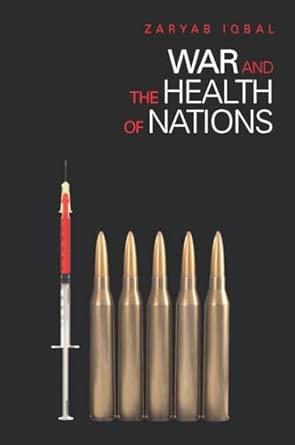
War and the Health of Nations
Author(s): Zaryab Iqbal (Author)
- Publisher: Stanford University Press
- Publication Date: 10 Feb. 2010
- Edition: 1st
- Language: English
- Print length: 208 pages
- ISBN-10: 0804758816
- ISBN-13: 9780804758819
Book Description
Assessments of the costs of war generally focus on the financial, political, military, and territorial risks associated with involvement in violent conflict. Often overlooked are the human costs of war, particularly their effects on population well-being. In War and the Health of Nations, Zaryab Iqbal explores these human costs by offering the first large-scale empirical study of the relationship between armed conflict and population health. Working within the influential “human security” paradigm―which emphasizes the security of populations rather than states as the central object of global security―Iqbal analyzes the direct and indirect mechanisms through which violent conflict degrades population health. In addition to battlefield casualties, these include war’s detrimental economic effects, its role in the creation of refugees and forced migration, and the destruction of societies’ infrastructure. In doing so, she provides a comprehensive picture of the processes through which war and violent conflict affect public health and the well-being of societies in a cross-national context.
War and the Health of Nations provides a conceptual and theoretical framework for understanding the influence of violent interstate and intrastate conflict on the quality of life of populations and empirically analyzes the war-and-health relationship through statistical models using a universal sample of states. The analyses provide strong evidence for the direct as well as the indirect effects of war on public health and offer important insights into key socio-economic determinants of health achievement. The book thus demonstrates the significance of population health as an important consequence of armed conflict and highlights the role of societal vulnerabilities in studies of global security.
Editorial Reviews
Review
―John L. Zeller, Journal of the American Medical Association
“
War and the Health of Nations makes an important contribution to the literature on human security, a concept that has a great deal of appeal but lacks strong empirical underpinnings. This work helps fill that gap by examining the links between health and violent conflict – or between ‘freedom from want’ and ‘freedom from fear’.”―Sakiko Fukuda-Parr, Professor of International Affairs,The New School
“For far too long we have known far too little about the aftereffects of political violence. To date, researchers have been justifiably focused on the determinants and dynamics of large-scale conflict. Zaryab Iqbal helps inaugurate a new focus regarding the outcomes of conflict (broadly conceived) on health (also broadly conceived).
War and the Health of Nations immediately contributes to our understanding of the topic as well as maps out a new direction for conflict studies, both theoretically as well as empirically. This book addresses one of the most crucial issues confronted by our age in a manner befitting the topic involved―seriously, rigorously, and elegantly.”―Christian Davenport, Professor of Peace Studies and Political Science, University of Notre Dame
“Social scientists are just starting to investigate the myriad ways in which armed conflict and war harms civilian populations. Combining careful theorizing with systematic cross-national empirical tests, Iqbal provides the most rigorous and comprehensive study to date of the direct and indirect negative consequences of war on public health. This book is of interest to a broad and diverse audience, including social scientists, public health experts, policy makers, and activists. If you want to better understand how human security is profoundly threatened by war, this book is a must-read.”
―Paul Huth, Professor & Co-Director of Center for International Development and Conflict Management, University of Maryland, and Editor,
From the Author
About the Author
Excerpt. © Reprinted by permission. All rights reserved.
WAR AND THE HEALTH OF NATIONS
By ZARYAB IQBAL
Stanford University Press
Copyright © 2010 Board of Trustees of the Leland Stanford Junior University
All rights reserved.
ISBN: 978-0-8047-5881-9
Contents
Tables and Figures…………………………………………………ixAcknowledgments……………………………………………………xi1. Introduction……………………………………………………12. The Concept of Human Security…………………………………….123. War and Health: A Conceptual and Theoretical Framework………………304. Conflict and Levels of Health Achievement………………………….535. A Disaggregated Analysis of the Impact of War on Health……………..776. Collateral Damage: War, Infrastructure, and Public Health……………987. The Allocation of Resources Between Defense and Health………………1138. Forced Migration and Population Health…………………………….1339. Conclusion……………………………………………………..148Appendixes………………………………………………………..A TheWorld Health Report 2002: Statistical Annex Explanatory Notes………159B Calculation of Disability-Free Life Expectancy………………………161C Health-Adjusted Life Expectancy (HALE), 1999–2002……………………162Notes…………………………………………………………….167References………………………………………………………..171Index…………………………………………………………….183
Excerpt
CHAPTER 1
Introduction
SINCE THE END OF WORLD WAR II, there have been numerous interstate andintrastate conflicts resulting in millions of deaths and billions of dollars’worth of destruction. Yet scholars have paid very little attention to theconsequences of conflict, in particular to its social consequences. The WorldHealth Organization’s (WHO) 2002 World Report on Violence and Healthrevealed that 1.6 million people die each year due to violence, includingcollective violence such as conflicts within or between states, and a largenumber of the people who lose their lives due to militarized conflict arenoncombatants. The 25 largest instances of conflict in the twentieth centuryled to the deaths of approximately 191 million people, and 60 percent ofthose fatalities occurred among people who were not engaged in fighting(World Health Organization 2002a). One of the most significant effects ofwar is the toll it takes on the health and well-being of a population beyondthe immediate casualties of combat. In this book, I assess the costs of armedconflict by explaining the relationship between armed conflict and publichealth.
War leads to direct casualties and deaths during combat; violent conflictalso results in widespread death and disability among the civilian populationsthat are affected either as collateral damage or as deliberate targets.For instance, Russia lost 10.1 percent of its population during World War II,Korea lost 10 percent of its population during the Korean War, and Vietnamlost 13 percent of its population during the Vietnam War (Garfield andNeugut 1997). In addition to direct deaths and injuries caused by combatamong the military and civilian populations, conflict results in conditionsthat contribute to the spread of disease and retardation of health care systems,such as the influenza outbreak during World War I, which killed morepeople than combat-related deaths. The disease and disability during andafter armed conflict is often accompanied by states’ inability to meet thepublic health needs of their populations if their health care infrastructurehas been damaged or destroyed. Moreover, wars are associated with the creationof suboptimal health conditions that result in hazards such as famine,epidemics, weapons-induced pollution, lack of clean water, poor sanitation,and general indigence. Consequently, the population is exposed to newhealth threats without access to proper health care.
Studying the relationship between conflict and health is particularlyimportant in light of the nature of conflicts in the current internationalsystem. Most of the recent and ongoing conflicts in the world are civil orintrastate wars that lead to large-scale devastation of a state’s infrastructuresince all the fighting occurs on the territory of one state. This amplifies theconditions that deteriorate the health of societies. Civil conflict is also highlylikely to result in displacement of people as refugees or internally displacedpersons, exposing communities to health menaces. The crisis in Liberiaeffectively demonstrates the suffering civil war can inflict on a population.In June 2003, as the Liberian capital of Monrovia was engulfed in violence,the city experienced an outbreak of cholera, and within three months, 6,353cases of cholera had been reported (World Health Organization 2003). Thecivil war made it impossible for either Liberian authorities or internationalagencies to carry out the extensive process of water chlorination that couldhalt further spread of the disease. Moreover, afflicted people were unableto access medical facilities due to the security situation. In September 2003,the WHO reported that only 32 percent of the Liberian population hadaccess to clean water, no more than 30 percent of the population had accessto latrines, and there had been no regular garbage collection in Monroviasince 1996. The SKD Stadium, the largest camp for internally displacedpeople in Monrovia, housed about 45,000 people who “cook and sleep inany sheltered spot they can find, in hallways and in tiny slots under thestadium seats,” with six nurses in the health center for 400 daily patients(World Health Organization 2003). After the civil war, the life expectancyin Liberia remains 41 years.
Examples of devastating effects of violent conflict on public healthabound in recent decades. In the Sudan, prolonged conflict has exposedthe population to diseases such as yellow fever, malnutrition, displacementof large groups, poverty, and famine. The Iraqi society experienced neardestruction of their health care system, previously one of the best in theMiddle East, during the first Gulf War. Public health in Iraq continued on apath of steady decline for a decade of international sanctions and internalrepression, after which the general and health infrastructures were subjectedto a second war. In 1993, Iraq’s water supply was estimated at 50 percent ofprewar levels (Hoskins 1997) and war-related postwar civilian deaths numberedabout 100,000 (Garfield and Neugut 1997). In 2006, approximately2 million people were internally displaced in Iraq (United Nations HighCommissioner for Refugees 2007).
For every interstate or civil war, populations of states suffer short-termand long-term effects on their health and well-being. To understand the realcost of violent conflict, it is necessary to take into account the human cost ofwar. Violent conflict can have economic, social, political, and environmentalconsequences; yet, while a large number of conflict studies focus on causesof conflict, the literature about the consequences of conflict—and in particularthe health consequences—remains relatively scarce. While scholarshave examined some aspects of the economic and political consequences ofconflict, far less work has been done on the manner in which conflict underminespublic health. The effects of conflict on a society continue long afterthe actual fighting has ceased, and understanding the social consequencesof war is integral to estimating the true cost of conflict.
The effect of war on population well-being is closely associated withnational and global security. The traditional approaches to studying securityfocus primarily on state-level factors. The idea of security is generallyconsidered synonymous with protecting the territory and national interestsof a state from external aggression or unwelcome interference. Once a state isable to safeguard its military, territorial, and political interests from outsidethreats, it is perceived to have attained national security. Particularly duringthe Cold War era, realist notions of security dictated that foreign policy andstate leaders remain unrelentingly occupied with the pursuit of militarysuperiority. The emphasis of neorealist theory on states as the single mostimportant entity in the international system led to the deprecation of theinterests of sub-state actors. Entities without sovereignty did not warrantattention at the international level, and what occurred within the bordersof a sovereign state was to be addressed at the domestic level. Only threatsto the security and existence of states were considered detrimental to globalsecurity and thus worthy of international attention and action.
In stark contrast to this conventional perspective, the emerging notionof human security considers first and foremost the security of state populations;this perspective asserts that the factors that engender insecurityamong the people living within states are not limited to perpetuation ofthe state. Instead, the security of people is inextricably bound up with theirquality of life and, therefore, threats to their security include a range ofsocial and economic issues beyond the territorial integrity of their states.Elements of human security include economic security, political security,access to food and health care, personal and community security, and environmentalsecurity (United Nations Development Programme 1994). Theoccurrence of violent international conflict can adversely affect any or allof these factors and amplify the insecurity of people in the affected state.However, the absence of militarized conflict does not guarantee the eliminationof these threats to human security. In order to gain an adequateunderstanding of whether people—and not merely states—are secure, thevarious components of human security must be addressed rather than conflatingthe security of people with the security of their state. The shift fromstate security to human security is necessitated by the salience and the globalnature of the issues that threaten the security of populations. Problems likeenvironmental degradation and disease proliferation do not just threatenthe security of people in a single state; these problems can easily reach globalmagnitude.
Although the literature on the concept of human security offers varyingdefinitions of what constitutes the security of people, there is a clear agreementthat health is an important component of security. Human securityentails the ability of people to maintain a quality of life that does not fallbelow the level at which they feel secure. Adequate provision of publichealth is important in enabling people to achieve a secure quality of lifeand to be functional enough to maintain their lifestyle. It is the securityof populations, rather than states, that makes the world secure. State securityis important in that people cannot be secure if the existence of thestates in which they live is threatened. However, students of security mustgo beyond state security to understand the true nature of human security.Violent conflict is accepted as a major threat to the security of states; it is alsoa formidable threat to the security of state populations. One way in whichconflict decreases the security of people is by causing a decline in provisionof public health. Since the health of a population is an integral componentof the security of communities and individuals, studying the effect of conflicton health is an important contribution to the understanding of humansecurity. And human security, due to its focus on the well-being of populations,is a better framework within which to assess international securitythan the traditional approach of viewing the security of states as the bestindicator of global security.
Studying the relationship between conflict and public health is valuablefor scholars, policy makers, practitioners, and the general population.Understanding this relationship adds to the scholarly literature about theconsequences of conflict by focusing attention on its effects on public health.A rigorous social scientific exploration of this topic provides policy makerswith relevant information for decisions regarding public health, includingbut not limited to allocation of resources for health purposes. Moreover, awider knowledge base on this topic would enable health care workers andpublic health practitioners to develop a clearer understanding of a significantinfluence on the health of a society and, therefore, to better performtheir duties.
The implications of this project have broad relevance due to the interconnectednessof the issues involved in the relationship between conflictand health. The ideas of human security have already become an importantforce in foreign and domestic policy making. Canada, Japan, Norway,and a number of other states are members of the Human Security Networkand are actively incorporating considerations of human security into theirpolicy decisions. An understanding of the effect of war on health wouldinform the security policies of states as the costs of war become clearer.Just as the financial cost of waging war is taken into consideration beforeembarking on military action, the health cost—if properly understood—would also be a factor in the decision to go to war. Further, an emphasison human security and health is likely to influence budgetary trade-offsbetween defense and social spending. In addition to policy makers at thenational level, this study holds relevance for practitioners and internationalorganizations in the realms of security, development, health, and humanrights. Health care is closely related to broader issues of development andthe effect of conflict on health calls for active participation by humanitarianagencies. Understanding how conflict affects public health serves two chiefpurposes in the policy/practice arena. First, it enables policy makers andpractitioners in national governments and international governmental andnongovernmental organizations to formulate more effective strategies fordealing with humanitarian emergencies as well as long-term health issues,such as disabilities and preventive health care. Second, it illuminates a significantsocial cost of conflict, making violent conflict less attractive. Thehigher the projected cost of violent conflict, the more likely states and groupsare to seek nonviolent means of conflict resolution. Most important, thisstudy is relevant to the people whose security it addresses. An importantelement of human security is the empowerment of people to enhance theirown security. Comprehending the costs of war influences the perception ofwar among populations and affects public opinion and decisions regardingpolitical participation.
The academic audience for this study is also wide and diverse. The examinationof the effect of conflict on health draws on, and contributes to, thefields of conflict processes, development, economics, and public health.The range of sociopolitical and economic factors involved in assessing thecosts and consequences of war reflects the interconnectedness of variousacademic disciplines in social scientific work. Conflict and security scholarsmaintain a profound interest in the causes and consequences of war; thisstudy examines an important impact of conflict within a broader frameworkof security than has been employed in previous work. The close relationshipsamong poverty, development, war, economics, and health extend thescope of this project to development economists and public health scholars.Studying the security of people rather than the security of states calls foran integrative approach in scholarship. Issues of military security of statescould be delegated to scholars of war, but the broad and complex nature ofhuman security warrants a multidisciplinary approach. Since this study isbased in the human security framework and contributes to the understandingof human security, it holds relevance for scholars in any discipline thatdeals with issues that influence the quality of life of populations.
The impact of violent conflict on public health disrupts the lives of populationsin the immediate and short term by causing death and destruction,and in the medium and long term due to the inability of communities tomeet their possibly escalated health care needs. War results in large numbersof deaths among combatants as well as the civilian populations and destroysmany aspects of community life that are necessary to meet the health careneeds of people. The violence and devastation of war results in destructionof important elements of the infrastructure, as well as in diversion ofscarce resources from social and health spending to military expenditures.As violence pervades the society, it becomes an accepted means of resolvingissues and leads to domestic violence and increased crime (Levy and Sidel1997). Hence violent conflict has serious and lasting effects on public health,and this book explores questions regarding the way in which these negativeeffects occur. Conflict adversely affects public health and the explorationof this relationship in this book makes theoretical and conceptual, as wellas methodological, contributions to the disciplines of political science andpublic health. The question of how conflict affects public health holds interestfor both scholars and policy makers, and this work is an attempt to offera social scientific analysis of the issue.
The main argument in this book is that violent conflict has serious directand indirect effects on the health of a society and that war underminesthe well-being of populations through a range of mechanisms. Militarizedviolence obviously has a negative effect on the well-being of a society due todeath and injury; but war also results in indirect effects on health throughdecreased efficiency of health care systems, prevalent disabilities among thepopulation, and the spread of disease. History reveals that more soldierslose their lives due to infectious diseases than through direct armed conflict(Foege 1997). In this book, I explore the multiple dimensions of the warand health relationship and analyze the linkages among armed conflict,political and socioeconomic influences, societal capacities, and populationwell-being. Below I present an overview of the organization of the book.
(Continues…)Excerpted from WAR AND THE HEALTH OF NATIONS by ZARYAB IQBAL. Copyright © 2010 by Board of Trustees of the Leland Stanford Junior University. Excerpted by permission of STANFORD UNIVERSITY PRESS.
All rights reserved. No part of this excerpt may be reproduced or reprinted without permission in writing from the publisher.
Excerpts are provided by Dial-A-Book Inc. solely for the personal use of visitors to this web site.