 Wow! eBook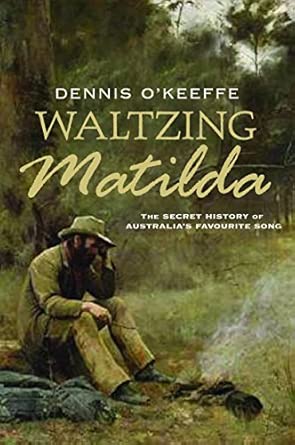
Waltzing Matilda: The Secret History of Australia's Favourite Song
Author(s): Dennis O'Keeffe (Author)
- Publisher: Allen & Unwin
- Publication Date: 1 April 2012
- Language: English
- Print length: 320 pages
- ISBN-10: 1742377068
- ISBN-13: 9781742377063
Book Description
Editorial Reviews
About the Author
Dennis O’Keeffe is one of the nation’s leading performers of Australian traditional songs, and has been a successful song-writing teacher for over ten years. For as many years, he has led the Australian traditional song sessions at the National Folk Festival in Canberra. Dennis plays an Anglo-concertina, an instrument that came to Australia during the gold-rushes of the 1850s, and was the most popular instrument in the Australian outback until the turn of the century. Regrettably, there are very few concertina players left in Australia. Dennis has been at the birth of literally hundreds of songs, having written some forty songs about Australian history, and nurtured many song-writers from their first idea through to the first public performance of their song. Twenty years of painstaking research into the origins of Waltzing Matilda, combined with his knowledge of Australian traditional songs and proven song-writing ability, gives Dennis an intimate understanding of how the song was written.
Excerpt. © Reprinted by permission. All rights reserved.
Waltzing Matilda
The Secret History of Australia’s Favourite Song
By Dennis O’Keeffe
Allen & Unwin
Copyright © 2012 Dennis O’Keeffe
All rights reserved.
ISBN: 978-1-74237-706-3
Contents
Preface,
1 Australia’s Song for the World,
2 The Backdrop for a Song,
3 Clancy and the Man from Snowy River,
4 There Once Was a Swagman,
5 Up Rode the Squatter,
6 ‘The Banjo’,
7 The Old Billy Boiling,
8 Warrnambool to Winton,
9 Australia for the Australians,
10 The Fight Begins,
11 The Burning of the Rodney,
12 Dagworth Burns,
13 The Cover-Up,
14 Christina’s Tune,
15 The Love Affair,
16 The ‘Jolly Swagman’ Song,
17 And His Ghost May Be Heard,
Bibliography,
Notes,
CHAPTER 1
Australia’s Song for the World
Wherever there are Australians, it seems ‘Waltzing Matilda’ is there. In fact, it seems ‘Waltzing Matilda’ has always been there. It holds a unique place in our culture. Quite simply, it is part of Australia and part of being Australian.
Our famous folk song has found its way from the remote Queensland plains to every corner of the earth, and the swag man, or ‘jolly swagman’ as he is now known, has become a symbol of the Australian identity.
Today, Australians live in a global society, where songs are as expendable as cars, television sets, mobile phones and computers. Yet ‘Waltzing Matilda’, after one hundred and fifteen years, continues to capture the imagination, not only of Australians, but of people throughout the whole world.
‘Waltzing Matilda’ is truly one of the greatest folk songs ever written and is widely recognised around the world as ‘the Australian song’, sometimes better known than the national anthem. Like ‘La Marseillaise’ for the French, ‘Danny Boy’ and ‘Amhrán na bhFiann’ for the Irish, ‘Flower of Scotland’ or ‘Loch Lomond’ for the Scots, ‘Land of Hope and Glory’ for the English, or ‘The Star-Spangled Banner’ and ‘This Land is Your Land’ for the Americans, ‘Waltzing Matilda’ is synonymous with the country itself and embodies the spirit of the people. It is ‘the people’s song’.
‘Waltzing Matilda’ was performed at the closing ceremony of the 2000 Olympic Games in Sydney and at the opening ceremony of the 1982 Commonwealth Games in Brisbane, and was played as Australia’s official song for the Montreal Olympics in 1976. It is the anthem of Australia’s rugby team and is performed at every AFL grand final. ‘Waltzing Matilda’ has marched Australians home from several wars, walked Prime Ministers into office, echoed around every schoolroom and been sung by Aussies at Earl’s Court. It is played as the quick march of the 1st Battalion, Royal Australian Regiment, and is the official song of the US Army 1st Marine Division, commemorating the time the unit spent in Australia during World War II. And who could forget the Aussie sailors singing ‘Waltzing Matilda’ as they returned to dock after winning the America’s Cup on Australia II in 1983? Today, the song is still preferred by many Australians to ‘Advance Australia Fair’, the current national anthem. When more than 2000 people trooped into an auditorium on the Via Conciliazione in Rome, it was sung as a tribute to Mary MacKillop. On the eve of her canonisation by Pope Benedict XVI in St Peter’s Square, the ceremony finished with a triumphant rendition of ‘Waltzing Matilda’—in Italian.
‘Waltzing Matilda’ has a place in almost every Australian heart, even though most Australians have no real idea what they are singing about. It is difficult to imagine Australia without ‘Waltzing Matilda’. Granted, there are many great Australian songs. Who can deny the strong emotions of ‘I Still Call Australia Home’ or ‘Tenterfield Saddler’, both written by Peter Allen, or many great ballads penned by John Williamson, including ‘True Blue’ and ‘Raining on the Rock’? The list goes on: ‘Along the Road to Gundagai’ to a land ‘Down Under’ where there’s ‘The Pub with No Beer’. But then, on a sweaty Saturday night in the local pub, you will hear many a call for ‘Khe Sanh’ or ‘Working Class Man’ as the greatest Australian songs ever written. But none of them can replace ‘Waltzing Matilda’, which has stood the test of time, and is by far the most recorded Australian song.
Although ‘Waltzing Matilda’ was born in January 1895 on a remote homestead in western Queensland, it never really gained popularity for another eight years, when in 1903 the Inglis Tea Company decided it wanted a catchy advertising jingle. The advertising gurus of the time decided to include the words and sheet music of ‘Waltzing Matilda’ in every packet of their tea. The promotion was apparently to convince the discerning tea-drinking public that they would be transformed into the same ‘jolly’ state as our legendary swagman camped by his billabong, who resided somewhere out in the Australian bush.
While it is difficult to gauge the popularity ‘Waltzing Matilda’ achieved throughout the country due to the Inglis ‘Billy Tea’ promotion, we do know that the song achieved enough acceptance to be sung by Australian diggers in the muddy trenches of the Western Front and the bloody trenches of Gallipoli. One can only imagine the pride of the author, Andrew Barton ‘Banjo’ Paterson, while attending an army staging camp at Randwick Racecourse at the beginning of World War I, when the parading troops began to sing ‘Waltzing Matilda’. He wryly commented to Sir Daryl Lindsay, ‘Well Daryl, I only got a fiver for the song, but it’s worth a million to me to hear it sung like this.’
The song was first recorded in 1927, thirty-two years after it was written. However, it was not until 1938 that ‘Waltzing Matilda’ achieved any real international recognition, when Peter Dawson’s recorded version was played on radio all around the world. Again the Australian soldiers would continue to sing the song on all fronts during World War II.
Over the next seven decades, ‘Waltzing Matilda’ would be recorded by thousands of artists throughout the world, in countless different languages, making it one of the most recorded songs in history. There are more than 700 individual recordings in the National Film and Sound Archive. The universal acceptance of the song on the public stage is further enhanced by performances in almost every different musical genre — from the country singing of the legendary Slim Dusty, the classic pop of Olivia Newton-John, the virtuoso guitar playing of Tommy Emmanuel and breathtaking operatic performances of Dame Nellie Melba, to name just a few. Recently recorded in Australia was the utterly delightful version ‘Waltjim Bat Matilda’, sung in Kriol by Ali (Arjibuk) Mills from Darwin. There has been a multitude of choral and orchestral arrangements, as well as versions by jazz musicians from solo pianists to Dixieland bands, accordion orchestras, children’s entertainers, a Filipino rondalla orchestra, and it is inevitably sung in curious accents by every choir that visits Australia.
‘Waltzing Matilda’ made its film debut in 1949 in Once a Jolly Swagman, starring Dirk Bogarde, and was then used for On the Beach in 1959. Since then the song has been used in countless Australian productions and is currently touring the world as part of the score in the 2008 Baz Luhrmann film Australia.
Today, ‘Waltzing Matilda’ is not our song alone, with many international artists claiming it as theirs too, from masculine Welsh choirs to trendy Rod Stewart and the gravel voice of Tom Waits fitting the phrase into ‘Tom Traubert’s Blues’. Even Chubby Checker recorded a version of our song when the twist craze took over the world between 1960 and 1962. I will never forget the exhilaration I experienced in 2007 when the best-selling Universal artist, violinist André Rieu, backed by 100 Scottish pipers, played ‘Waltzing Matilda’. I, along with 30,000 Melburnians, stood, applauded and sang every word.
Unfortunately, the song’s international acclaim has caused one problem for Australians. The song was copyrighted by an American publisher, Carl Fischer Music, in 1941. Although no copyright applies in Australia, the Australian Government had to pay royalties to Carl Fischer Music when the song was played at the 1996 Summer Olympics held in Atlanta. Research in recent times, however, has cast doubt on the claim of Carl Fischer Music to have the original composition rights to ‘Waltzing Matilda’.
The controversy over the rights to ‘Waltzing Matilda’ is just one of the many mysteries of the absorbing history of our national song.
Although ‘Waltzing Matilda’ was written 115 years ago, debate still rages about its origins, and why Banjo Paterson wrote it. Many historians and authors have written about ‘Waltzing Matilda’. Some writers like Peter Forrest believe ‘the wonderful thing about Waltzing Matilda is that its words have no real meaning’, while historian Dr Jonathan King, during the centenary celebrations at Winton in 1994, claimed Waltzing Matilda was a ‘harmless ditty’. On the surface it appears to be a happy-go-lucky song about a jolly swagman, a petty thief who gets caught stealing a sheep and would rather jump into a billabong and drown than be taken alive. Many people have no idea what the idiom ‘waltzing matilda’ really means; most think it has something to do with a dance, but none of this really seems to matter. The song just sounds good and as Australians, we relate to it — it brings out the larrikin in us all.
Embodied mythically is a cultural connection that could only be Australian. ‘Waltzing Matilda’ could never have attained such universal acceptance if it had been a ‘harmless ditty’. To believe this is to undermine the character and literary genius of Australia’s most loved poet, Banjo Paterson.
‘Waltzing Matilda’ has proven its bona fides. No-one can really identify the secret ingredients, or set out purposefully to write a song that will come to represent the spirit of a nation. These great songs seemingly write themselves, and are absorbed into the culture as belonging to the people.
‘Waltzing Matilda’ is one of these great songs. It belongs to us. There is no other nation that sings of such strange things as swagmen, squatters, jumbucks, billabongs and ‘waltzing matilda’.
On 6 April 1995, at the centenary celebration for the first public singing of ‘Waltzing Matilda’ in Winton, the then Prime Minister Paul Keating commented:
I suspect there is no one here who has not at some time, somewhere in the world, heard or remembered the tune and felt deeply affected by it. I’m sure it had brought Australians home before they intended to, and given others the strength to stay away a bit longer. For a century it has caused Australian hearts to beat faster. I venture to say it has caused more smiles and tears, and more hairs to stand up on the backs of Australian necks than any other thing of three minutes’ duration in Australian history. It has long been our unofficial national song. Not our anthem — one can’t sing too solemnly about a jumbuck. But ‘Waltzing Matilda’ is Australia’s song and it always will be …
But what does this strange phrase ‘waltzing matilda’ really mean?
There is little doubt the origins are German, and that the idiom came across to Australia with German settlers, in one form or another. But it truly found favour with the swagmen-shearers of the outback.
‘Waltzing’ is derived from the German term auf der Walz, meaning ‘on the tramp’. In Germany, apprentices in various trades or crafts were required to spend an allotted period travelling around the country, or even outside Germany, gaining experience and new techniques for their trade. They were auf der Walz, taking only what they could carry in a roll or swag: their tools, a change of clothes and any bare necessities. During this period, the apprentice gained employment with master craftsmen in various towns, earning his living as he went, sleeping where he could. The traditional Walz of the journeyman (itinerant tradesman) lasted at least three years and one day, and he never stayed in any one place for more than three months.
The apprentice was required to carry a special book, a Handwerksbuch, in which each master who employed him had to enter the particulars of the work he learnt, its duration and his conduct. After completing his allotted time ‘on the tramp’ the apprentice could return to his village and practise his trade. All this was part of the guild system for apprentice tradesmen, and was not done away with officially until about 1911. The revival of the custom in Germany through newly established journeyman guilds or brotherhoods during the 1980s admitted women for the first time, and increasing numbers of journeymen are auf der Walz again.
The name ‘Matilda’ also has a Teutonic origin, meaning ‘Mighty Battle Maiden’. Over the years the name was given to the female camp followers who accompanied the soldiers in a brutal European religious conflict, the reformation (1618–1648), also known as the Thirty Years’ War, which was fought mostly in present-day Germany.
These ‘Matildas’ would sleep with the soldiers and keep them warm at night. Because of the warmth the Matildas provided the name was then used to describe the grey army coats that the soldiers wore or carried with them. In Australia, the name was given by the workers in the bush to the ‘swag’ or blanket that they carried, usually over the shoulder, to keep them warm at night.
In the Australian vernacular, then, ‘waltzing matilda’ means to go walkabout, looking for a job, with your tools of trade and whatever keeps you warm at night. What a wonderful expression!
Many thousands of German settlers came to Australia in the mid-1800s, settling by the River Torrens and around the Barossa Valley area; by the 1850s as many as 6000 German-born people were on the Victorian goldfields. By 1880 there were very tight-knit German settlements along the Murray River and northwards into New South Wales, to Henty and Temora and eastwards to Cooma. In 1885, 1000 Germans had settled in the Moreton Bay district; their numbers reached 14,000 by 1891. Other settlements in Queensland were at Maryborough, Wide Bay, Bundaberg, Rockhampton, Mackay, Townsville and Kennedy.
A large proportion of the Germans on the goldfields had come out independently of the community migration, hoping to win a fortune from gold. Others were working-class refugees who came to escape the political upheavals of the 1848 European revolutionary movements. It is possible to assume that a number of the young men among them were still auf der Walz, and would have sacrificed their apprenticeships to come to Australia. If this were so, they could have described themselves as still being auf der Walz in Australia, or at least used that expression to describe their involvement in the ‘rushes’ from one goldfield to another.
During World War I, many good citizens of the Australian Germanic population were interned for the duration of the war, for fear of an attack from within. Although some German-named towns still exist, such as Hahndorf in the Adelaide Hills, most Germanic town names were wiped from all Australian maps. Fortunately, the phrase ‘waltzing matilda’ had already been printed in the Bulletin newspaper, and was sufficiently well known in the outback for Banjo Paterson to recognise its ‘Australian’ meaning and appreciate the wonderful poetic nature of the expression. Otherwise, like most aspects of early German history in Australia, ‘waltzing matilda’ may have been lost forever.
Luckily, by the time of World War I, ‘Waltzing Matilda’ had achieved renown as an Australian song. It is doubtful that the Australian soldiers at Gallipoli and on the Western Front would have sung and marched to ‘Waltzing Matilda’ with such gusto, pride and ownership if they had known it was a German phrase.
Now, more than a hundred years after ‘Waltzing Matilda’ was written, we are uncovering the events that surrounded and influenced the writing of our national song. Some aspects regarding the creation of the song will always remain contentious. However, what we do know is that without the volatile and turbulent 1894 shearers’ strike, a mysterious love affair and a series of coincidental events, in places as far distant as the lush green countryside of western Victoria and the unforgiving and barren plains of north-western Queensland, there would be no ‘Waltzing Matilda’.
CHAPTER 2
The Backdrop for a Song
THE ORIGINAL VERSION of ‘Waltzing Matilda’ was written by Andrew Barton ‘Banjo’ Paterson to a tune played to him by Christina Macpherson, during January 1895, at Dagworth Station in western Queensland. The tune Christina played was ‘The Craigielee March’, which was a variant of the Scottish song ‘Thou Bonnie Wood of Craigielea’.
Over the last century many people have alluded to Banjo Paterson’s love affair with Christina Macpherson at the time he wrote ‘Waltzing Matilda’. But this was not the only factor in the creation of Australia’s unofficial national anthem.
‘Waltzing Matilda’ has two clearly defined parts, a chorus and verses, encompassing two very different stories and emotions. Both parts of the song were a carefree response by Banjo Paterson to much deeper, more complicated events surrounding his life at the time of writing.
And quite simply the chorus is undoubtedly a love song, inspired by Paterson’s love affair with Christina Macpherson. Unfortunately for Banjo, his fiancée of eight years, Sarah Riley, Christina’s friend, was also staying at Dagworth Station at the time. This affair ended in humiliation and embarrassment for all involved, leading Paterson to distance himself from the writing of ‘Waltzing Matilda’ and events at Dagworth Station. Perhaps tellingly, eight years after the song was written, the same year Banjo married his new lover, Alice Walker from Tenterfield, he sold the lyrics of ‘Waltzing Matilda’ for the meagre sum of £5 to the publisher Angus & Robertson. There is now speculation that he did this to hide the true story of the triangular love affair in which he was embroiled when the song was written. This decision further damaged the lives of the two women involved with him at the time, Christina Macpherson and Sarah Riley.
The verses are drawn from specific events that occurred during the 1894 shearers’ strike, reflecting the serious conflict between the landowners and union shearers. In fact, without a series of violent and disturbing events that occurred during that particular strike, ‘Waltzing Matilda’ would never have been written. These events culminated in the alleged suicide of Samuel Hoffmeister (the swagman) beside the Four-Mile Billabong near Kynuna in western Queensland. But did Hoffmeister drown himself in the fabled billabong, or could the death of this Australian icon be one of the biggest cover-ups in Australian history? Does the truth remain with the coolibah trees, standing like sentinels, gently swaying and whispering guarded secrets across the silent waters of a remote billabong?
For more than a hundred years Australians have struggled with the perception that their cultural hero apparently committed suicide. This is at odds with the Australian legend. The legacy of the bushrangers and escaped convicts was an unwritten code — never be taken alive. It was better to die fighting than be captured. Now we have evidence that will cast new light on Paterson’s immortal ballad.
(Continues…)Excerpted from Waltzing Matilda by Dennis O’Keeffe. Copyright © 2012 Dennis O’Keeffe. Excerpted by permission of Allen & Unwin.
All rights reserved. No part of this excerpt may be reproduced or reprinted without permission in writing from the publisher.
Excerpts are provided by Dial-A-Book Inc. solely for the personal use of visitors to this web site.


