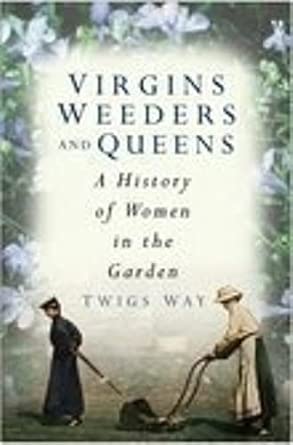
Virgins Weeders and Queens: A History of Women in the Garden First Edition
Author(s): Twigs Way (Author)
Publisher: The History Press
Publication Date: 15 Dec. 2006
Edition: First Edition
Language: English
Print length: 278 pages
ISBN-10: 0750941065
ISBN-13: 9780750941068
Book Description
From the early misfortunes of Eve, condemning her descendants to a dubious reputation for fruit management, to the acclaimed successes of plant breeders such as the eccentric Ellen Willmott who combined bankruptcy with iris breeding, the fortunes of the female gardener have been as varied as their roles.
Telling the tales of the sixteenth-century housewife, who neatly sidestepped accusations of herbal witchcraft while working her plot, and the unconventional Ladies of Llangollen, who eloped together and created their gothic garden and many other women besides, A History of Women in the Garden showcases female horticulturists through the centuries. An enlightening and entertaining read that will allow the reader to gain fresh enthusiasm for even the most menial of garden tasks, and realise that hundreds of women have trod the garden path before.
Editorial Reviews
Book Description
An entertaining history of the role of women in the garden, from Tudor queens to peasant herb wives
From the Author
From the early misfortunes of Eve, condemning her descendants to a dubious reputation for fruit management, to the acclaimed successes of plant breeders such as the eccentric Ellen Willmott who combined bankruptcy with iris breeding; the fortunes of the female gardener have been as varied as their roles. Neatly sidestepping accusations of herbal witchcraft, the sixteenth century housewife worked from dawn to dusk `setting their plot’ whilst their wage earning sisters weeded the beds of royal palaces for 3d a day. Royalty did more than just pay the wages, as the quince and the orange gained popularity from queens anxious to bring exotic fruits to their respective marriage beds, or at least their breakfast tables. Elizabeth I inspired her courtiers to bankruptcy, installing statues and fountains of her alter-ego, Diana the Virgin Huntress in their gardens, whilst she reigned over a spring made eternal. Sexuality and scandal entered the female garden in the eighteenth century. The Ladies of Llangollen eloped together to create a truly gothic garden whilst the Linnaean System turned botany into anything but a `polite’ study. Stamens were emasculated and orchids shunned as the humble, sexless, fern became the mania of the day. Little wonder that those women who dared to venture beyond the conservatory were labelled as eccentric. The call of the floriculture was heard in the cheerless parlours of many a Victorian spinster, giving them an amusement which, in the words of their champion, Louisa Johnson, `lures them from dwelling too deeply upon the unavoidable disappointments and trials of life which sooner or later disturb and disquiet the heart’. But amusement would not satisfy long, and careers were in the minds of students at the first schools for women gardeners. Out to supplant the `inferior, rule-of thumb, slow-thinking, inartistic man-gardener’ whom they had tolerated for so long, garden schools would replace him with `intelligent, educated ladies’ both at home and in the colonies. And then there was always the matter of what to wear . . . This book is, I hope, as enjoyable, enlightening, and entertaining to read as it was to research and write. Woman from all periods of history and all classes of society populate its pages as they populated our gardens in the past. To read them is to gain fresh enthusiasm for even the most menial of garden tasks, realising the hundreds of women that have trod the garden path before!
About the Author
TWIGS WAY has also written Virgins, Weeders & Queens. She is a garden historian and lecturer, and her media work includes Channel 4’s Lost Gardens, BBC Look East, guest presenting for Radio 4 and various newspaper commissions including Cambridgeshire Evening News and The Independent on Sunday.
 Wow! eBook