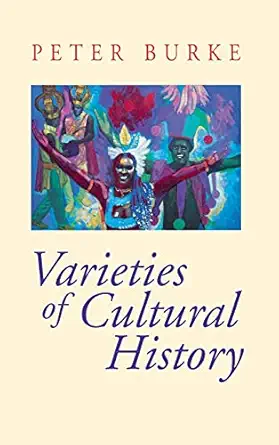
In this collection of essays, of which four are published here for the first time, Peter Burke explores the theory and practice of what is called “new cultural history.” He focuses on the varieties of cultural history which have emerged since the writings of Jacob Burckhardt and Johan Huizinga. No new orthodoxy has emerged to replace the classic model, Burke suggests, despite the importance of innovative approaches inspired by social and cultural anthropology.
After discussing the origins and identity of cultural history, Burke explores the social history of dreams and the relation between history and social memory. He presents five case studies addressing topics in the history of early modern Italy. Each is located on the frontiers of cultural history―between learned and popular culture, between the public and the private spheres, and between the serious and the comic. Burke then turns to the encounter between Europe and the New World and to the phenomenon of cultural translation in the etymological, literal, and metaphorical senses of the term. He concludes with two theoretical investigations: one on the history of mentalities and one which asks why cultural history seems doomed to fragmentation.
Editorial Reviews
About the Author
Peter Burke is Professor of Cultural History at the University of Cambridge and Fellow of Emmanuel College, Cambridge. Among his many books are The Art of Conversation and History and Social Theory, both from Cornell.
The aim of this book is both to illustrate and to discuss some of the main varieties of cultural history which have emerged since the questioning of what might be called its “classic” form, exemplified in the work of Jacob Burckhardt and Johan Huizinga. Among the themes of individual chapters are the history of popular culture, the history of Carnival, the history of mentalities, the history of gestures, the history of jokes, and even the history of dreams.
The emphasis of both the introduction and the case-studies which follow is on the variety of forms taken by cultural history today. The classic model has not been replaced by any new orthodoxy, despite the importance of approaches inspired by social and cultural anthropology. Variety is to be found in the cultures studied as well as among their historians. The case-studies included in the volume come not only from Europe (and in particular from Italy) but also from the New World, especially Brazil. Particular emphasis is placed on the importance of cultural encounters, cultural conflicts, and their consequences, whether these consequences should be described in terms of mixing, syncretism or synthesis.
Written by one of the leading cultural historians in Europe today, this book will be of particular interest to students of early modern Europe, of the encounters between European culture and the New World, and to students and scholars interested in problems of historiography.
Editorial Reviews
From the Inside Flap
The aim of this book is both to illustrate and to discuss some of the main varieties of cultural history which have emerged since the questioning of what might be called its “classic” form, exemplified in the work of Jacob Burckhardt and Johan Huizinga. Among the themes of individual chapters are the history of popular culture, the history of Carnival, the history of mentalities, the history of gestures, the history of jokes, and even the history of dreams.
The emphasis of both the introduction and the case-studies which follow is on the variety of forms taken by cultural history today. The classic model has not been replaced by any new orthodoxy, despite the importance of approaches inspired by social and cultural anthropology. Variety is to be found in the cultures studied as well as among their historians. The case-studies included in the volume come not only from Europe (and in particular from Italy) but also from the New World, especially Brazil. Particular emphasis is placed on the importance of cultural encounters, cultural conflicts, and their consequences, whether these consequences should be described in terms of mixing, syncretism or synthesis.
Written by one of the leading cultural historians in Europe today, this book will be of particular interest to students of early modern Europe, of the encounters between European culture and the New World, and to students and scholars interested in problems of historiography.
From the Back Cover
The aim of this book is both to illustrate and to discuss some of the main varieties of cultural history which have emerged since the questioning of what might be called its “classic” form, exemplified in the work of Jacob Burckhardt and Johan Huizinga. Among the themes of individual chapters are the history of popular culture, the history of Carnival, the history of mentalities, the history of gestures, the history of jokes, and even the history of dreams.
The emphasis of both the introduction and the case-studies which follow is on the variety of forms taken by cultural history today. The classic model has not been replaced by any new orthodoxy, despite the importance of approaches inspired by social and cultural anthropology. Variety is to be found in the cultures studied as well as among their historians. The case-studies included in the volume come not only from Europe (and in particular from Italy) but also from the New World, especially Brazil. Particular emphasis is placed on the importance of cultural encounters, cultural conflicts, and their consequences, whether these consequences should be described in terms of mixing, syncretism or synthesis.
Written by one of the leading cultural historians in Europe today, this book will be of particular interest to students of early modern Europe, of the encounters between European culture and the New World, and to students and scholars interested in problems of historiography.
About the Author
Peter Burke is Professor of Cultural History at the University of Cambridge and Fellow of Emmanuel College, Cambridge.
 Wow! eBook