The Trinity: John F. Kennedy, Lyndon B. Johnson, and Civil Rights in African American Memory

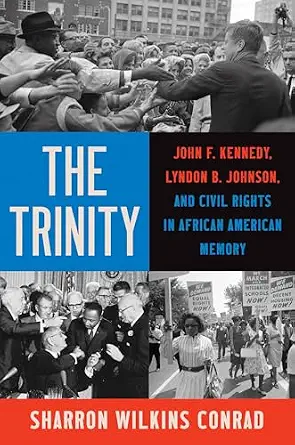
The Trinity: John F. Kennedy, Lyndon B. Johnson, and Civil Rights in African American Memory book cover

The Trinity: John F. Kennedy, Lyndon B. Johnson, and Civil Rights in African American Memory

Author(s): Sharron Wilkins Conrad (Author)

  • Publisher: The University of North Carolina Press
  • Publication Date: June 9, 2026
  • Language: English
  • Print length: 272 pages
  • ISBN-10: 1469694441
  • ISBN-13: 9781469694443

Book Description

A striking triptych once displayed in countless African American households, the Trinity typically features Jesus Christ, Martin Luther King Jr., and John F. Kennedy. More than decoration, these portraits were deliberate acts of memory and quiet resistance, a medium through which African Americans asserted their own narratives of hope, leadership, and the fight for justice.

In this provocative history, Sharron Wilkins Conrad traces the Trinity across several decades, showing how African Americans didn’t merely remember the civil rights movement; they shaped its meaning. The Trinity reveals why Kennedy’s image hung beside King and Christ, while Lyndon B. Johnson, despite signing landmark legislation such as the 1964 Civil Rights Act, remained largely unheralded. Kennedy’s charisma, symbolic promise, and perceived martyrdom placed him among sacred icons, while Johnson—seen as transactional and confronted by the era’s growing impatience—never secured the same emotional legacy. In a gripping exploration of memory and meaning-making, Conrad reveals how communities create historical truths by elevating some leaders, sidelining others, and preserving their own visions in defiance of the official record.


Editorial Reviews

Review

“A groundbreaking examination of Kennedy and Johnson through the eyes of African Americans, weaving grassroots voices, movement history, and media analysis into a vivid, multilayered narrative. Conrad’s archival brilliance and fresh theoretical insights open new avenues for understanding the politics, culture, and civil rights struggles of the 1960s.”—Charles W. McKinney Jr., author of Greater Freedom: The Evolution of the Civil Rights Struggle in Wilson, North Carolina

“A superb, original, and urgently needed history that reshapes our understanding of the civil rights era and presidential leadership. Drawing on largely untapped sources and elevating voices too often unheard, Conrad offers a nuanced, deeply engaging account that will captivate both scholars and general readers.”—Ellen Fitzpatrick, author of The Highest Glass Ceiling: Women’s Quest for the American Presidency

“An enrapturing study that fuses history, memory, and material culture to reveal how African Americans have carried, contested, and reimagined the unfinished legacies of the civil rights struggle and why those memories still burn with urgency today.”—Torren L. Gatson, Middle Tennessee State University

Book Description

The portraits on our walls tell a history all their own.

View on Amazon

{“@context”:”https://schema.org”,”@type”:”Book”,”name”:”The Trinity: John F. Kennedy, Lyndon B. Johnson, and Civil Rights in African American Memory”,”image”:”https://m.media-amazon.com/images/I/51o7XpAXhTL._SY445_SX342_FMwebp_.jpg”,”author”:{“@type”:”Person”,”name”:”Sharron Wilkins Conrad (Author)”},”publisher”:{“@type”:”Organization”,”name”:”The University of North Carolina Press”},”datePublished”:”June 9, 2026″,”isbn”:”9781469694443″,”numberOfPages”:272,”inLanguage”:”English”,”description”:”A striking triptych once displayed in countless African American households, the Trinity typically features Jesus Christ, Martin Luther King Jr., and John F. Kennedy. More than decoration, these portraits were deliberate acts of memory and quiet resistance, a medium through which African Americans asserted their own narratives of hope, leadership, and the fight for justice.In this provocative history, Sharron Wilkins Conrad traces the Trinity across several decades, showing how African Americans didn’t merely remember the civil rights movement; they shaped its meaning. The Trinity reveals why Kennedy’s image hung beside King and Christ, while Lyndon B. Johnson, despite signing landmark legislation such as the 1964 Civil Rights Act, remained largely unheralded. Kennedy’s charisma, symbolic promise, and perceived martyrdom placed him among sacred icons, while Johnson—seen as transactional and confronted by the era’s growing impatience—never secured the same emotional legacy. In a gripping exploration of memory and meaning-making, Conrad reveals how communities create historical truths by elevating some leaders, sidelining others, and preserving their own visions in defiance of the official record.”,”url”:”https://www.amazon.com/dp/1469694441/”,”bookFormat”:”http://schema.org/EBook”,”additionalType”:”http://schema.org/PDF”,”fileSize”:”41 MB”,”accessibilityFeature”:[“login required”,”member access only”],”accessibilitySummary”:”PDF version available to authenticated members only. File size: 41 MB.”}

未经允许不得转载:Wow! eBook » The Trinity: John F. Kennedy, Lyndon B. Johnson, and Civil Rights in African American Memory