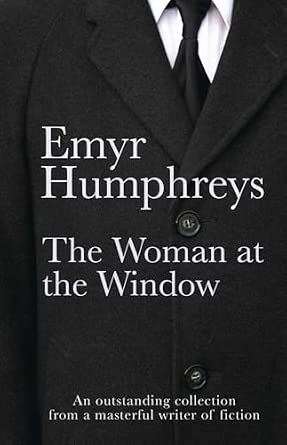
Emyr Humphreys is a major figure in twentieth-century writing and The Woman at the Window is an immensely enjoyable and impressive addition to his outstanding list of award-winning novels and short stories.
From the widow alone in the rectory drawing room to views across the sunny expanses of post-war Europe, celebrated writer Emyr Humphreys offers this urbane, mature collection.
His protagonists look back over the patterns of their lives and forward too, for the chance to untangle family relationships, rekindle lost loves, or find a home for themselves in familiar yet fresh surroundings.
“A Welsh writer of European stature, Emyr Humphreys is at the height of his powers. Like Sandor Marai, he is a lord of irony, whose wry, sage wit and eagle eyesight capture a panorama of the twentieth century, with its fratricidal wars and struggling ideals, in a richly epigrammatic English. And on the human level, this volume speaks, through its cast of fascinating characters, intimately to the reader’s heart.” Stevie Davies
Emyr Humphreys is the author of twenty novels in English and Welsh, and has also published collections of stories and poetry. He has written screenplays and adapted other works for television and radio, in addition to producing and directing in both of those media. His novels have won the Arts Council of Wales Book of the Year, Hawthornden and other prizes.
Editorial Reviews
Review
Select Guide Rating
About the Author
Emyr Humphreys, born in 1919 in Prestatyn, north Wales, is one of the foremost Welsh novelists writing in English. He is the author of over twenty novels, of short story volumes, verse and non-fiction work, and was described by the poet R.S. Thomas as ‘the supreme interpreter of Welsh life’. In the early 40’s, as a conscientious objector, and whilst studying history at the University of Wales, Aberystwyth, he was sent to work on the land during the Second World War. He subsequently went as a war relief worker to the Middle East and then to Italy. In the mid-fifties, he joined BBC Wales as a drama producer, before taking a lectureship in Drama at the University of Wales, Bangor. In 1972, after remarkable success as a young novelist, winning the Somerset Maugham Award for Hear and Forgive (1952) and the Hawthornden Prize for A Toy Epic (1958), his most famous novel, written in both Welsh and English, he embarked on a career as a full-time writer. His work, which has remained true throughout his career to the realist novel, is concerned with goodness, with social and political conscience. Mass culture is an opiate, which the necessarily singular voice of the fiction writer must (in however beleaguered a manner) continue to oppose.’ In his volume of short stories, Old People are a Problem (Seren, 2003), he explores a variety of situations in which the young and the old are obliged to live together at the beginning of the 21st century. His most recent work is The Woman at the Window (Seren, 2009).
 Wow! eBook