 Wow! eBook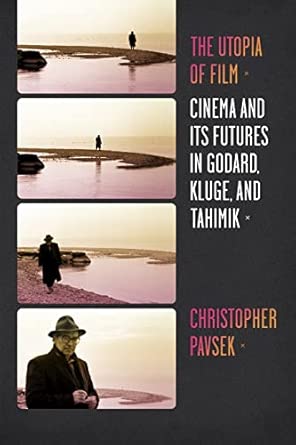
The Utopia of Film: Cinema and Its Futures in Godard, Kluge, and Tahimik
Author(s): Christopher Pavsek (Author)
- Publisher: Columbia University Press
- Publication Date: 29 Jan. 2013
- Edition: Illustrated
- Language: English
- Print length: 304 pages
- ISBN-10: 0231160984
- ISBN-13: 9780231160988
Book Description
The German filmmaker Alexander Kluge has long promoted cinema’s relationship with the goals of human emancipation. Jean-Luc Godard and Filipino director Kidlat Tahimik also believe in cinema’s ability to bring about what Theodor W. Adorno once called a “redeemed world.” Situating the films of Godard, Tahimik, and Kluge within debates over social revolution, utopian ideals, and the unrealized potential of utopian thought and action, Christopher Pavsek showcases the strengths, weaknesses, and undeniable impact of their utopian visions on film’s political evolution. He discusses Godard’s Alphaville (1965) against Germany Year 90 Nine-Zero (1991) and JLG/JLG: Self-portrait in December (1994), and he conducts the first scholarly reading of Film Socialisme (2010). He considers Tahimik’s virtually unknown masterpiece, I Am Furious Yellow (1981-1991), along with Perfumed Nightmare (1977) and Turumba (1983); and he constructs a dialogue between Kluge’s Brutality in Stone (1961) and Yesterday Girl (1965) and his later The Assault of the Present on the Rest of Time (1985) and Fruits of Trust (2009).
Editorial Reviews
Review
Select Guide Rating
About the Author
Christopher Pavsek is associate professor of film in the School for the Contemporary Arts at Simon Fraser University in Vancouver. His films include The One and All (2002) and To Those Born After (2005), and he is the translator of Alexander Kluge’s Learning Processes with a Deadly Outcome.


