 Wow! eBook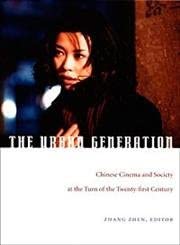
The Urban Generation: Chinese Cinema and Society at the Turn of the Twenty-First Century
Author(s): Zhen Zhang
- Publisher: Duke University Press
- Publication Date: 28 Mar. 2007
- Language: English
- Print length: 464 pages
- ISBN-10: 0822340534
- ISBN-13: 9780822340539
Book Description
The contributors analyze the historical and social conditions that gave rise to the Urban Generation, its aesthetic innovation, and its ambivalent relationship to China’s mainstream film industry and the international film market. Focusing attention on the Urban Generation’s sense of social urgency, its documentary impulses, and its representations of gender and sexuality, the contributors highlight the characters who populate this new urban cinema-ordinary and marginalized city dwellers including aimless bohemians, petty thieves, prostitutes, postal workers, taxi drivers, migrant workers-and the fact that these “floating urban subjects” are often portrayed by non-professional actors. Some essays concentrate on specific films (such as Shower and Suzhou River) or filmmakers (including Jia Zhangke and Zhang Yuan), while others survey broader concerns. Together the thirteen essays in this collection give a multifaceted account of a significant, ongoing cinematic and cultural phenomenon.
Contributors. Chris Berry, Yomi Braester, Shuqin Cui, Linda Chiu-han Lai, Charles Leary, Sheldon H. Lu, Jason McGrath, Augusta Palmer, BÉrÉnice Reynaud, Yaohua Shi, Yingjin Zhang, Zhang Zhen, Xueping Zhong
Editorial Reviews
Review
From the Back Cover
About the Author
Zhang Zhen is Associate Professor of Cinema Studies at New York University. She is the author of An Amorous History of the Silver Screen: Shanghai Cinema, 1896–1937.
Excerpt. © Reprinted by permission. All rights reserved.
the urban generation
Chinese Cinema and Society at the Turn of the Twenty-first Century
DUKE UNIVERSITY PRESS
Copyright © 2007 Duke University Press
All right reserved.
ISBN: 978-0-8223-4053-9
Contents
Acknowledgments……………………………………………………………………………………………………………………….ixIntroduction: Bearing Witness: Chinese Urban Cinema in the Era of “Transformation” (Zhuanxing) ZHANG ZHEN……………………………………..1Rebel without a Cause? China’s New Urban Generation and Postsocialist Filmmaking YINGJIN ZHANG……………………………………………….49The Independent Cinema of Jia Zhangke: From Postsocialist Realism to a Transnational Aesthetic JASON MCGRATH…………………………………..81Getting Real: Chinese Documentary, Chinese Postsocialism CHRIS BERRY………………………………………………………………………115Tear down the City: Reconstructing Urban Space in Contemporary Chinese Popular Cinema and Avant-Garde Art SHELDON H. LU…………………………137Tracing the City’s Scars: Demolition and the Limits of the Documentary Impulse in the New Urban Cinema YOMI BRAESTER……………………………161Scaling the Skyscraper: Images of Cosmopolitan Consumption in Street Angel (1937) and Beautiful New World (1998) AUGUSTA PALMER…………………181Whither the Walker Goes: Spatial Practices and Negative Poetics in 1990s Chinese Urban Cinema LINDA CHIU-HAN LAI……………………………….205Ning Ying’s Beijing Trilogy: Cinematic Configurations of Age, Class, and Sexuality SHUQIN CUI………………………………………………..241Zhang Yuan’s Imaginary Cities and the Theatricalization of the Chinese “Bastards” BRNICE REYNAUD……………………………………………264Mr. Zhao On and O the Screen: Male Desire and Its Discontent XUEPING ZHONG…………………………………………………………………295Maintaining Law and Order in the City: New Tales of the People’s Police YAOHUA SHI………………………………………………………….316Urban Dreamscape, Phantom Sisters, and the Identity of an Emergent Art Cinema ZHANG ZHEN…………………………………………………….344Appendix. The Urban Generation Filmmakers (compiled by Charles Leary)……………………………………………………………………….389Bibliography………………………………………………………………………………………………………………………….411Contributors………………………………………………………………………………………………………………………….429Index………………………………………………………………………………………………………………………………..431
Chapter One
IDEOLOGY, FILM PRACTICE, AND THE MARKET
rebel without a cause?
China’s New Urban Generation and Postsocialist Filmmaking YINGJIN ZHANG
In this chapter I seek to remap the varied landscape of postsocialist Chinese filmmaking since the early 1990s by focusing on the new Urban Generation. In particular I undertake a close reading of Guan Hu’s (b. 1967) debut feature Dirt (Toufa luanle, 1994), a little-known film that is symptomatic of this generation’s existential crisis. In addressing issues such as alienation, nostalgia, and rebellion, Dirt provides an entry point to explore this new generation’s formative years in the mid-1990s, which coincided with a phase of sea change in China’s recent history of postsocialism.
At the beginning of the 1990s, Chinese film production fell into three major categories. First, the state-subsidized and propagandist leitmotif films (zhuxuanl dianying) were to become an increasingly visible presence. Second, the art films (yishu dianying)-less avant-garde than a few years before-were reduced to a shrinking minority in quantity more than in quality. And third, the entertainment (yulepian) or commercial films (shangye dianying), of numerous genres and varied production values, constituted a dominant majority. By the end of the decade, as exemplified by the 1999 season celebrating the fiftieth anniversary of the People’s Republic of China, both art films and entertainment films moved closer to official ideology, while leitmotif films gradually acquired commercial features and successfully recruited several leading art film directors. The result is a new alliance of art, politics, and capital-a powerful new force that has redirected much of the creative energy to the market and at least temporarily compelled “underground” or “independent” directors to try filmmaking inside the studio system. As I elaborate in the conclusion to this essay, co-optation and complicity prevailed in the postsocialist filmmaking of the late 1990s, and the events of 2000-2002 have presented alternatives to an even newer group of filmmakers.
POSTSOCIALISM (AND POST-TIANANMEN): THE VARIED LANDSCAPE OF FILMMAKING
Schematically, in the current scholarship in English the following four concepts of postsocialism can be differentiated: postsocialism as a label of historical periodization; postsocialism as a structure of feelings; postsocialism as a set of aesthetic practices; and postsocialism as a regime of political economy. Paul Pickowicz, the first scholar to connect postsocialism with Chinese cinema, takes for his work hints from Fredric Jameson’s theory of post-modernism and constructs a parallel system in modern China. If the “modern” refers to “postfeudal, bourgeois culture that developed in capitalist societies in eighteenth- and nineteenth-century Europe,” and the “modernist” refers to “avant-garde … culture that arose in the West in the late nineteenth and early twentieth centuries,” then the modernist framework for a study of post-Mao China is neither useful nor productive but simply misleading, especially in light of the long history of delegitimizing modernism in socialist China. For the same reason, Pickowicz strongly resists the postmodernist framework on a historicist ground: “The postmodern framework refers primarily to postindustrial contexts. Postmodernism, that is, presupposes advanced capitalism.” In lieu of postmodernism, Pickowicz endorses the use of postsocialism as “the ideological counterpart of postmodernism.” For him, since “postsocialism presupposes socialism,” this new framework illuminates Chinese culture in the 1980s, which “contained the vestiges of late imperial culture, the remnants of the modern or bourgeois culture of the Republican era, the residue of traditional socialist culture, and elements of both modernism and postmodernism.”
After proposing postsocialism as a periodizing label referring “in large part to a negative, dystopian cultural condition that prevails in late socialist societies,” Pickowicz further defines postsocialism in China as a “popular perception” and “an alienated … mode of thought and behavior” that certainly predate the death of Mao. Postsocialism, in this definition, appears to be a structure of feelings that remained repressed in the Mao years but has found vocal articulation in the post-Mao era, with alienation and disillusion as its two thematic foci. In a study of Huang Jianxin’s first urban trilogy, Pickowicz regards Black Cannon Incident (Heipao shijian, 1985) as a postsocialist critique of the Leninist political system, Dislocation (Cuowei, 1986) as a parody that links postsocialism to a theater of the absurd, and Transmigration (Lunhui, 1988) as a story of individual resignation and anomie in the postsocialist society. Elsewhere, Pickowicz uses The Troubleshooters (Wanzhu, 1988; dir. Mi Jiashan) and The Price of Frenzy (Fengkuang de daijia, 1988; dir. Zhou Xiaowen) as further examples of postsocialist urban cinema. From the perspective of the political economy of filmmaking in the reform era, Pickowicz concludes that the post-Tiananmen scene was a jumble of contradictions, where quasi-dissident filmmakers like Zhang Yimou and Chen Kaige specialized in reverse orientalism; the “Sixth Generation” (diliudai) directors like Zhang Yuan (b. 1961) and He Yi (He Jianjun, b. 1960) produced films outside the studio system; and even crude propaganda works sometimes would undermine state power.
Pickowicz’s study illustrates that, as a structure of feelings, postsocialism could be articulated in a wide spectrum of cinematic works. Even the earlier post-Mao films by the renowned Third Generation director Xie Jin would qualify as postsocialism to the extent that they express an alienated mode of thought and behavior. For this reason, postsocialism may be further conceived of as a set of alternative aesthetic practices adopted by directors of various generations-alternative, that is, to the dominant mode of socialist realism in the Mao years. In the category of urban cinema, Black Snow (Benming nian, 1989; dir. Xie Fei) thus predates the Sixth Generation in its treatment of disillusion and pessimism by way of following a marginalized exprisoner in his fatal struggle in a new urban society generated by the emerging market economy. In expanding Pickowicz’s notions of postsocialism to include cinematic styles, Chris Berry and Mary Ann Farquhar raise the following pressing questions: “Can postsocialism be seen as a complement to postmodernism? Is its pastiche of other styles, its ambiguity and play, part of an aesthetic parallel to postmodernism?” In other words, can we ever adequately address the question of postsocialism without confronting its haunting other-postmodernism?
For Arif Dirlik and Xudong Zhang, the answer to the latter question is definitely negative. “What we need to keep in mind,” they argue, is “that the postmodern is also the postrevolutionary and the postsocialist.” The ensuing conception of postsocialism is that of a new regime of political economy, which includes all conceivable aspects of a changing socioeconomic condition responsible for the formation of the postmodern in contemporary China. This explains why Xudong Zhang proceeds to analyze a vast array of issues in his double mapping of postmodernism and postsocialism in contemporary China. These issues range from the ambiguity of reforms, overproduction crises, the utopian impulse of Sino-Marxism (especially Maoism), the shared space between the state and civil society, market madness and plebeian excess, as well as political anxieties of intellectuals now divided into several contending ideological camps. Chinese postmodernism, he concludes, “emerges with the anxiety-causing intensification and articulation of economic-social-class-political-ideological differentiations, contradictions, polarization, and fragmentation of Chinese society”-a society that is unequivocally characterized as “postsocialist.”
My brief summary here of the recent scholarship on postsocialism is meant to delineate it not as a singular concept governing the entire post-Mao era (i.e., from 1977 onward); rather, I envision postsocialism as a varied landscape of culture in post-Mao China against which filmmakers of different generations, aesthetic aspirations, and ideological persuasions struggle to readjust or redefine their different strategic positions in different social, political, and economic situations. My emphasis on difference derives from my conviction that the period in which the Sixth Generation came into being marks a new regime of political economy and therefore constitutes a new chapter of cultural history in contemporary China. Sometimes labeled “post-New Era” (hou xinshiqi), this post-Tiananmen period-namely, the period subsequent to the government’s crackdown on the prodemocratic student demonstration on June 4, 1989-differs significantly from the New Era studied by Pickowicz and others. Consequently, filmmaking in the post-Tiananmen period demands paying attention to different configurations of cultural production, artistic pursuit, political control, ideological positioning, and institutional restructuring.
Difference, indeed, has been frequently used as a marker to distinguish the Sixth Generation as a unique group in postsocialist China. Critics have established a list of binary oppositions to highlight the differences between the Fifth and the Sixth generations. Whereas the former is associated with rural landscape, traditional culture, ethnic spectacle, grand epic, historical reflection, allegorical framework, communal focus, and depth of emotion, the latter is sided with the urban milieu, modern sensitivity, narcissistic tendency, initiation tales, documentary effects, contingent situation, individualistic perception, and precarious moods. Ostensibly, markers of difference like these, together with their unofficial or semiofficial production, do not favor the Sixth Generation as the standard-bearer of postsocialism in terms of aesthetic practices. But these distinctions nonetheless characterize these young directors as among the most experimental in the 1990s when the Fifth Generation -many of whom were avant-garde auteurs themselves in the mid- and late 1980s-had reverted to more traditional genres and styles such as the tear-jerker melodrama and the spectacular historical epic.
What makes the works of the Sixth Generation more symptomatic of post-socialism than their predecessors is their institutionally imposed but self-glorified status of marginality in a crucial turning point in postsocialism as a regime of political economy. After the government had launched the program of wholesale market economy and had instituted a series of reforms in the post-Tiananmen era, the Sixth Generation entered the film market in confrontation (not yet quite in competition) with several major forces in film production. The mainstream or leitmotif film was given substantial state subsidies in the wake of Tiananmen. The art film as practiced by the leading figures of the earlier generations continued to attract transnational capital (from Hong Kong, Taiwan, and Japan, for instance). In the meantime, cheap commercial films (especially comedies and martial arts movies) flooded the market, and by the mid-1990s some leading studios had teamed up with private investors and coproduced films of high artistic values and box office appeal, such as Red Cherry (Hong yingtao, 1995; dir. Ye Daying).
Yet underground operation constitutes but only one set of the strategies deployed by the young directors. What is less known-or intentionally ignored -in the Western media is that many new graduates from the Beijing Film Academy and other institutions have retained nominal affiliations with their assigned units. In addition to Guan Hu, the Beijing Film Studio listed on its staff other active young directors such as Lu Xuechang (b. 1964) and Zhang Yang (b. 1967). By the mid-1990s, several of their films were approved for public release in China. Guan’s Dirt was joined by Lou Ye’s (b. 1965) Weekend Lovers (Zhoumo qingren, 1994), Lu Xuechang’s The Making of Steel (Zhangda chengren, 1995), Wang Rui’s (b. 1962) No Visit after the Divorce (Lihun le, jiu bie zailai zhaowo, 1995), Wu Di’s (b. 1970) Yellow Goldfish (Huang jinyu, 1995), and Zhang Ming’s (b. 1961) Rainclouds over Wushan (Wushan yunyu, 1995).
Situated in this brand-new political-economic regime, the Sixth Generation is itself a cultural phenomenon made possible by the postsocialist market economy, which developed rapidly in the 1990s in full complicity with transnational capitalism and which values the ideology of entrepreneurship. Somewhat ironically, underground filmmaking may be treated as a byproduct -even if unintentional-of postsocialism in the 1990s because, as entrepreneurs themselves, “independent” filmmakers turned their financial disadvantages into ideological advantages and negotiated their ways through the cracks and fissures opened up by the market economy. Relaxed state regulations enabled them to become independent in the first place, notably by being able to rent film equipment and facilities and deal directly-albeit unofficially-with overseas distribution agents. Nonetheless, given their initial dependence on state equipment for production and their reliance on international film festival circles for exhibition, the status of the Sixth Generation’s as “independent” filmmakers is rather dubious.
The qualified existence of the Sixth Generation as “independent” filmmakers leads back to postsocialism as a periodizing concept. Even in an attempt to set a starting date or a high point for postsocialism (as Pickowicz did in his work of the mid-1990s), it is evident that postsocialism as delineated in this chapter is a reality evolving along an unexplored path and toward an uncertain future. As such postsocialism has remained a source of anxiety that continues to generate feelings of deprivation, disillusion, despair, disdain, and sometimes even indignation and outrage. To explore feelings like these, I now turn to Dirt as a text symptomatic of the Sixth Generation in their formative years.
DIRT: HISTORY AND MEMORY IN RUINS
Guan Hu started his career by making the second choice for independently minded filmmakers mentioned above: by pursuing a major studio label. In 1991, he managed to obtain an investment of 800,000 yuan (roughly US$100,000) from the Golden Bridge International Trading Company, a subsidiary of Sino-Chemicals (Zhonghua), through the connections of the actress Kong Lin. With her prominent roles in the films Bloody Morning (Xuese qingchen, 1990; dir. Li Shaohong) and Raise the Red Lantern (Da hong denglong gaogao gua, 1991; dir. Zhang Yimou), both internationally released and acclaimed, Kong had acquired enough star power for fund-raising purposes. After paying the Inner Mongolian Studio 150,000 yuan for the studio label fees (an amount that although 18.75 percent of their budget was cheaper than other big-name studios), Guan Hu assembled a crew and a cast (whose average age was twenty-four) and started in May 1992 to work on what he envisioned to be the first Chinese MTV-style rock feature.
Dirt opens with a full screen of Mao Zedong’s celebrated quotation during the Cultural Revolution: “The world belongs to you as well as to us; but it is eventually yours. You youngsters … are like the rising sun. Hope is rested on your shoulders.” A group of children gather at a neighbor’s house and play a record of the Beatles song “Hey Jude”:
Hey Jude, don’t make it bad. Take a sad song and make it better. Remember to let her into your heart, Then you can start to make it better.
(Continues…)
Excerpted from the urban generation Copyright © 2007 by Duke University Press. Excerpted by permission.
All rights reserved. No part of this excerpt may be reproduced or reprinted without permission in writing from the publisher.
Excerpts are provided by Dial-A-Book Inc. solely for the personal use of visitors to this web site.


