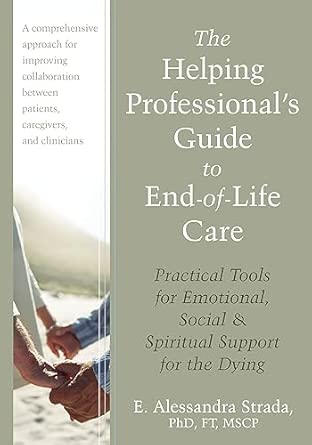
The Helping Professional's Guide to End-of-Life Care: Practical Tools for Emotional, Social, and Spiritual Support for the Dying
Author(s): E. Strada (Author)
Publisher: New Harbinger
Publication Date: 21 Feb. 2013
Edition: 1st
Language: English
Print length: 256 pages
ISBN-10: 1608821994
ISBN-13: 9781608821990
Book Description
Nearly half of people at the end of life will receive hospice care, but few psychologists, nurses, physicians, chaplains, and hospice workers have been trained specifically to recognize and address the psychological, social, and emotional issues that may arise in patients who are dying. Patients in the midst of advanced terminal illness may experience a variety of distressing emotions, and may feel anxious, frightened, regretful, or desperate. This guide was created specifically to guide helping professionals of all kinds through the process of working through patients’ psychological issues to allow them peace and comfort in their final moments.
The Helping Professional’s Guide to End of Life Care clarifies the spiritual and emotional care that patients need and presents an evidence based approach integrating cognitive behavioral therapy (CBT), transpersonal psychotherapy, hypnosis, mindfulness, and guided imagery to help patients manage emotional distress at the end of life. Through case conceptualizations and detailed treatment planning guidance, readers learn to formulate comprehensive assessment and treatment plans for patients and gain skills that will help them manage the emotional intensity of this work.
This secular, professional treatment model can be applied to patients of any religious or spiritual background. The book also addresses integrating the patient’s therapeutic team with the medical team, addressing the emotional needs of friends and family of the dying, crisis intervention for suicidal patients, working with clients on psychotropic medications, and how helping professionals can manage their own emotions to become more effective clinicians.
Editorial Reviews
Review
“Comprehensive and inspirational. Strada provides real-life examples in a way that encourages both self-reflection and development. A must-have book for members of the palliative care team.” –Serife Eti, MD, program director of the Fellowship in Hospice and Palliative Medicine in the department of pain medicine and palliative care at Beth Israel Medical Center, New York, NY
“A deeply compassionate book. Strada speaks from the heart and from her extensive experience as a psychologist. Her words point toward a path of healing–for the dying, for their loved ones, and for those professionals who accompany them on their journey.” –James Hallenbeck, MD, author of “Palliative Care Perspectives”
“This book is a gift from an inspiring and extremely skillful psychologist and palliative care practitioner. E. Alessandra Strada provides clinicians with the information, attitudes, insights, and skills needed to provide more effective, competent, and compassionate care to patients and their family members who are facing advancing disease. Her writing style models the clarity and compassion that is essential to guide all clinicians to help provide optimal end-of-life care.” –William Breitbart, MD, chairman of the department of psychiatry and behavioral sciences at Memorial Sloan-Kettering Cancer Center, New York, NY
Book Description
Comprehensive guide for professionals caring for the elderly.
About the Author
E. Alessandra Strada, PhD, is attending psychologist in the department of pain medicine and palliative care at Beth Israel Medical Center in new York City. She is assistant professor of neurology and psychiatry at the Albert Einstein College of Medicine and assistant professor of East-West psychology at the California Institute of Integral Studies in San Francisco, CA. Her clinical and research interests have focused on psychological and spiritual care of patients with advanced and terminal illness and patients with chronic pain. Her treatment approaches include the integrated use of psychodynamic, existential, and insight-oriented approaches with cognitive behavioral therapy, guided imagery, mindfulness, and meditation.
 Wow! eBook