Wow! eBook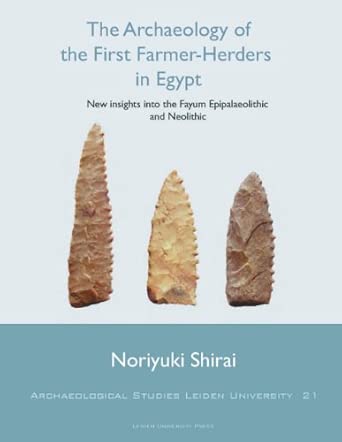
The Archaeology of the First Farmer-Herders in Egypt: New insights into the Fayum Epipalaeolithic and Neolithic: 21
Author(s): Noriyuki Shirai (Author)
- Publisher: Leiden University Press
- Publication Date: 17 Mar. 2010
- Edition: 1st
- Language: English
- Print length: 402 pages
- ISBN-10: 9087280793
- ISBN-13: 9789087280796
Book Description
The Archaeology of the First Farmer-Herders in Egypt explores how and why farming and herding started in the Fayum, which is a large oasis with a permanent lake in the Egyptian Western Desert. Noriyuki Shirai’s research on lithic artefacts used by the Epipalaeolithic hunter-fishers and Neolithic famer-herders in the Fayum gives a clue as to the mobility and residential strategy of the Fayum people and their time and labour investments in tool production. The Neolitic famer-herders ( 6th C.B.C.E.) relied heavily on hunting and fishing, which had been the major subsistence activities since the Epipalaeolithic period. Lithic evidence, as Shirai proves, suggests that the Fayum people were not nomadic but were tethered to lakeshores.Archaeological Studies Leiden University (ASLU) is a series of the Faculty of Archaeology, Leiden University since 1998.The series’ aim is to publish Research and PhD theses of Archaeology and covers the international research fields of European Prehistory, Classical-, Near Eastern- Indian American- and Science-based Archaeology.
Editorial Reviews
From the Back Cover
The Archaeology of the First Farmer-Herders in Egypt explores how and why farming and herding started in the Fayum, which is a large oasis with a permanent lake in the Egyptian Western Desert. Noriyuki Shirai’s research on lithic artefacts used by the Epipalaeolithic hunter-fishers and Neolithic famer-herders in the Fayum gives a clue as to the mobility and residential strategy of the Fayum people and their time and labour investments in tool production. The Neolitic famer-herders ( 6th C.B.C.E.) relied heavily on hunting and fishing, which had been the major subsistence activities since the Epipalaeolithic period. Lithic evidence, as Shirai proves, suggests that the Fayum people were not nomadic but were tethered to lakeshores.
Archaeological Studies Leiden University (ASLU) is a series of the Faculty of Archaeology, Leiden University since 1998. The series’ aim is to publish Research and PhD theses of Archaeology and covers the international research fields of European Prehistory, Classical-, Near Eastern- Indian American- and Science-based Archaeology.
About the Author
Noriyaki Shirai is a PhD researcher at the Faculty of Archaology at Leiden University.