 Wow! eBook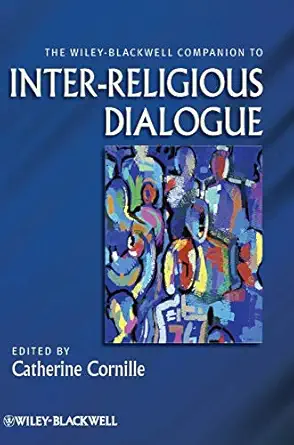
The Wiley-Blackwell Companion to Inter-Religious Dialogue
Author(s): Catherine Cornille
- Publisher: Wiley-Blackwell
- Publication Date: March 2, 2013
- Edition: 2013th
- Language: English
- Print length: 254 pages
- ISBN-10: 1461465362
- ISBN-13: 9781461465362
Book Description
The turbulent year of 2011 has brought the appearance of mass popular unrest and the collapse of long lived autocratic regimes in Egypt, Tunisia, Libya and possibly Syria. The sudden and unanticipated fall of these regimes – often thought of as exemplars of authoritarian resilience – has brought much of the conventional wisdom on the durability and vulnerability of nondemocratic regimes into question. This book seeks to advance the existing literature by treating the autocratic state not as a unitary actor characterized by strength or weakness but rather as a structure or terrain that can alternatively inhibit or facilitate the appearance of national level forms of protests. In the mode of the Arab Spring, the color revolutions of the former Soviet Union, and the people power movement of the Philippines, such movements overcome the daunting impediments presented by autocrats, appeal to likeminded counterparts across society, and overwhelm the ability of regimes to maintain order. Conversely, in other settings, such as contemporary China, decentralized state structures provide an inhospitable environment for national-level protest, leading collective actors to opt for more local and parochial forms of contention. This outcome produces paradoxical situations, such as in the PRC, where protests are frequent but national-level mobilization and coordination is absent.
Editorial Reviews
From the Back Cover
The turbulent year of 2011 has brought the appearance of mass popular unrest and the collapse of long lived autocratic regimes in Egypt, Tunisia, Libya and possibly Syria. The sudden and unanticipated fall of these regimes – often thought of as exemplars of authoritarian resilience – has brought much of the conventional wisdom on the durability and vulnerability of nondemocratic regimes into question. This book seeks to advance the existing literature by treating the autocratic state not as a unitary actor characterized by strength or weakness but rather as a structure or terrain that can alternatively inhibit or facilitate the appearance of national level forms of protests. In the mode of the Arab Spring, the color revolutions of the former Soviet Union, and the people power movement of the Philippines, such movements overcome the daunting impediments presented by autocrats, appeal to likeminded counterparts across society, and overwhelm the ability of regimes to maintain order. Conversely, in other settings, such as contemporary China, decentralized state structures provide an inhospitable environment for national-level protest, leading collective actors to opt for more local and parochial forms of contention. This outcome produces paradoxical situations, such as in the PRC, where protests are frequent but national-level mobilization and coordination is absent.


