 Wow! eBook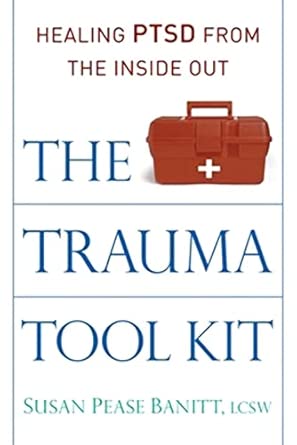
The Trauma Tool Kit: Healing Ptsd from the Inside out Original Edition
Author(s): Susan Pease Banitt (Author)
- Publisher: Quest Books,U.S.
- Publication Date: 20 May 2012
- Edition: Original
- Language: English
- Print length: 312 pages
- ISBN-10: 0835608964
- ISBN-13: 9780835608961
Book Description
2013 Nautilus Silver Award Winner!
In 2010 the Department of Veterans Affairs cited 171,423 Iraq and Afghanistan war veterans diagnosed with PTSD, out of 593,634 total patients treated. That’s almost 30 percent; other statistics show 35 percent. Nor, of course, is PTSD limited to the military. In twenty years as a therapist, Susan Pease Banitt has treated trauma in patients ranging from autistic children to women with breast cancer; from underage sex slaves to adults incapacitated by early childhood abuse. Doctors she interviewed in New York report that, even before 9/11, most of their patients had experienced such extreme stress that they had suffered physical and mental breakdowns. Those doctors agree with Pease Banitt that stress is the disease of our times. At the 2009 Evolution of Psychotherapy conference Jack Kornfield noted, We need a trauma tool kit. Here it is.
Most people, Pease Banitt says, experience trauma as a terminal blow to their deepest sense of self. Her techniques restore a sense of wholeness at the core level from which all healing springs. The uniqueness of her book lies in its diversity and accessibility. She assesses the values and limitations of traditional and alternative therapies and suggests methods that are universally available. Almost anybody can grow some lavender in a pot, she notes, or find a tree to sit under, a journal to write in, or Epsom Salts in which to soak. They can learn exercises of the mind and breath work to regulate the body. Besides such resources, Pease Banitt’s tools for healing include:
- Skills to build a first-aid kit to respond to any traumatic event
- Insight into the causes of stress mentally and physically
- Motivation to deal with stress sooner rather than later
- An insider’s knowledge about maintaining health
- The ability to make good decisions for effective interventions
- Increased resilience to overwhelming events
She closes with a look at public policy and public health issues and the need for new therapeutic models. If trauma is the disease of our time, then healing from trauma individually and globally can pave the way for a brighter future. This book provides the tools.
Editorial Reviews
Review
— Ainslie MacLeod, author of “The Instruction” and “The Transformation”
“”The Trauma Tool Kit” is an extremely important book in a very young field –the discipline of helping people heal from trauma using yoga therapeutics. Not only will it serve as the seminal work in this practice, it will remain an example of the highest quality, and at the
same time, a profoundly useful guide for front line therapists, case workers and trauma specialists. Ta
“2013 Nautilus Silver Award Winner!”
“In “The Trauma Tool Kit” Susan Pease Banitt concentrates on the physical, spiritual and esoteric dimensions of trauma usually ignored by our mainstream culture and healing practices. She presents universal dimensions of traumatic injury and recovery as they have been modeled in spiritual and holistic traditions for millennia as well as integrative methods practiced by holistic healers today. “The Trauma Tool Kit” is a readable, accessible, comprehensive, ‘user-friendly’ smorgasbord of healing ideas, information and practices that can help guide trauma survivors to wholeness. Susan Pease Banitt is consistently positive, encouraging and helpful as she guides readers in restoring healing and hope.” –Edward Tick, Ph.D., author, “War and the Soul” and “The Practice of Dream Healing,” Director, Soldier’s Heart
“”The Trauma Tool Kit” is a truly excellent book. Susan Pease Banitt combines her practical experience as a clinical social worker with her extensive knowledge of ancient and modern spirituality to create a fascinating guide to healing the often unrecognized symptoms of stress. Open this book at any page and you’ll find something to draw you in and keep you reading. It truly is a toolbox, packed full of useful information, not just for those suffering from PTSD, but for anyone interested in personal and spiritual growth.” — Ainslie MacLeod, author of “The Instruction” and “The Transformation”
“”The Trauma Tool Kit” is an extremely important book in a very young field –the discipline of helping people heal from trauma using yoga therapeutics. Not only will it serve as the seminal work in this practice, it will remain an example of the highest quality, and at the
same time, a profoundly useful guide for front line therapists, case workers and trauma specialists. Tapping into deep clinical experience while at the same time bringing to contemporary audiences the profound details from the science of yoga, Susan Pease Banitt’s “The Trauma Tool Kit” is professional, thorough, easy to read and totally practical. It will not live on people’s shelves, but will be well read (and re-read) for many years to come.” — Mark Lilly, founder of Street Yoga
“”The Trauma Tool Kit” has the potential to unlock lifelong trauma and buried feelings, to empower both men and women to access the routemaps to their authentic selves. It’s a blueprint for recovery, plain speaking but esoteric. Her style and own journey embody all that is good in east and west. An important book for our times.” — –Farah Damji, author of “Try Me”
“Post Traumatic Stress Disorder (PTSD) is a human event of such enormous repercussions that it envelops both mind and body. According to Susan Pease Banitt, in her book “The Trauma Tool Kit: Healing PTSD From the Inside Out,” “PTSD is a whole-body tragedy.”
Western medicine has traditionally treated psychological trauma as an issue of the mind and psyche. However, today it is becoming more understood that stress and trauma affect the entire human organism, including physical health.
Banitt encourages people who have been traumatized, whether they are returning soldiers, child-abuse survivors, or others in recovery from trauma, to realize the complexity of their experiences and work on their own rehabilitation.” –Penny Hastings, excerpted from “ForeWord Reviews,” Spring 2012
“In “The Trauma Tool Kit” Susan Pease Banitt concentrates on the physical, spiritual and esoteric dimensions of trauma usually ignored by our mainstream culture and healing practices. She presents universal dimensions of traumatic injury and recovery as they have been modeled in spiritual and holistic traditions for millennia as well as integrative methods practiced by holistic healers today. “The Trauma Tool Kit” is a readable, accessible, comprehensive, ‘user-friendly’ smorgasbord of healing ideas, information and practices that can help guide trauma survivors to wholeness. Susan Pease Banitt is consistently positive, encouraging and helpful as she guides readers in restoring healing and hope.”
–Edward Tick, Ph.D., author of “War and the Soul” and “The Practice of Dream Healing,” and Director of “Soldier’s Heart”
About the Author
,"datePublished":"20 May 2012","isbn":"9780835608961","numberOfPages":312,"inLanguage":"English","description":"2013 Nautilus Silver Award Winner!In 2010 the Department of Veterans Affairs cited 171,423 Iraq and Afghanistan war veterans diagnosed with PTSD, out of 593,634 total patients treated. That's almost 30 percent; other statistics show 35 percent. Nor, of course, is PTSD limited to the military. In twenty years as a therapist, Susan Pease Banitt has treated trauma in patients ranging from autistic children to women with breast cancer; from underage sex slaves to adults incapacitated by early childhood abuse. Doctors she interviewed in New York report that, even before 9/11, most of their patients had experienced such extreme stress that they had suffered physical and mental breakdowns. Those doctors agree with Pease Banitt that stress is the disease of our times. At the 2009 Evolution of Psychotherapy conference Jack Kornfield noted, We need a trauma tool kit. Here it is.Most people, Pease Banitt says, experience trauma as a terminal blow to their deepest sense of self. Her techniques restore a sense of wholeness at the core level from which all healing springs. The uniqueness of her book lies in its diversity and accessibility. She assesses the values and limitations of traditional and alternative therapies and suggests methods that are universally available. Almost anybody can grow some lavender in a pot, she notes, or find a tree to sit under, a journal to write in, or Epsom Salts in which to soak. They can learn exercises of the mind and breath work to regulate the body. Besides such resources, Pease Banitt's tools for healing include: Skills to build a first-aid kit to respond to any traumatic eventInsight into the causes of stress mentally and physicallyMotivation to deal with stress sooner rather than laterAn insider's knowledge about maintaining healthThe ability to make good decisions for effective interventionsIncreased resilience to overwhelming eventsShe closes with a look at public policy and public health issues and the need for new therapeutic models. If trauma is the disease of our time, then healing from trauma individually and globally can pave the way for a brighter future. This book provides the tools.","bookEdition":"Original","url":"https://www.amazon.co.uk/dp/0835608964/","bookFormat":"http://schema.org/EBook","additionalType":"http://schema.org/PDF","fileSize":"64 MB","accessibilityFeature":["login required","member access only"],"accessibilitySummary":"PDF version available to authenticated members only. File size: 64 MB."}


