Wow! eBook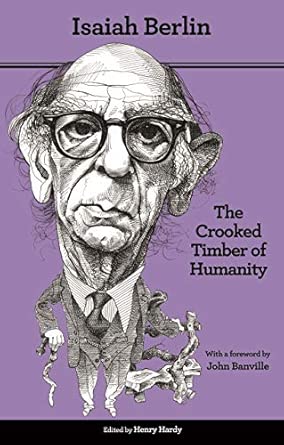
The Crooked Timber of Humanity – Chapters in the History of Ideas – 2nd Edition
Author(s): Isaiah Berlin (Author), Henry Hardy (Author), John Banville (Author)
- Publisher: Princeton University Press
- Publication Date: 19 April 2016
- Edition: 2nd
- Language: English
- Print length: 384 pages
- ISBN-10: 9780691155937
- ISBN-13: 9780691155937
Book Description
“Out of the crooked timber of humanity, no straight thing was ever made.”–Immanuel Kant
Isaiah Berlin was one of the most important philosophers of the twentieth century–an activist of the intellect who marshaled vast erudition and eloquence in defense of the endangered values of individual liberty and moral and political plurality. In The Crooked Timber of Humanity he exposes the links between the ideas of the past and the social and political cataclysms of our own time: between the Platonic belief in absolute truth and the lure of authoritarianism; between the eighteenth-century reactionary ideologue Joseph de Maistre and twentieth-century Fascism; between the romanticism of Schiller and Byron and the militant–and sometimes genocidal–nationalism that convulses the modern world.
This new edition features a revised text that supplants all previous versions, a new foreword in which award-winning novelist John Banville discusses Berlin’s life and ideas, particularly his defense of pluralism, and a substantial new appendix that provides rich context, including letters by Berlin and previously uncollected writings, most notably his virtuoso review of Bertrand Russell’s A History of Western Philosophy.
Editorial Reviews
Review
“As a historian of ideas, [Berlin] has no equal; and what he has to say is expressed in prose of exceptional lucidity and grace.”
—Anthony Storr, Independent on Sunday“Overwhelming intelligence . . . [Berlin’s] mind is captivating . . . His reflections . . . strike at the heart of our most parroted beliefs.”– “Washington Post Book World”
“The perfect guide through the complex radical changes that have swept Western societies . . . A brilliant, convincing work . . . humane, compassionate, important.”– “San Francisco Chronicle”
About the Author
Excerpt. © Reprinted by permission. All rights reserved.
THE CROOKED TIMBER OF HUMANITY
CHAPTERS IN THE HISTORY OF IDEAS
By ISAIAH BERLIN, Henry Hardy
PRINCETON UNIVERSITY PRESS
Copyright © 2013 Isaiah Berlin
All rights reserved.
ISBN: 978-0-691-15593-7
Contents
Foreword by John Banville…………………………………………..xiEditor’s Preface…………………………………………………..xixNote on References…………………………………………………xxviThe Pursuit of the Ideal……………………………………………1The Decline of Utopian Ideas in the West……………………………..21Giambattista Vico and Cultural History……………………………….51Alleged Relativism in Eighteenth-Century European Thought………………73Joseph de Maistre and the Origins of Fascism………………………….95Appendix: Violence and Terror……………………………………….178European Unity and Its Vicissitudes………………………………….186The Apotheosis of the Romantic Will: The Revolt against the Myth of an
Ideal World……………………………………………………….219The Bent Twig: On the Rise of Nationalism…………………………….253Appendix to the Second Edition………………………………………279Index…………………………………………………………….335
Excerpt
CHAPTER 1
The Pursuit of the Ideal
I
There are, in my view, two factors that, above all others,have shaped human history in the twentieth century. One is thedevelopment of the natural sciences and technology, certainlythe greatest success story of our time – to this, great and mountingattention has been paid from all quarters. The other, withoutdoubt, consists in the great ideological storms that have alteredthe lives of virtually all mankind: the Russian Revolution and itsaftermath – totalitarian tyrannies of both right and left and theexplosions of nationalism, racism and, in places, religious bigotrywhich, interestingly enough, not one among the most perceptivesocial thinkers of the nineteenth century had ever predicted.
When our descendants, in two or three centuries’ time (ifmankind survives until then), come to look at our age, it is thesetwo phenomena that will, I think, be held to be the outstandingcharacteristics of our century – the most demanding of explanationand analysis. But it is as well to realise that these greatmovements began with ideas in people’s heads: ideas about whatrelations between men have been, are, might be and should be;and to realise how they came to be transformed in the name ofa vision of some supreme goal in the minds of the leaders, aboveall of the prophets with armies at their backs. Such ideas are thesubstance of ethics. Ethical thought consists of the systematicexamination of the relations of human beings to each other, theconceptions, interests and ideals from which human ways oftreating one another spring, and the systems of value on whichsuch ends of life are based. These beliefs about how life shouldbe lived, what men and women should be and do, are objects ofmoral enquiry; and when applied to groups and nations, and, indeed,mankind as a whole, are called political philosophy, whichis but ethics applied to society.
If we are to hope to understand the often violent world inwhich we live (and unless we try to understand it, we cannotexpect to be able to act rationally in it and on it), we cannotconfine our attention to the great impersonal forces, naturaland man-made, which act upon us. The goals and motives thatguide human action must be looked at in the light of all thatwe know and understand; their roots and growth, their essence,and above all their validity, must be critically examined withevery intellectual resource that we have. This urgent need, apartfrom the intrinsic value of the discovery of truth about humanrelationships, makes ethics a field of primary importance.Only barbarians are not curious about where they come from,how they came to be where they are, where they appear to begoing, whether they wish to go there, and if so, why, and if not,why not.
The study of the variety of ideas about the views of life thatembody such values and such ends is something that I have spentforty years of my long life in trying to make clear to myself. Ishould like to say something about how I came to becomeabsorbed by this topic, and particularly about a turning-pointwhich altered my thoughts about the heart of it. This will,to some degree, inevitably turn out to be somewhat auto biographical– from this I offer my apologies, but I do not knowhow else to give an account of it.
II
When I was young I read War and Peace by Tolstoy, much tooearly. The real impact on me of this great novel came only later,together with that of other Russian writers, both novelists andsocial thinkers, of the mid-nineteenth century. These writersdid much to shape my outlook. It seemed to me, and still does,that the purpose of these writers was not principally to giverealistic accounts of the lives and relationships to one another ofindividuals or social groups or classes, not psychological or socialanalysis for its own sake – although, of course, the best of themachieved precisely this, incomparably. Their approach seemedto me essentially moral: they were concerned most deeply withwhat was responsible for injustice, oppression, falsity in humanrelations, imprisonment whether by stone walls or conformism– unprotesting submission to man-made yokes – moral blindness,egoism, cruelty, humiliation, servility, poverty, helplessness,bitter indignation, despair on the part of so many. In short, theywere concerned with the nature of these experiences and theirroots in the human condition: the condition of Russia in thefirst place, but, by implication, of all mankind. And converselythey wished to know what would bring about the opposite ofthis, a reign of truth, love, honesty, justice, security, personalrelations based on the possibility of human dignity, decency,independence, freedom, spiritual fulfilment.
Some, like Tolstoy, found this in the outlook of simple people,unspoiled by civilisation; like Rousseau, he wished to believe thatthe moral universe of peasants was not unlike that of children,not distorted by the conventions and institutions of civilisation,which sprang from human vices – greed, egoism, spiritual blindness;that the world could be saved if only men saw the truththat lay at their feet; if they but looked, it was to be found inthe Christian gospels, the Sermon on the Mount. Others amongthese Russians put their faith in scientific rationalism, or in socialand political revolution founded on a true theory of historicalchange. Others again looked for answers in the teachings of theOrthodox theology, or in liberal Western democracy, or in areturn to ancient Slav values, obscured by the reforms of Peterthe Great and his successors.
What was common to all these outlooks was the belief thatsolutions to the central problems existed, that one could discoverthem, and, with sufficient selfless effort, realise them on earth.They all believed that the essence of human beings was to be ableto choose how to live: societies could be transformed in the lightof true ideals believed in with enough fervour and dedication.If, like Tolstoy, they sometimes thought that man was not trulyfree but determined by factors outside his control, they knewwell enough, as he did, that if freedom was an illusion it was onewithout which one could not live or think. None of this was partof my school curriculum, which consisted of Greek and Latinauthors, but it remained with me.
When I became a student at the University of Oxford, I beganto read the works of the great philosophers, and found thatthe major figures, especially in the field of ethical and politicalthought, believed this too. Socrates thought that if certaintycould be established in our knowledge of the external world byrational methods (had not Anaxagoras arrived at the truth thatthe moon was many times larger than the Peloponnese, howeversmall it looked in the sky?), the same methods would surelyyield equal certainty in the field of human behaviour – how tolive, what to be. This could be achieved by rational argument.Plato thought that an elite of sages who arrived at such certaintyshould be given the power of governing others intellectually lesswell endowed, in obedience to patterns dictated by the correctsolutions to personal and social problems. The Stoics thoughtthat the attainment of these solutions was in the power of anyman who set himself to live according to reason. Jews, Christians,Muslims (I knew too little about Buddhism) believed that thetrue answers had been revealed by God to his chosen prophets andsaints, and accepted the interpretation of these revealed truths byqualified teachers and the traditions to which they belonged.
The rationalists of the seventeenth century thought that theanswers could be found by a species of metaphysical insight, aspecial application of the light of reason with which all menwere endowed. The empiricists of the eighteenth century,impressed by the vast new realms of knowledge opened by thenatural sciences based on mathematical techniques, which haddriven out so much error, superstition, dogmatic nonsense,asked themselves, like Socrates, why the same methods shouldnot succeed in establishing similar irrefutable laws in the realmof human affairs. With the new methods discovered by naturalscience, order could be introduced into the social sphere as well– uniformities could be observed, hypotheses formulated andtested by experiment; laws could be based on them, and thenlaws in specific regions of experience could be seen to be entailedby wider laws; and these in turn to be entailed by still wider laws,and so on upwards, until a great harmonious system, connectedby unbreakable logical links and capable of being formulated inprecise – that is, mathematical – terms, could be established.
The rational reorganisation of society would put an end tospiritual and intellectual confusion, the reign of prejudice andsuperstition, blind obedience to unexamined dogmas, and thestupidities and cruelties of the oppressive regimes which suchintellectual darkness bred and promoted. All that was wanted wasthe identification of the principal human needs and discovery ofthe means of satisfying them. This would create the happy, free,just, virtuous, harmonious world which Condorcet so movinglypredicted in his prison cell in 1794. This view lay at the basis ofall progressive thought in the nineteenth century, and was atthe heart of much of the critical empiricism which I imbibed inOxford as a student.
III
At some point I realised that what all these views had in commonwas a Platonic ideal: in the first place that, as in the sciences, allgenuine questions must have one true answer and one only, allthe rest being necessarily errors; in the second place that theremust be a dependable path towards the discovery of these truths;in the third place that the true answers, when found, mustnecessarily be compatible with one another and form a singlewhole, for one truth cannot be incompatible with another – thatwe knew a priori. This kind of omniscience was the solution ofthe cosmic jigsaw puzzle. In the case of morals, we could thenconceive what the perfect life must be, founded as it would be ona correct understanding of the rules that governed the universe.
True, we might never get to this condition of perfect knowledge– we may be too feeble-witted, or too weak or corrupt orsinful, to achieve this. The obstacles, both intellectual and thoseof external nature, may be too many. Moreover, opinions, as I say,had widely differed about the right path to pursue – some foundit in Churches, some in laboratories; some believed in intuition,others in experiment, or in mystical visions, or in mathematicalcalculation. But even if we could not ourselves reach these trueanswers, or indeed, the final system that interweaves them all,the answers must exist – else the questions were not real. Theanswers must be known to someone: perhaps Adam in Paradiseknew; perhaps we shall only reach them at the end of days; ifmen cannot know them, perhaps the angels know; and if not theangels, then God knows. The timeless truths must in principle beknowable.
Some nineteenth-century thinkers – Hegel, Marx – thoughtit was not quite so simple. There were no timeless truths. Therewas historical development, continuous change; human horizonsaltered with each new step in the evolutionary ladder; historywas a drama with many acts; it was moved by conflicts of forces,sometimes called dialectical, in the realms of both ideas andreality – conflicts which took the form of wars, revolutions,violent upheavals of nations, classes, cultures, movements. Yetafter inevitable setbacks, failures, relapses, returns to barbarism,Condorcet’s dream would come true. The drama would havea happy ending – man’s reason had achieved triumphs in thepast, it could not be held back for ever. Men would no longerbe victims of nature or of their own largely irrational societies:reason would triumph; universal harmonious co-operation, truehistory, would at last begin.
For if this was not so, do the ideas of progress, of history, haveany meaning? Is there not a movement, however tortuous, fromignorance to knowledge, from mythical thought and childishfantasies to perception of reality face to face, to knowledge oftrue goals, true values as well as truths of fact? Can history bea mere purposeless succession of events, caused by a mixture ofmaterial factors and the play of random selection, a tale full ofsound and fury signifying nothing? This was unthinkable. Theday would dawn when men and women would take their lives intheir own hands and not be self-seeking beings or the playthingsof blind forces that they did not understand. It was, at the veryleast, not impossible to conceive what such an earthly paradisecould be; and if it was conceivable, we could, at any rate, try tomarch towards it. That has been at the centre of ethical thoughtfrom the Greeks to the Christian visionaries of the Middle Ages,from the Renaissance to progressive thought in the last century;and, indeed, is believed by many to this day.
IV
At a certain stage in my reading, I naturally met with the principalworks of Machiavelli. They made a deep and lasting impressionupon me, and shook my earlier faith. I derived from them not themost obvious teachings – on how to acquire and retain politicalpower, or by what force or guile rulers must act if they are toregenerate their societies, or protect themselves and their Statesfrom enemies within or without, or what the principal qualitiesof rulers on the one hand, and of citizens on the other, must be, iftheir States are to flourish – but something else. Machiavelli wasnot a historicist: he thought it possible to restore something likethe Roman Republic or Rome of the early Principate. He believedthat to do this one needed a ruling class of brave, resourceful,intelligent, gifted men who knew how to seize opportunities anduse them, and citizens who were adequately protected, patriotic,proud of their State, epitomes of manly, pagan virtues. That ishow Rome rose to power and conquered the world, and it isthe absence of this kind of wisdom and vitality and courage inadversity, of the qualities of both lions and foxes, that in the endbrought it down. Decadent States were conquered by vigorousinvaders who retained these virtues.
But Machiavelli also sets side by side with this the notion ofChristian virtues – humility, acceptance of suffering, unworldliness,the hope of salvation in an afterlife – and he remarks thatif, as he plainly himself favours, a State of a Roman type is to beestablished, these qualities will not promote it: those who live bythe precepts of Christian morality are bound to be trampled onby the ruthless pursuit of power on the part of men who alonecan re-create and dominate the republic which he wants to see.He does not condemn Christian virtues. He merely points outthat the two moralities are incompatible, and he does not recognisean overarching criterion whereby we are enabled to decidethe right life for men. The combination of virtù and Christianvalues is for him an impossibility. He simply leaves you to choose– he knows which he himself prefers.
The idea that this planted in my mind was the realisation,which came as something of a shock, that not all the supremevalues pursued by mankind now and in the past were necessarilycompatible with one another. It undermined my earlier assumption,based on the philosophia perennis, that there could be noconflict between true ends, true answers to the central problemsof life.
Then I came across Giambattista Vico’s Scienza nuova. Scarcelyanyone in Oxford had then heard of Vico, but there was onephilosopher, Robin Collingwood, who had translated Croce’sbook on Vico, and he urged me to read it. This opened my eyes tosomething new. Vico seemed to be concerned with the successionof human cultures – every society had, for him, its own vision ofreality, of the world in which it lived, and of itself and of its relationsto its own past, to nature, to what it strove for. This visionof a society is conveyed by everything that its members do andthink and feel – expressed and embodied in the kinds of words,the forms of language that they use, the images, the metaphors,the forms of worship, the institutions that they generate, whichembody and convey their image of reality and of their place init; by which they live. These visions differ with each successivesocial whole – each has its own gifts, values, modes of creation,incommensurable with one another: each must be understood inits own terms – understood, not necessarily evaluated.
(Continues…)Excerpted from THE CROOKED TIMBER OF HUMANITY by ISAIAH BERLIN. Copyright © 2013 by Isaiah Berlin. Excerpted by permission of PRINCETON UNIVERSITY PRESS.
All rights reserved. No part of this excerpt may be reproduced or reprinted without permission in writing from the publisher.
Excerpts are provided by Dial-A-Book Inc. solely for the personal use of visitors to this web site.