 Wow! eBook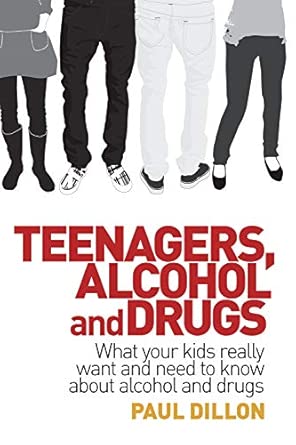
Teenagers, Alcohol and Drugs: What your kids really want and need to know about alcohol and drugs
Author(s): Paul Dillon (Author)
- Publisher: Allen & Unwin
- Publication Date: 1 Feb. 2009
- Edition: First Edition
- Language: English
- Print length: 216 pages
- ISBN-10: 1741756804
- ISBN-13: 9781741756807
Book Description
Editorial Reviews
About the Author
Excerpt. © Reprinted by permission. All rights reserved.
Teenagers, Alcohol and Drugs
What Your Kids Really Want And Need To Know About Alcohol and Drugs
By Paul Dillon
Allen & Unwin
Copyright © 2009 Paul Dillon
All rights reserved.
ISBN: 978-1-74175-680-7
Contents
Preface,
Introduction,
CHAPTER 1: THE BASICS,
CHAPTER 2: ALCOHOL AND PARTIES,
CHAPTER 3: LOOKING AFTER YOUR FRIENDS,
CHAPTER 4: CANNABIS,
CHAPTER 5: OTHER DRUGS,
CHAPTER 6: WADING THROUGH SOME URBAN MYTHS,
CHAPTER 7: THOSE REALLY TOUGH QUESTIONS NO ONE WANTS TO ANSWER,
AFTERWORD,
CHAPTER 1
THE BASICS
When I'm addressing parent groups I usually start by asking the audience to think about where they get their information about drugs from. What has shaped their perception of the issue and how do they feel about drugs in relation to their own family?
Most parents know relatively little about alcohol and other drugs. They might have a bit of practical experience — usually in the form of vague memories from their teens or early twenties — but when it really comes down to it, most of the information they have has been obtained either through their friends or the media.
As I always say to young people, these are not the best sources of information. Friends don't mean to steer you in the wrong direction, but the sharing of information is going to subtly distort that information over time. You also need to remember that everyone has their own views on controversial issues such as drugs, and this can mean that when information is passed on, so too are the viewpoints, and this might affect the reliability of the information.
The media is no better. I have been working with the Australian media for over fifteen years now and I have seen first hand just how inaccurate many of the reports beamed into your home or presented in your daily newspaper are. Some media outlets have agendas, and in recent times we have seen some newspapers and television programs actually decide to take a stand on a particular issue or cause and attempt to change community viewpoints. This is not the appropriate place to debate the ethics of their actions, but it is important to remember that 'news' is often presented in a manner calculated to persuade you to think in a particular way.
Drug stories often appear under headlines designed to shock and horrify the readers, regardless of what the story is in fact trying to convey. I can't tell you how many times I have received an email or phone call from a responsible journalist to apologise for the appalling headline the editors have attached to an otherwise accurate story. Unfortunately, it is usually the headline that is remembered by the general public.
In this chapter, I will try to challenge some of the preconceived ideas you might have about alcohol and other drugs. Our views on issues such as drugs are formed based on a range of things, including our families and who we associate with, personal experiences and where we source our information. I hope that what you're about to read will make you critical of what you have been told in the past. If it does, go and read more, ask other people about their thoughts and beliefs in the area and learn to question the information you are provided with.
Don't most young people experiment with alcohol and other drugs? Isn't it almost a rite of passage?
Last night I was watching TV and saw a new advertisement about young people and drug use. Over the top of an image of a group of young people was superimposed the words One third of all young people have used an illegal drug. That statistic sounds pretty scary for parents, and it is — there can be devastating consequences when anybody uses an illegal drug, and of course those risks are often greater for a young person. But why must we always be pushing out a negative message when it comes to this issue? Wouldn't it have been much more powerful and positive to present the same image with a statement saying that two thirds of young people haven't used an illegal drug?
No one should stick their head in the sand and pretend that there isn't a problem. When it comes to alcohol, it would be true to say that most young people will experiment with it at some time during their adolescence. However, the same cannot be said for illegal drugs, particularly when we're talking about teenagers. Most young people have never tried illegal drugs, they have no interest in these substances and they never will. Study after study confirms this, yet try to get this fact reported in the media and you hit a brick wall.
Interestingly, you often hit that very same brick wall when you speak to the teenagers themselves ...
I had just finished my presentation at an inner-city high school by showing a slide revealing the number of young people who have not experimented with illicit drugs. This slide always raises eyebrows, with many teenagers surprised that the number is not significantly lower.
Max, a sixteen-year-old year eleven student and outspoken critical thinker, stood up to express his doubts.
'I find those figures very hard to believe,' he said. 'Everybody I know uses drugs. Where did you find those people who you surveyed?'
After explaining how the national survey data was collected I decided to challenge Max's statement.
'So everybody you know uses drugs?' I said. 'You're in a room with over 100 of your peers — are you saying that everyone in this room uses drugs?'
'No, of course not,' he replied. 'I don't mean people at school, I mean the people I know out of school. They all use drugs.'
I asked what drugs he was talking about and he informed me that cannabis was the drug of choice for 'everybody'.
'Give me a number,' I said. 'I want an actual number of people that you know for a fact use cannabis. I'm not talking about people you have heard about, or people you believe it of — tell me how many people you have seen smoking the drug.'
It took Max quite a while to respond and at first I thought my test was going to backfire, but he was an intelligent and thoughtful young man and was taking my request seriously. When he finally did give his answer it confirmed my belief that although he believed a considerable proportion of the people he knew (well, actually all of them) smoked cannabis, this was not the case.
'Five,' he said.
I love this story! I tell it at every school I go to and it always gets a great reception. Unfortunately, there is a perception out there, even among young people, that most people have used drugs. But when you take a few moments to challenge that perception you can get some really interesting results. I will often get young people coming up to me after I tell the story about Max saying that when they really questioned it they realised they didn't know as many people who used drugs as they thought they did.
There are two words I really dislike that we tend to overuse when talking about alcohol and drugs —'all' and 'everybody'. If you take a couple of minutes to think about it, you'll realise that statements like 'everybody does it' and 'all teenagers go through that stage' just don't add up. 'Everybody' doesn't do it and not 'all' teenagers go through that stage — these generalisations need to be challenged and, unfortunately, we don't do that enough.
For some reason young people really feed into this mythology and are their own worst enemies when it comes to reinforcing stereotypes about teenagers and drug use. When I work with large groups of teenagers I often start off a discussion by asking them what they know about drugs. Inevitably, the first few statements from the floor tend to be along the lines of:
Drugs are everywhere.
Everyone takes drugs.
Peer pressure makes it really difficult for teenagers to resist drugs and alcohol.
Everyone I know gets drunk.
It's interesting to note that this is the response you get from the large group but when you talk to them in smaller numbers you quickly find that these sweeping generalisations don't hold up. Questions like 'Do you or your best friend use drugs?' or 'When was the last time you saw someone use an illegal drug?' are often answered with 'No' and 'Never'.
Many of you would have seen current affairs shows where they get a group of young people together and ask them questions about the drug problem. The interviewer usually asks them exactly the same type of questions as I do in a group discussion, and the young people respond with the generalisations I have listed above, reinforcing the belief that most, if not all, teenagers are regularly using illegal drugs and getting drunk all the time.
On one of my school visits I met a particularly amazing group of kids. These articulate, intelligent year eleven students spoke candidly about their lives, questioned and were critical of the data given in the presentation, and really took advantage of a lively discussion session at the end of the talk.
It so happened that the following week one of the current affairs shows contacted me and asked me to assist them in pulling together a group of young people for a forum on drugs. I immediately knew which school I was going to approach. This was a group that I could trust to be honest and open with their answers, and to avoid falling into the trap of speaking in stereotypes. I contacted the school and the interview was arranged.
On the day of filming, prior to the arrival of the interviewer and camera crew, I had a meeting with those students who had been selected by the school and given permission by their parents to participate. I sat them down and ran through the type of questions I thought would be asked.
'How big a problem is drugs for teenagers?' was my first question.
'Of course it's an issue. There are some kids in our year who have used drugs but they're in the minority,' was the first of many responses the group gave. 'Alcohol is the biggest problem, but even then most of us only drink at parties and, although some people can get pretty wasted, the majority drink pretty sensibly.'
And it went on like that. The answers were spontaneous: I didn't brief them, I didn't try to encourage them to respond in a particular way.
The camera crew arrived, and the presenter introduced herself to the group and explained how the forum would work. She would ask a series of questions and then she wanted them to speak freely and honestly about their experiences and thoughts on the issue. The whole idea was for them to bounce off one another and for the conversation to flow. I was excited — this was going to be great!
The camera started to roll and the first question was much the same as the one I had asked the group only half an hour before: 'So what can you tell me about young people and drugs — is it a problem?'
I have no idea what happened, but somehow that group of articulate and intelligent teenagers turned into the children from Village of the Damned as soon as the camera started rolling. Their eyes glazed over and out came the stereotypical generalisations. 'Drugs are everywhere', 'Everyone does drugs' — the clichés just kept coming. And of course, the interviewer lapped them all up; it was perfect television.
In my experience, kids often tell us what they think we want to hear. Now no parent will tell you that they want to hear that young people take drugs or drink to excess — but it is what many people believe because that is what they have been fed by the media and society in general. Young people pick up on this very quickly, and rehash these messages, even if it is not their own experience.
Let's not forget that not all young people are the same, and this is particularly true when it comes to attitudes and values around drugs. Even when it comes to alcohol use, young people are not one homogenous group. When I talk to groups of teenagers I usually divide them into three key categories, two of which we rarely acknowledge. The first is the loudest and the most obvious: those young people who drink to excess. There is much debate as to whether this group is growing — I don't believe it is, although it is quite clear that heavy-drinking teenagers are consuming at much riskier levels and at a younger age.
The next group comprises the ones who drink responsibly. They don't drink regularly and when they do they usually consume a small amount. This does not mean there are no risks involved in their drinking behaviour, but we do need to acknowledge that these young people are trying to do 'the right thing'.
Finally we have the abstainers. An interesting fact, rarely discussed, is that 2025 per cent of Australian school-based sixteen- and seventeen-year-olds describe themselves as non-drinkers. We never speak about these young people and their decision; in fact, we completely ignore them, making them feel even more alienated from their peer group than they do already.
We need to acknowledge that many young people will drink alcohol at some time during their adolescence and some may experiment with one or more illegal drugs. As a parent, you need to let your child know where you stand in regard to alcohol and drinking behaviour, and the use of illegal drugs. Letting your teenager know how you feel about sensitive topics, and explaining your viewpoints clearly and without passing judgment, is not only going to assist them to develop positive values but will also strengthen your relationship with your child.
When is the right time to start talking to my kids about drugs?
I'm a firm believer that you should start talking about drugs the minute you start giving them to your child. We live in a world where pharmaceutical companies have been able to convince us that for every problem we have, there is a drug that can fix it. If you are depressed, you take a pill. If you have a headache, you take a pill. We start medicating our children from a very early age, training them to be very effective drug users.
Whether the drugs are medicinal, legal or illegal, our children should be informed about the risks associated with drug use. When it comes to pharmaceutical drugs or over-the-counter medications, children need to be made aware of the importance of appropriate use. In the first few years of primary school, drug education lessons focus on this area and do it extremely well. They don't talk about drugs being 'bad', instead they discuss the idea that drugs can help people when used appropriately, and it is the misuse of drugs that can cause problems.
Unfortunately, many parents don't bother to talk to their children about medicines, seemingly forgetting that they are drugs too. These days, it is rare to get a doctor's appointment that lasts longer than ten minutes. No sooner are we escorted into a doctor's surgery to explain what is wrong with us than we are handed a prescription and ushered out. There's no time to ask what it is we are taking and, even though pharmacists will often give us some basic instructions to accompany the drugs we are given, because it has been prescribed by a doctor we don't even question how safe or how dangerous it might be. We simply take it — no questions asked.
Over-the-counter medications are used in the same way. The last time your child complained of a headache or a pain, what was the first thing you said to them? I can almost guarantee that you told them to go and take a pill of some description. I bet you didn't ask them why they had a headache or suggest a non-pharmaceutical option — you most likely went for the quick fix. Using a drug to solve a problem has become second nature.
Let's get down to brass tacks here — most drugs can be used in a positive way. Heroin is an extremely effective painkiller, cannabis can ease the symptoms of a number of medical conditions, and there is even some evidence that ecstasy (MDMA) can be useful in the treatment of post-traumatic stress disorder. This is not to say that these drugs are safe and that there are safe ways to use them. All drugs have a degree of risk associated with their use and we need to make that perfectly clear to our children. If we can communicate these risks to them about legally available products, such as drugs we obtain from a doctor or headache tablets we get from the supermarket, we have a much better chance of conveying effective messages about illegal drugs.
With very young children, I suggest you start by reading aloud the directions contained on a medication's packaging when you administer it. This sends a simple message to your child about the importance of following instructions when it comes to medications. You need to explain to your child that these directions are vital, as medicines can be extremely dangerous when used inappropriately.
Unfortunately, many parents only decide to talk to their child about drugs when a crisis situation occurs. This 'crisis' can be as serious as finding out that their child is actually using drugs or as mundane as their child being invited to a teenage party for the first time. Trying to have a discussion about drug use at a time like this is unlikely to be a positive experience for either you or your child. Your teenager will feel uncomfortable at best, and threatened at worst, by having the issue raised at this time. As a result, you are likely to feel frustrated and angry at their response, leading to greater friction and a breakdown in the parent-child relationship.
(Continues...)Excerpted from Teenagers, Alcohol and Drugs by Paul Dillon. Copyright © 2009 Paul Dillon. Excerpted by permission of Allen & Unwin.
All rights reserved. No part of this excerpt may be reproduced or reprinted without permission in writing from the publisher.
Excerpts are provided by Dial-A-Book Inc. solely for the personal use of visitors to this web site.


