Author(s): James E. Driskell (Editor), Eduardo Salas
Publisher: Psychology Press
Publication Date: 1 May 1996
Edition: 1st
Language: English
Print length: 328 pages
ISBN-10: 0805811826
ISBN-13: 9780805811827
Book Description
The pace of life in our high technology world has quickened. Industries that do not become more efficient, often by requiring a faster production turnaround with less slack, are superseded. Because of this, workers face an environment in which they must perform under more time pressure and under greater task load, in which stress is more prevalent, and in which consequences of poor performance are more critical than ever before.
The dominant, if unstated, psychoanalytic paradigm underlying much stress research over the past fifty years has led to an emphasis on coping and defense mechanisms and to a preoccupation with disordered behavior and illness. Accordingly, almost any book with “stress” in the title will invariably devote a considerable amount of pages to topics such as stress-related disorders, clinical interventions, stress and coping, psychopathology, illness, and health issues.
This book presents basic and applied research that addresses the effects of acute stress on performance. There are a large number of applied settings that share the commonalities of high demand, high risk performance conditions, including aviation; military operations; nuclear, chemical, and other industrial settings; emergency medicine; mining; firefighting; and police work, as well as everyday settings in which individuals face stressors such as noise, time pressure, and high task load.
This book focuses directly on the effects of acute stress– defined as intense, novel stress of limited duration–on performance. The effects of stress on task performance, decision making, and team interaction are discussed, as well as the interventions used to overcome them.
Editorial Reviews
Review
“…represents an up to date and comprehensive review of both theoretical and empirical advances in this area….Each chapter is well structured and accompanied by an extensive reference list making this an invaluable source of material for both researchers and practitioners….This volume represents a significant addition to the literature and the authors are to be commended for their lucid writing and digestible summaries of their domains.” ―Cognitive Times
“Salas, Driskell, and Hughes provide a useful general introduction in which they set out a four-state model of stress and performance that defines inputs, the appraisal process, performance expectations, and outcomes including physiological, emotional, social, cognitive, and performance components.” ―Contemporary Psychology
From the Back Cover
As technology expands, as airplanes become faster and airways more crowded, as Naval battleships become more lethal, as decisions to launch or not launch a space shuttle become more complex, the demands imposed by these systems increase. Those who work in these settings face an environment in which they must perform under more time pressure and under greater task load, in which stress is more prevalent, and in which the consequences of poor performance are more critical than ever before. This book is about stress and performance. It is not about stress-related disorders, clinical interventions, or coping. Most books on stress invariably devote a considerable amount of pages to disordered behavior, illness, and treatment, and yet there are typically precious few pages devoted to performance and effectiveness under stress. This work is meant to fill this gap. The primary characteristic that distinguishes this volume from other related texts is its specific focus on how stress impacts performance and on interventions to overcome these effects.
 Wow! eBook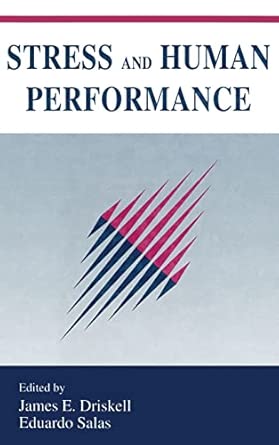


![The Five Temptations of a CEO: A Leadership Fable, 10th Anniversary Edition [Standard Large Print 16 Pt Edition] Large type / Large print Edition-Wow! eBook](https://m.media-amazon.com/images/I/41vGxEiJjwL._SY445_SX342_ML2_.jpg)
