Wow! eBook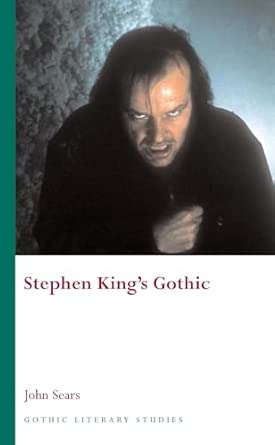
Stephen King's Gothic (Gothic Literary Studies)
Author(s): John Sears (Author)
- Publisher: University of Wales Press
- Publication Date: 15 Jun. 2011
- Language: English
- Print length: 272 pages
- ISBN-10: 0708323456
- ISBN-13: 9780708323458
Book Description
Editorial Reviews
Review
About the Author
Excerpt. © Reprinted by permission. All rights reserved.
Stephen King’s Gothic
By John Sears
University of Wales Press
Copyright © 2011 John Sears
All rights reserved.
ISBN: 978-0-7083-2345-8
Contents
Acknowledgements,
Abbreviations,
1 Rereading Stephen King’s Gothic,
2 Carrie’s Gothic Script,
3 Disinterring, Doubling: King and Traditions,
4 Genre’s Gothic Machinery,
5 Misery’s Gothic Tropes,
6 Gothic Time in ‘The Langoliers’,
7 ‘This Inhuman Place’: King’s Gothic Places,
8 Facing Gothic Monstrosity,
9 Conclusion: King’s Gothic Endings,
Notes,
Bibliography,
CHAPTER 1
Rereading Stephen King’s Gothic
* * *
‘Does anybody ever reread King? Are his texts susceptible to rereading?’
‘Reread too Kings …’
‘If you want to be a writer, you must do two things above all others: read a lot and write a lot.’ (OW, 164)
Rereading King
What would it mean to reread Stephen King? What kind of demand would be levied on the rereader? Stephen King’s fictions (and those written by the different ‘King’, Richard Bachman, making two ‘Kings’ to reread) comprise a vast and ever-increasing number of novels, short stories, screenplays. To reread them (all) would require, above all, time, an extended time of reading that is potentially indefinite as the oeuvre expands within it: in the time of writing this book, King has published three new novels and a collection of short stories. Such a rereading would be, in one sense, simply an exercise in the quantification of reading, in reading as consuming. ‘Reading a lot’, as King puts it, would also be one result, ‘above all others’, of rereading King’s activity of ‘writing a lot’. But ‘rereading King’ would also be an exercise in the extension of repetition, in the act of rereading an oeuvre already deeply structured (as this book will argue) by its own engagement in the Gothic habit of rereading and, consequent on these rereadings, rewriting what it has read and reread. To reread King would be to enter (to re-enter), and perhaps to become lost within, a labyrinth of intra- and intertextual relations, an immense and complex textual space.
David Punter’s question about rereading King is the correct one to ask at the beginning of a discussion of Stephen King’s Gothic. The Gothic mode is notoriously predicated on varieties of repetition, on the recycling of narratives and forms, on revisiting older, pre-existent texts, on labyrinthine texts and spaces, and on the seemingly endless resurrection of an apparently dead, outmoded tradition. John Frow writes of ‘exhausted genres such as the Gothic romance’, which yet ‘survive in their modal form’. Fred Botting argues that, with its return to the genre of romance in Francis Ford Coppola’s Bram Stoker’s Dracula (1992), ‘Gothic dies, divested of its excesses, of its transgressions, horrors and diabolical laughter […]’. This dying, he suggests, may be a ‘prelude to other spectral returns’. In Stephen King’s work and in the writings of his contemporaries and younger imitators, Gothic clearly revives or survives, persisting as a remarkably resilient, successful and lucrative mode of popular fiction.
David Punter’s questions are, of course, those asked of much popular fiction. For Punter, ‘rereading’ perhaps implies a mixture of close reading, critical reading and extended theoretical analysis, a different kind of reading from that invited by the initial encounter with the popular fictional text. That encounter of reading is predicated on ostensibly simple meanings: ‘popular fiction’, Ken Gelder affirms, ‘is simple’, in opposition to a construction of ‘Literature’ (with a capital ‘