Wow! eBook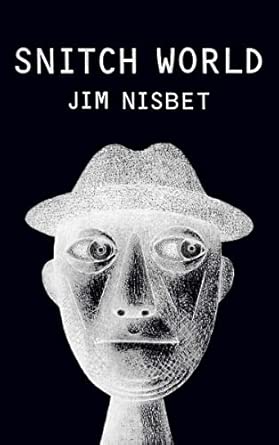
Snitch World
Author(s): Jim Nisbet (Author)
- Publisher: PM PRESS
- Publication Date: 27 Jun. 2013
- Language: English
- Print length: 218 pages
- ISBN-10: 1604866810
- ISBN-13: 9781604866810
Book Description
Editorial Reviews
Review
“Missing any book by Nisbet should be considered a crime in all 50 states and maybe against humanity.”
–Bill Ott, Booklist
“Jim Nisbet is a poet…[who] resembles no other crime fiction writer. He mixes the irony of Dantesque situations with lyric narration, and achieves a luxuriant cocktail that truly leaves the reader breathless.”
—Drood’s Review of Mysteries
“Jim Nisbet is a lot more than just good…powerful, provocative…Nisbet’s style has overtones of Walker Percy’s smooth southern satin, but his characters–losers, grifters, con men–hark back to the days of James M. Cain’s twisted images of morality.”
—Toronto Globe-Mail
“Jim Nisbet’s work has been tapping directly into the pulse of America for decades. Like others who have done the same in the past, its only later that the rest of us catch up and realize just how right those trailblazers were all along. That time is now, for all of us to not only catch up to this unheralded master but to offer him the respect and regard that he deserves.”
—Spinetingler
About the Author
San Francisco writer Jim Nisbet has published nine novels, including the acclaimed Lethal Injection. He has also published five volumes of poetry. His novel, Dark Companion, was shorted-listed for the 2006 Hammett Prize. His works have been published in French as well as English, along with a miscellany of additional translations into German, Japanese, Italian, Polish, Hungarian, Greek and, forthcoming, Russian and Romanian.
Excerpt. © Reprinted by permission. All rights reserved.
Snitch World
By Jim Nisbet
PM Press and The Green Arcade
Copyright © 2013 Jim Nisbet
All rights reserved.
ISBN: 978-1-60486-681-0
CHAPTER 1
The Miata jumped the curb and sheared off a light pole. The impact deployed the airbags, but Chainbang was ready. He knifed Klinger’s before it was fully inflated and his own before it could crush the glass pipe in his breast pocket. The six-inch blade went through the nylon like a pit bull through a kindergarten.
Or so he thought. His arms absorbing the shocks transmitted by the rim of the steering wheel, Klinger didn’t mind a nick on his right cheek inflicted by the blade, its vector skewed by the onrushing fabric. And then, shredding his own safety device, Chainbang stabbed himself too, under the chin.
Neither of them noticed.
The light pole crashed headfirst into the middle of the northbound lanes of Webster and sent a shower of sparks onto the sidewalk. The Miata wound up stalled beyond the opposite side of the median and pointed northbound in the middle of the two southbound lanes.
It was three-thirty in the morning. At the moment, there was no traffic.
Klinger keyed the starter. The solenoid merely clicked. He keyed it again. Same result.
“Fucker’s quitting while it’s ahead,” Chainbang observed.
“Yeah, well,” Klinger advocated, “it’s quitting while we’re behind.”
Chainbang beat a tattoo on the lip of the disgorged dash with the blade of his knife. The nearest fire station is only four blocks away, at Turk and Webster. The nearest copshop is just around the corner from the fire station, at Turk and Fillmore.
As Chainbang stared up the street and paradiddled his knife over the vinyl, a swiveling red light came on over the garage door of the fire station.
“Senseless violence,” Klinger was saying. He turned the key in the switch like he was turning a screw into a cork. “You think you killed that guy?”
Chainbang shrugged. “I hit him hard as I could.”
“Might have done it,” Klinger concluded grimly, and now, though he’d been patient with the nonrespondent starter, the shank of the key wrung off in the switch.
That’s the thing about adrenaline, Klinger thought, as he thumbed the stub of the key in the darkness adjacent the steering column. A man under its influence doesn’t know his own strength.
The preliminary moan of a siren emanated from the rising garage door of San Francisco Fire Station No. 5.
Klinger dropped his hand to the door handle. “It’s time for us to go.” He held out his other hand. “Give me half of whatever comes out of your pocket.”
Chainbang continued to stare through the wind-screen, and continued to drum the flat of the knife on what was left of the dashboard. His eyes refocused on the glass in front of him. Now he noticed the long crack that meandered from the lower-right corner of the wind-screen on the passenger side to the upper-left corner on the driver’s side. It meandered like the Snake River across the befogged reservation of his youth. Befogged is the wrong word. Chainbang’s memory of his youth lay beyond any number of smeared thicknesses of graffitied Lexan, securely obfuscated.
The engine of the ladder truck rolled through the open garage door of the fire station, lights throbbing, siren probing.
Chainbang thought of spearing the beckoning hand to the lid of the center console before he bolted. But, he reflected, word of this minor treachery would inevitably get back to whatever joint he wound up in after this or some other caper, and, shithead or not, nobody, even a Klinger so uniquely snitched out, was entirely without friends.
In that regard was not even he, Chainbang, one of Klinger’s friends?
The ladder truck, fully extruded like a pipefish from its den now, aimed many of its lights south toward the Miata, siren in full cry.
“Hey! Wake up! Fork it over!”
Chainbang thrust his free hand into the pocket of his windbreaker and fished up a fistful of bills. Though in the dark he had no idea as to their denomination or quantity, he crushed them into Klinger’s waiting palm. “You should invest some of this in driver’s education, you fuck.”
Klinger didn’t waste a moment. His door, being the one that had impacted the light pole, was jammed. So, as they’d been robbing liquor stores with the top down, since they couldn’t figure out how to get it up, he tried to step up and out of the stolen sports car with dignity. But the remnants of the airbag entangled his legs, and he and his dignity spilled headlong into the street.
Going to school on Klinger’s experience, Chainbang took the time to gleefully lacerate his own airbag to ribbons before he opened the door and stepped onto the landscaped median, formerly home to the ruined light pole.
The fire engine was three blocks away now. From somewhere a little farther away came the distinguishable siren of an ambulance. This would be standard San Francisco emergency response: one or two fire trucks and an ambulance. Not until somebody had determined that a crime had been committed would the cops be called.
East across Webster, beyond the light pole, spread some eight square blocks of housing projects, with which Chainbang was all too familiar. Time was, he might have clambered over one of the entry gates and taken refuge in any of a number of abandoned units, or the various shooting galleries, or a unit known to take in fugitives for a price. In the old days the cops would chase a man to the edge of the projects and stop dead, no matter the hotness of their pursuit, for even the cops were afraid to broach the boundaries of this and other such projects without massive backup, even in broad daylight.
But those days were over. Tonight, Chainbang’s better chance was — he cast his mind over the neighborhood — Alamo Square, two blocks straight up Grove Street. He could spend the night burrowed into a clump of Mexican sage the size of a haystack. As long as the cops didn’t bring out the dogs, he’d be fine.
He rounded the back of the Miata and put his foot on the prostrate Klinger’s chest.
“Hey — what the fuck?”
“Don’t follow me, man,” Chainbang said. He pointed up the hill. “Go your own way.” He pointed toward the projects.
“Don’t worry, motherfucker,” Klinger said, after a short pause for astonishment. “I done followed you enough for one night.”
“You got the gun — right?”
“Gun?” Klinger tried to sit up, but the foot bore down on him. Klinger relaxed. “Last time I saw it, it was on the center console.”
Chainbang glanced at the car. One headlight was still functioning, though its beam angled up into the trees further north along the median. The inside of the car was a tangle of darkened nylon.
Two blocks down Webster, at McAllister, the ladder truck erupted in honks of outrage as the SUV of a confused motorist, having entered the intersection despite all the noise and lights, stopped directly in front it.
Two blocks further north, the station’s red command vehicle exited the firehouse and turned south, siren blaring and lights flashing.
Lying on his back in the street, Klinger looked up at Chainbang and laughed. “I believe you were the last man to handle the weapon?”
Chainbang scowled and raised the knife.
Klinger threw the fistful of money into Chainbang’s face, twisted the knee above the offending foot, and rolled away.
Chainbang fell backward into the Miata with a curse. Klinger found his feet and ran.
Two-thirds up the block toward Fillmore, Klinger heard the squeal of tires and orders, barked over a bumper-mounted PA speaker. Klinger got a grip on his nerves, slowed to a walk, then turned around.
A hundred yards down the hill a black and white blocked the intersection, and in front of the squad car, flooded by headlights and the driver’s side spotlight, stood Chainbang, blinking and squinting with his hands up.
Beyond him the totaled Mazda lifted steam into the night.
The paper scattered throughout the intersection had once been, no doubt, legal tender, and might be again. At that distance, Klinger couldn’t tell. It might just as well have been calendar pages herded by a breeze through a canyon in a darkened financial district on the last billable day of the year.
Just like most any innocent bystander might do, Klinger stood stock still as the arrest proceeded. He could hear Chainbang’s feeble protestations but, at that distance, he couldn’t understand what was being said. A cop stood in front of Chainbang shining a flashlight in his face. Another stood behind him, warily, one hand on his holstered service weapon. A third was fitting the bracelets.
One building further up the sidewalk and two stories up, the weights of a double-hung sash rattled in their soffits. “What’s up?” a sleepy voice asked.
“Not sure,” Klinger replied without turning around. “I thought it was an accident, but there’s a lotta cops.”
The fire truck finally arrived, and shortly thereafter the commander’s red SUV, and then an ambulance, and finally another police car.
“Jeeze,” said the man in the window.
“Yeah,” Klinger allowed.
“I always wondered,” said the man in the window, “why San Francisco always sends two fire trucks and an ambulance to every single fucking 911 call. You know?”
Klinger nodded.
“I mean,” the man in the window continued, “that’s costing the taxpayer money.”
Klinger nodded some more.
“You gotta wonder, what with all these budget shortfalls, closing schools and parks, cutting back on police foot patrols and whatnot, how come they don’t just send one truck to a fire, or one ambulance to the shortness of breath, or one cop car to the domestic disturbance. You know?”
Now Chainbang was face down on the hood of the police car, talking over his shoulder as one of the cops, ignoring him, methodically went through his pockets. Surely Chainbang had ditched the knife? And nope. There it was on the trunk lid, its blade still open, just at the edge of a pool of light, with his bandana. The bandana still had a knot in it.
Chainbang like to hold up stores with a bandana tied over his nose and mouth. Like Jesse James and shit, as he liked to say.
“Don’t you think?” the man in the window repeated after a moment.
“Yeah,” Klinger nodded, as if thoughtfully. “But San Francisco is a wooden city. Used to be, anyway. You get a call for a fire, you just about have to respond with the heavy hand. Hell, it wasn’t the earthquake that did in the town, in 1906, it was the fire that raged for days afterwards. They couldn’t get up no water pressure, see, and the whole town was built of wood then, so the place went up like Dresden in World War II. Also a wooden city. So was Nagasaki, for that matter. And Saint-Malo.”
“The hell you talking about?” the man in the window said.
Klinger frowned. “Combustible cites?”
“Yeah?” The man in the window yawned. “I never heard of any of those places.”
Klinger resisted the impulse to confront the only other witness to the crime scene on Webster Street with his own astonishment. “They all burned,” was all he said, and he said it as if he were speaking to himself.
The man in the window made no response. Down in the intersection, the investigating officer had extracted a fistful of hastily bundled cash from Chainbang’s hip pocket. I thought he pulled that cash from the pocket of his wind-breaker, Klinger observed to himself.
“Still,” the man in the window started up again. “If only they could do some sort of triage on the original 911 call.”
“But they do,” Klinger insisted. “You called 911 lately?”
No answer.
Okay, thought Klinger. Either the guy’s chickenshit, or he calls 911 all the time and doesn’t want me, whom from Adam he knows not, to think he’s a snitch. “They ask you now,” Klinger said. “What is the nature of your emergency, sir or ma’am as the case may be?”
“Oh,” said the man in the window. “They do?”
“But they still send at least one fire truck and an ambulance.”
“But why?” insisted the man. “It’s expensive.”
“Maybe you should go to the meetings,” Klinger suggested.
“Like I got time to go to the meetings,” the man said tiredly.
Klinger shrugged. “Maybe you could look it up online.”
“Man,” the man said, “I need to look up what happened to my life online.”
You said it, Klinger thought to himself, I didn’t.
The window rattled shut.
Down the hill in the intersection, a cop was reading Chainbang his rights. The ladder truck made a U-turn through the intersection and headed back to the station house.
This’ll be strike three, Klinger thought, so it wouldn’t make much difference if Chainbang snitched me out or not. Things will go hard on him, no matter what. Klinger made a face. He might easily have killed me, and he probably did kill that store clerk. It could well make the difference between life without parole and the hotshot. But Chainbang won’t snitch on anybody.
Back to prison, and for what? A hundred bucks? Two hundred?
Klinger had no idea how much money they’d snatched from the cash register, but it made no difference now.
A few yards down the sidewalk a door opened, and a woman appeared with a dog on a leash. The dog gratefully relieved itself against the trunk of the first tree it came across.
“Hello,” the woman said quietly as they moved up the hill. She was young and pretty and nicely dressed.
“Evening,” Klinger said. “Nice dog.”
“Thank you,” the woman said.
Klinger offered the back of his fingers and the dog sniffed them perfunctorily. “Looks like some kind of mix.”
“Labradoodle, actually,” the woman said.
“Oh? That’s a breed?”
The woman nodded and smiled sleepily. “It is now.”
“Labrador and poodle, I’d guess.”
“That’s right.”
The dog wagged its tail a little.
“What’s her name?”
“His name is Latte.”
Klinger blinked first.
“What’s going on down there?” she asked.
Klinger looked up from patting Latte’s head. Down in the intersection, one cop held open the back door on the black and white. Another cop, holding Chainbang’s elbow with one hand, pushed his head down so it would clear the top of the door. Even from that distance, Klinger might have seen that the back door had no handles on the inside. Or maybe he just knew it. “Some kind of accident, I guess.”
“It looks as if they are arresting that man. Was he the driver?”
A tow truck arrived, yellow lights flashing, and stopped so as to perfectly obscure Klinger’s view of Chainbang. The driver stepped down from the cab of his truck and initiated some paperwork with one of the cops.
“I don’t know,” Klinger said. “I was walking up the hill, heard a crash and …” He shrugged. “I think he took out a streetlight. Next thing I knew, there were many flashing lights down there. They got here really quick.”
“Both the fire house and the police station are just up the street. Maybe he’s impaired,” the girl suggested.
“Could be.” Klinger managed a smile. “It’s pretty late not to be impaired.”
The young woman looked at him. He looked at her. If I had the money, Klinger thought to himself, I damn sure would be impaired. By the look of you, young lady, you can well afford to be impaired and yet, at three-thirty in the morning, you’re not. “Just getting home from work?” he ventured.
“Just long enough to freshen up,” she nodded, “walk the dog, grab a nap, get back by eight.”
“Some kind of deadline,” Klinger inferred.
“IPO,” the woman told him.
“IPO,” Klinger repeated stupidly.
“It’s very exciting,” she told him. “Nobody knows what’s going to happen.”
“That’s the damn truth,” Klinger nodded wearily.
The labradoodle whimpered.
“Latte’s gotta go,” the woman said. “Nice talking to you.”
She turned the dog with his lead and walked quickly down the hill, toward all the lights.
Klinger watched her go, then turned up the hill, where there were no lights.
CHAPTER 2
Mary Fiducione always took her morning coffee in the little yard behind her studio.
Dexter Gordon’s cover of “Don’t Explain” quietly interpolated the morning, emanating from a pair of battered speakers screwed to opposite ends of the header above the seven-foot slider, and under the short eave that provided a little protection from the elements. A hummingbird took turns with a fat bumblebee as they both investigated the refulgent trumpets of a datura that towered over the back corner of the little yard. A neighboring ornamental plum, heralding spring only a week ago, now lofted its mauve blossoms above the graying board fence that ran along the north side of the lot.
The weathered table before her was covered by a fading cloth depicting a woman wearing sunglasses, a Jackie O coiffure, and a cocktail dress, surmounting the motto, queen of fucking everything. On it lay the New York Times, the Chronicle, a copy of The Furies by Janet Hobhouse, a pot of Scottish breakfast tea, a teaspoon, and a very delicate-looking ceramic cup and saucer decorated with pinkly-tinged cerise tea roses.
But what compelled her interest this morning was the Idiot’s Guide to Programming iPhone Applications, a scratch pad, a small netbook computer, and her iPhone itself.
The doorbell rang.
Mary frowned and continued to tap at the phone’s virtual keyboard.
After a minute, the doorbell rang again.
Mary suddenly remembered that she was expecting UPS to deliver a new belt holster for her phone. Still frowning at the keyboard, she stood up, passed through the open side of the sliding glass door, through the length of the ground floor apartment, and opened the front door.
(Continues…)Excerpted from Snitch World by Jim Nisbet. Copyright © 2013 Jim Nisbet. Excerpted by permission of PM Press and The Green Arcade.
All rights reserved. No part of this excerpt may be reproduced or reprinted without permission in writing from the publisher.
Excerpts are provided by Dial-A-Book Inc. solely for the personal use of visitors to this web site.