Wow! eBook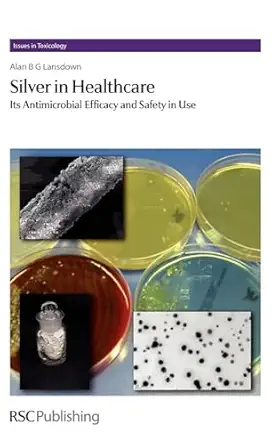
Silver in Healthcare: Its Antimicrobial Efficacy and Safety in Use
Author(s): Alan B. G. Lansdown (Author)
- Publisher: Royal Society of Chemistry
- Publication Date: May 7, 2010
- Edition: 1st
- Language: English
- Print length: 280 pages
- ISBN-10: 1849730067
- ISBN-13: 9781849730068
Book Description
Silver in healthcare has many different facets and since the early concepts of microbiology of the 1880’s, has been developed from usage in surgical clips, staples, foil wound dressings and surgical implants, to the widespread and clinically effective antiseptic wound dressings, sutures, catheters, bone and dental implants, and cardiovascular devices of today. From the dawn of human civilisation, silver has had a role of water purification and even now has a role in hospital water systems for control of MRSA and legionnaires disease. Biotechnological advances in recent years have extended the antimicrobial properties of silver into production of hygiene textiles and use in domestic products. Important advances have been made in understanding mechanisms of antimicrobial action of silver, the central importance of ionisation patterns in the presence of body fluids and secretion, and the genetical and molecular profiles of silver resistance. This publication is a comprehensive account of the history of silver in medicine, its clinical benefits and wide advantages as a broad spectrum antimicrobial agent. It is clear from the extensive array of publications in recognised and unofficial press, that many misconceptions and misleading conceptions have been perpetuated, leading to errors in evaluation of the safety of the metal in occupational, domestic and therapeutic situations. The book is unique in that it is the only comprehensive presentation of the toxicology of silver and it identifies the major misconceptions in the safety of silver and interpretation of argyria and argyrosis as central features of silver toxicity. In this book, Dr Lansdown reviews the literature from a clinical and experimental viewpoint, with the benefit of his many years research on silver and experience gained in working with clinicians, healthcare product manufacturers and microbiologists. There is also discussion in the book on the relevance of antimicrobial resistance to silver and deficiencies in present day clinical practice in not evaluating incidences of resistance on a routine basis. The subject matter is presented in a readable fashion and includes reference to use of the metal in such practices as acupuncture and treatment of tropical diseases as practised in some parts of the world, each of which is accompanied by special clinical risk. It is also a collation of current views on the use and efficacy of silver as a broad spectrum antibiotic. The chapters which deal specifically with toxicological aspects of silver in clinical, occupational and environmental issues are central to the book’s value. The book is aimed at clinicians, research scientists and product manufacturers and will provide ideas for new research and academic endeavour. It is also essential reading for research students with an interest in metal toxicity and its management in mammalian tissues.
Editorial Reviews
From the Back Cover
About the Author
Excerpt. © Reprinted by permission. All rights reserved.
Silver in Healthcare
Its Antimicrobial Efficacy and Safety in Use
By Alan B. G. Lansdown
The Royal Society of Chemistry
Copyright © 2010 Alan B. G. Lansdown
All rights reserved.
ISBN: 978-1-84973-006-8
Contents
Acknowledgements, xii,
Chapter 1 Silver in Health and Disease, 1,
Chapter 2 Silver and its Compounds, Chemistry and Biological Interactions, 9,
Chapter 3 Uptake and Metabolism of Silver in the Human Body, 43,
Chapter 4 Silver as an Antibiotic: Problems of Resistance, 72,
Chapter 5 Silver in Medical Devices: Technology and Antimicrobial Efficacy, 92,
Chapter 6 Silver as an Antibiotic in Water Systems, 144,
Chapter 7 Silver Technology and Antibiotic Textiles, 152,
Chapter 8 The Toxicology of Silver, 164,
Chapter 9 Silver and Organs of Special Sense, 214,
Chapter 10 A Final Thought: How Much Silver is Too Much?, 250,
Subject Index, 256,
CHAPTER 1
Silver in Health and Disease
Silver is a lustrous white metallic element found in many parts of the world in soil and rocks, fresh and salt water, and in the atmosphere. Silver is the sixty-third most abundant element in the Earth’s crust and is found naturally as the native metal, as argentite (Ag2S) and horn silver (AgCl), and in numerous complexes with lead, zinc, copper, arsenic, mercury, tellurium and antimony. The date of its discovery is not known but silver coins, jewellery, religious icons and ornaments, and instruments have been recovered from sites of the ancient civilisations of South America, Egypt and the Middle East and China dating from 2000BC. Silver and the trade of silversmithing are recorded in Biblical texts and in writings by Homer.
Silver and its alloys have a wide variety of commercial uses of which coinage, silverware, jewellery, photography, electrical contacts and electroplating, dental amalgams, batteries and medical devices are the most important nowadays. Silver in hygiene clothing is a very recent innovation. The mention of the word “silver” conjures up visions of cups, trinkets, trophies, religious icons, etc., and possession of items of value which have come to signify wealth and posterity.
Silver has a long and fascinating history in the treatment of human diseases including epilepsy, neonatal eye disease, venereal diseases, cholera, dysentery and wound infections. Silver prostheses and silver surgical instruments were used by surgeons from the Middle Ages; the eminent paediatric neurosurgeon, Ambrose Paré (1517–1590), employed silver clips in facial reconstruction surgery. Paré had extensive clinical experience in head surgery management, and his patients included Henri II King of France. He had considerable historical importance as a renaissance surgeon and his teaching extended throughout the literate world. At about the same time, the English surgeon John Woodall is also believed to have used silver nitrate in treating infections in craniofacial surgery. Later, William Halsted (1895) preferred silver wire sutures in hernia operations and used silver foil as a safeguard against post-operative infections. It is unlikely that either was fully acquainted with the true nature of infectious disease or the true prophylactic action of silver which became apparent through the classical studies of Louis Pasteur (1822–1895) and Robert Koch (1843–1910), who provided a basic understanding of infectious diseases and the metabolism and classification of bacteria. The powerful methodology developed by Koch in Germany heralded the “Golden Age” of medical bacteriology when such pathogens as cholera vibrio, typhoid bacillus, diphtheria bacillus, pneumococcus, staphylococcus, streptococcus, meningococcus, gonococcus and tetanus bacillus were identified, and the famous Koch’s pos tulates formulated. At the time, early evidence was emerging that metallic ions (notably Hg++, Ag+) were effective antibacterial agents at concentrations as low as one part per million (ppm), but it is unclear whether Pasteur or Koch ever used silver or mercury as antibacterials. We can speculate that much of the early enthusiasm for using silver in bone prostheses, sutures, operating needles and surgical instruments, dental devices and wound therapy may have derived from its aesthetic value as a precious metal, but clinical evidence accumulating over the past 150 years has established that metallic silver and ionisable silver compounds can provide a safe and efficacious means of protecting the human body from infectious diseases.
Silver nitrate, supposedly introduced by the French ophthalmologist Credé, should possibly be regarded as the first efficacious antibiotic known to medical science. Dr. Credé (1895) claimed that silver nitrate used in vaginal douching dramatically reduced the incidence of ophthalamia neonatorum in his clinic from 10.8% to 0.2%. Although the full details of his procedure are not available, it is conceivable that his successes were largely attributable to 2% phenol and not silver nitrate per se. Later, Lehrfeld recommended superficial sterilisation of the birth canal and thorough flushing of the eyes with boric acid followed by 0.5% silver nitrate as a prophylactic therapy. Solleman cautioned against the use of silver nitrate in treating eye and mucus membrane infections on account of its irritancy and risks of corneal damage and blindness; he suggested that a “single drop of silver nitrate in a wax capsule” placed in the conjunctival sac for a few minutes and the eye rinsed in saline might be a more suitable therapy in controlling infections and irritation. In the 1940s, it was common practice to use silver nitrate to treat skin infections. Clinicians considered that its local antibacterial action could be readily controlled and that its action extended “quite deeply”, with silver ion complexing with albumins or precipitating as silver chloride. Whereas it seems that silver nitrate formed the mainstay of antiseptics available to physicians and surgeons for many years, the safer and efficacious modern antibiotics including penicillin, sulfonamides, tetracyclines, etc. available nowadays are more widely accepted in clinical practice. Silver nitrate still has a place in burns unit wound clinics today and is frequently a life-saving therapy in cases of Pseudomonas aeruginosa infections.
Older manuals of pharmacology recommend that painting the posterior pharynx with 10% solution or rinsing the mouth with 0.5% after meals is an effective antismoking measure (the foul taste experienced in the presence of cigarette smoke discouraged smoking). Even these days, antismoking remedies using silver are available although the extent to which they are used is not known. In the 1940s, silver nitrate “pills” were available to treat gastrointestinal complaints, particularly peptic ulcers. Prescriptions of 10–20 mg of silver nitrate with kaolin and petrolatum may have been effective in alleviating the complaint, but the risks of irritancy and argyria precluded their clinical acceptability. As discussed later, silver colloidal preparations for oral or respiratory conditions are not regulated in UK, USA and many other countries. Colloidal silver preparations, which may have been commonplace throughout the earlier part of the 20th century, were superseded by safer and more efficacious antibiotics. Nevertheless, they are still available and have been associated with risks of argyria, one such case being the “silver man”.
Advances in materials science and instrumentation have led to the inclusion or coating of a wide range of industrial, medical and domestic devices and appliances with silver as a means of controlling or preventing infections. As an overview, we might view the silver story in four main phases:
1. The primary phase being the long period from the initial identification of silver as a bright ductile and malleable material, which could be fashioned into attractive shapes and figures, but when little or nothing was known about its chemical or biological properties.
2. The second phase would cover the period from the mid-1800s to about 1920 when scientists acquired an understanding of the chemical and biological properties of silver and its ability to control disease. Silver instruments were fashionable in surgery and dentistry (Figure 1.1). Silver nitrate became recognised as an efficacious antiseptic against many of the bacterial infections of the time.
3. Through the greater part of the 20th century, the silversmith’s art became more refined; health scientists became aware of toxic risks of silver dust and fumes in the work place, and in the products released into clinical and domestic use. During this period, silver nitrate, colloidal silver preparations and silver sulfadiazine formed the major means of controlling infections, but manufacturers became aware of their legal requirements in marketing safer and more efficacious products.
4. The modern era extending from about 1990: the value of silver in healthcare has seen the introduction of sustained silver-ion release products for wound care and new technology for producing medical catheters, bone implants and cements, cardiovascular devices (stents, heart valves, etc.) and dental products with antibiotic protection against bacterial colonisation and biofilm formation.
Silver has a long history in water purification. The earliest evidence of this comes from evidence that silver coins were placed in the water of monarchs and nobles of the ancient dynasties of the Egypt and the Middle East and when it was fashionable to retain drinking water in silver urns and cups. Even in more recent times, the Maharajah of Jaipur (India) used massive silver urns to transport the sacred waters of the river Ganges on his trips to Europe (Figure 1.2). These days, silver–copper filters are in use in many hospitals to control risks of Legionella and methicillin-resistant Staphylococcus aureus (MRSA) in hot water systems. In each case, manufacturers strike a balance between including silver in or on their products to control health-threatening infections and the inherent safety risks of silver accumulating in the human body. Safety measures are in place to control levels of silver in drinking water in many countries.
A discussion on silver would be incomplete without recognition of the numerous advances made over the past 150 years using silver impregnation techniques in investigative anatomy and pathophysiology. Such names as Ranvier, Camillo Golgi, Santiago Ramon y Cajal, Bielschowsky and del Rio Hortega are routinely quoted in dissertations and textbooks of neuroanatomy and pathology. Ranvier developed a classical method using a silver impregnation to demonstrate nerve fibres and their nodes (Ranvier myelinated nerve fibres) in chromic acid preserved tissues. The significance of the nodes of Ranvier in neuroconduction has been subject to later investigations. Silver impregnation developed and further refined by Golgi and Ramon y Cajal has been instrumental in aiding an understanding of cells and fibres of the central nervous system; they published more than 300 scientific papers leading to the award of the Nobel Prize for Physiology and Medicine to Ramon y Cajal in 1906. Bielschowsky introduced the first and most reliable technique of silver impregnation using ammoniacal silver for demonstration of axons and neurofibrils (Figure 1.3); a method that is still preferred today on account of its specificity and reliability. The true significance of Ramon y Cajal’s teaching has become apparent with advent of the electron microscope. Advances and modifications of silver impregnation and silver proteinate methods have provided great benefits to neuropathologists investigating degenerative changes in axons and nerve endings. Interestingly, silver per se does not seem to be injurious to the brain or the central or peripheral nervous system.
Silver has financial, pleasurable, clinical and industrial implications for a wide spectrum of the population in all countries. The human body is exposed to silver through drinking water, the food we eat, and through a wide range of medical and work place exposures. But how safe is silver? The lay and scientific literature is coloured by an alarming range of inaccuracies, misleading colloquialisms and speculations which tend to obscure the true value of the metal and its low toxicity relative to most other metallic elements. Internet captions have been seen quoting that “… although silver metal is not in itself toxic, most of its salts are poisonous”. As far as I am aware, no comprehensive account of the toxicity of silver has yet been produced in any language and present safety thresholds published are at the best, only approximate. A toxicological profile for silver was compiled by William Roper for the Agency for Toxic Substances and Disease Registry of the US Public Health Service in 1990, but this preceded the tremendous advances in the use of silver in wide-ranging medical devices and consumer products, and fails to predict the massive advances in silver technology seen in recent years.
This book is based on my experience in the biological and clinical evaluation of silver and silver products in skin wound management and subsequent researches into the use of silver in biomaterials for medical devices. Argyria is the most commonly cited toxic manifestation of silver exposure, but although it is a cosmetically undesirable discolouration associated with exposure to silver, there is no evidence that it is life-threatening. The famous “Blue Man of Barnum and Bailey’s Circus” is recorded as having 90–100 g of silver in his body and was quite an attraction at the time.
CHAPTER 2
Silver and its Compounds, Chemistry and Biological Interactions
2.1 Silver: the Essentials
Silver is a stable, ductile and malleable transitional element found widely throughout the world. The name of the element derives from the Anglo-Saxon seolfor or siolfur, and the Latin argentum. It is fractionally harder than gold, but has the highest thermal and electrical conductivity of all metals in the Periodic Table and presents the lowest contact resistance. Pure silver has a brilliant white metallic lustre, but although it is stable in air it readily tarnishes on exposure to ozone, air containing sulfur or hydrogen sulfide (Figure 2.1). Commercially extracted silver is 99.9% pure.
Silver possibly accounts for 0.1 ppm in the Earth’s crust and about 0.3 ppm in soils. It occurs as cubic crystals and in deposits of pure metal in the form of two isotopes, 107Ag and 109Ag, which occur in approximately similar proportions; 109Ag exhibits greater sensitivity and is of greater value as a probe in analytical chemistry. A total of thirty five isotopes of silver are known. Of these, the radioactive silver isotope, 110mAg, is produced for neutron activation analysis (NAA) of silver in tissue samples or in air; it has a half life of 249.79 days and emits γ-radiation. 108Ag has a half-life of 2.4 minutes and emits γ-rays with a photopeak of 0.63 MeV.
The date of discovery of silver is not known but slag dumps found in Asia Minor and on islands in the Aegean Sea suggest that man learned to separate silver from lead as early as 3000BC. The ancient Egyptians may have worked in silver at about that time, although the metal they used was probably mined in Turkey. A silver salver recovered from the Chaldean Empire (ca. 2850BC), and now exhibited in the Louvre in Paris, may be the first tangible evidence of the use of silver in water purification, or it may have been used as a funerary urn, preserving the ashes of the dead for a future life.
Early civilisations discovered that water preserved in silver vessels remained much purer and more acceptable for drinking than that held in earthenware pitchers. The disinfecting powers of silver may extend back to Babylonian times when silver containers were used to transport water for the personal use of the great kings of Persia. There is evidence that silver coins and silver spoons were once placed in drinking water as a means of purification. Silver is still extensively used in water purification today and, in many hospitals, hot water systems are filtered through silver–copper devices as a protection against Legionella sp. and MRSA infections.
Apart from the aesthetic and precious metal value of silver and its large-scale use in jewellery, religious icons and vessels, and silverware (mainly as silver alloys with copper and other metals), significant advances have been made in the use of silver of silver and its compounds in medicinal science and surgery. The electro-thermal properties of silver are used in solders, electrodes, electrical contacts, batteries, etc. Although silver was commonly used in coinage at one time on account of its precious metal value, only few countries still mint silver in coinage today; the silver content is generally low and consequently human exposure through this route is minimal. Silver metal threads are incorporated into paper currency as a security device in several countries, but more commonly non-precious metals such as tin are preferred.
(Continues…)Excerpted from Silver in Healthcare by Alan B. G. Lansdown. Copyright © 2010 Alan B. G. Lansdown. Excerpted by permission of The Royal Society of Chemistry.
All rights reserved. No part of this excerpt may be reproduced or reprinted without permission in writing from the publisher.
Excerpts are provided by Dial-A-Book Inc. solely for the personal use of visitors to this web site.