Wow! eBook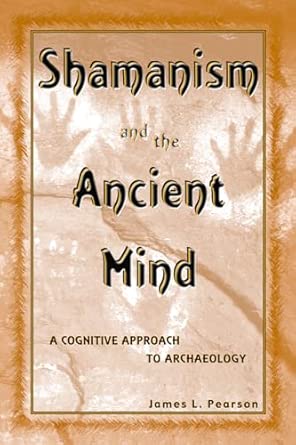
Shamanism and the Ancient Mind: A Cognitive Approach to Archaeology
Author(s): James L. Pearson (Author)
- Publisher: AltaMira Press
- Publication Date: 18 Feb. 2002
- Language: English
- Print length: 208 pages
- ISBN-10: 0759101558
- ISBN-13: 9780759101555
Book Description
Editorial Reviews
Review
Pearson usefully thinks in terms of a continuous range from less towards more ‘processual’ and ‘post-processual’ positions… he stresses the research value of rock art, for these are ancient images which seem directly to express what it was that existed and seemed to be important in their world as ancient peoples knew it to be…Pearson presents his partisan view briefly and well, with verve and conviction. — Christopher Chippendale, Cambridge University Museum of Archaeology and Anthropology ―
Cambridge Archaeological JournalIn this very well written account, James Pearson discusses the major trends in archaeological thought that made [a] revolution in the interpretation of prehistoric art possible. His thoughtful discussion of the many pros and cons of various competing theories regarding the origins of Paleolithic cave art is both interesting and insightful. — Danny A. Brass ―
National Spedeological Society News[Pearson’s] thoughtful discussion of the many pros and cons of various competing theories regarding the origins of Paleolithic cave art are both interesting and insightful. ―
Nebraska HistoryPearson’s book is a solid introductory text suitable for anyone who understands the fluid nature of research at an early stage. ―
Canadian Journal of ArchaeologyThe time is long overdue for a step back from the basic data, for a synthesis of what we know, and do not know, about the role of shamanism, hallucinogenic drugs, and altered states of consciousness as part of a cognitive approach to archaeology. Jim Pearson now provides us with such an overview. He gives us a valuable critical synthesis of theoretical approaches to cognitive archaeology and reminds us that a large part of the archaeological record results from human cognition. This is an important book that should be on every aspiring archaeologist’s bookshelf. — Brian Fagan, (University of California, Santa Barbara)