Wow! eBook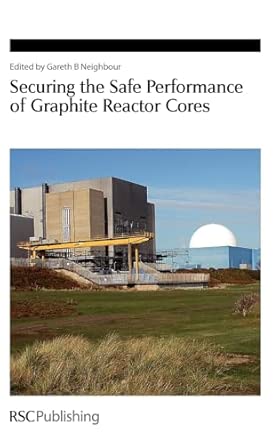
Securing the Safe Performance of Graphite Reactor Cores: The Proceedings of the Meeting on securing the Safe Performance of Graohite Reactor cores … Group: Volume 328 Edition. ed. Edition
Author(s): Gareth B Neighbour
- Publisher: Royal Society of Chemistry
- Publication Date: 11 Jun. 2010
- Edition: Edition. ed.
- Language: English
- Print length: 272 pages
- ISBN-10: 9781847559135
- ISBN-13: 1847559131
Book Description
This book provides an up-to-date account of recent advances in securing safe performance of graphite-moderated nuclear reactors both within the UK and abroad.
Editorial Reviews
From the Inside Flap
From the Back Cover
About the Author
Gareth Neighbour is a Senior Lecturer in Engineering at the University of Hull and has been involved with the nuclear industry since 1989. He completed his PhD at the University of Bath in collaboration with the Berkeley Nuclear Laboratories of the then CEGB on the topic of Microstructural Processes Leading to Fracture in Nuclear graphite in 1992 and has maintained a strong interest in nuclear graphites ever since. He joined the Department of Engineering at the University of Hull in February 2001 from the University of Bath where he formed and then led the internationally recognised Bath Nuclear Materials Group. During five years at Bath, he saw his group thrive to hold a broad range of contracts by providing an independent research and development activity to the nuclear power industry including the regulator and the IAEA. Prior to this, during 1992-1996, he worked for AEA Technology at their Windscale plant where, amongst other things, he worked on post-irradiation evaluation of reactor fuel. Gareth has in excess of 60 open literature publications as well as a similar number of substantive and definitive industrial reports for external organisations covering a diverse range of subjects from modelling dimensional change in irradiated moderator graphites to product development and in particular, redundancy in design. Currently, Gareth’s research activity falls under the banner of “Materials and Process Performance”. The main thrust is the effectiveness of UK gas-cooled reactor core designs, particularly the functionality of core components to support life extension using various modelling and analytical techniques. Coupled with this is his interest in policy formulation using a systems approach for radioactive materials treatment, waste minimisation and decommissioning and in particular, the effect of risk assessment methodology has on environmental and societal decision making.
Excerpt. © Reprinted by permission. All rights reserved.
Securing the Safe Performance of Graphite Reactor Cores
By Gareth B. Neighbour
The Royal Society of Chemistry
Copyright © 2010 The Royal Society of Chemistry
All rights reserved.
ISBN: 978-1-84755-913-5
Contents
Part A – General Introduction,
Part B – Assessing Core Behaviour and Methodologies,
Part C – Surveillance and Test Methods,
Part D – Prediction of Component Performance,
Part E – Plant Performance,
Part F – Graphite Reactor Decommissioning,
Author Index, 257,
Subject Index, 258,
CHAPTER 1
A Look into the Past – How it All Began
Abstract
The paper records the plenary lecture given by Dr Derek Dominey. The paper will recall his experience of the early days of the research which underwrote the design and operation of the graphite moderated commercial reactors in the UK. In 1959, he joined a team at Harwell involved in the research into the radiation induced carbon dioxide-graphite reaction. His role was to pioneer the use of Carbon-14 which he had used in his research at Oxford. BEPO and later DIDO were used as radiation sources. In 1966, the research was continued at Berkeley Nuclear Laboratories using a large Co-60 source. The graphite monitoring programme for the AGRs was developed at Berkeley Nuclear Laboratories (BNL) during this period. His paper will describe the experimental methods and some of the personalities involved.
Keywords
BEPO, DIDO, Berkeley Nuclear Labs, Radiolytic oxidation
PLENARY LECTURE
I am very conscious of the honour done to me by the request from the organising committee to give this plenary lecture. I have been involved in the chemistry of graphite, on and off, for over 50 years and this is, perhaps, an appropriate time to look back at where it all began.
I have taken some inspiration in preparing the talk from two books. The first by Professor Otto Frisch is entitled “What Little I Remember” and in the Preface he acknowledged that his memory was not always accurate and that he had tried to bring to life some of the people he had met. The second was by Spike Milligan entitled “Adolph Hitler; My Part in his Downfall”. So my story relies on an incomplete and maybe inaccurate memory and I emphasise that personally I played a very small part in what has been a remarkable success story. I will refer to the part played by many individuals, but I could mention so many more and I apologise to those who I have neglected to name.
As an aside, it is interesting to note that in 1975 Otto Frisch wrote a spoof article entitled “Are coal-driven power stations feasible” supposedly written at a time when uranium supplies were becoming exhausted and a new source of energy was needed. The article concluded that the problems with safety would rule out the use of coal. The noxious gases produced by combustion would have “to be collected in suitable containers, pending chemical detoxification. Alternatively the waste might be mixed with hydrogen and filled into large balloons, which are subsequently released”. This before any talk of global warming.
So, how did it all begin for me? I was at school when the atomic bombs were dropped on Japan. Post war, the hot topic was how this new form of energy would be turned to practical use. There was a series of conferences in Geneva on “The Peaceful Uses of Atomic Energy”. The proceedings still make interesting reading. I was intrigued and felt that this exciting prospect would play a part in my subsequent career. And so it proved.
I read Chemistry at Oxford. This was a four year course, the last of which involved a full time research project. I persuaded Professor Hinshelwood to take me as a member of his team because he was the only person supervising work on radioactive isotopes. He was investigating the metabolism of bacteria by measuring the uptake of labelled nutrients labelled with Sulphur-35, Phosphorus- 32 or Carbon-14. During this period I also worked on isotope effects, measuring the different rates of reactions with compounds containing Carbon- 12 and Carbon-13 (which forms about 1% of natural carbon). Measurements were made by mass spectrometry. This work was done in collaboration with Professor Gus A. Ropp from Tennessee and my first published paper was in the Journal of the American Chemical Society in 1957. Gus was a very tall, laconic guy who became a great friend. He and his wife explored the British Isles mainly at weekends in a tiny Volkswagon which he bought in Germany and subsequently took home to the USA. His other hobby was photography, but he took so long to get an accurate reading on his light meter that the light had usually changed by the time he clicked the shutter!
Subsequently, I joined the team which followed up the Professor’s earlier studies on the mechanism of hydrocarbon pyrolysis with Carbon-14 labelled compounds. All the compounds we used had to be synthesised. We obtained our supplies of radioactive isotopes, which were produced at Harwell in BEPO, from the Radio Chemical Centre at Amersham who could supply any form of Carbon-14 provided it was CO2! We also had to develop methods for measuring the very low energy beta radiation from Carbon-14. The CO2 was converted to Barium Carbonate which was filtered and dried and then counted with a thin window Geiger-Muller counter. Corrections had to be applied for the thickness of the sample because the radiation was absorbed by the sample itself. To measure the activity of any other compound, it had to be converted to CO2 and processed in the same way. This was a tedious process and eventually we developed a windowless scintillation counter on the end of a gas chromatograph, packing the columns ourselves, and we were able to measure the activity of individual gases. Our sole apparatus for working out our results was a mechanical calculator which involved much handle turning; it was shared between a team of 5 which included a Canadian, an Indian, two South Africans and myself and we became adept at managing international disputes! Sometimes we worked all night on the basis that as long as the equipment was working – keep going. So CO2 and radiation entered my life.
After graduation, I applied for a Research Fellowship at Harwell as the next step towards my goal. After months of investigation by the security agencies during which I turned down several other opportunities, including one to join a team developing a reactor to power aircraft, I was allowed to take up the Fellowship. Remember this was not long after the unmasking of Klaus Fuchs in 1950 so the caution was understandable.
I arrived at Harwell in 1959 in the middle of a Geneva Conference and met the Head of Chemistry Division, Bob Spence, who gave me a month to look round the laboratories and go back to him with a proposal for research when he returned from Geneva. I duly did this and as a result joined the Pile Irradiation Group under John Wright.
I was fortunate in starting my career under John and I learned an enormous amount from him and the members of his team. John was methodical and logical in his approach. He had spent time at Chalk River before moving to Harwell. John was a former graduate of my College and he took me under his wing. His criticism and correction of my reports was ruthless and those who subsequently suffered my treatment of their efforts owe much of this to him. He taught us to be rigorous. When he retired John produced several superb reports which summarised the research at that point. The major report (Wright, 1981) contains 373 references and the list reads like a roll of honour of those who did the pioneer work. Sadly John contracted Alzheimer’s disease from which he died. Ironically this disease has played a major role in my life since I retired from full time work in l 995 to look after my wife.
Two other senior members of the group were Mike Tomlinson and Ken Linacre. Mike is a lanky Yorkshireman whose main hobby was climbing. He and his wife, Helen, who worked in the translation service in the Harwell library, would set off for the Scottish mountains on Friday evenings and be back at work on Monday morning. There were no motorways then. On one such trip Mike broke his leg. He was a neighbour of ours and I drove him into work in his Ford Zephyr with his leg propped on the dashboard. When their son was born he was carried up mountains on Mike’s back. Mike and Helen eventually emigrated to Canada and Mike played a prominent role in developing Whiteshell at Pinawa. They are still living there in retirement. Ken Linacre was largely responsible for developing calorimetry as the method for measuring absorbed radiation dose. This was essential to underwrite the corrosion measurements which the group made.
So what did I do? At that time the first Magnox reactors at Berkeley and Bradwell were being built. They began operation in l 962. Reactors with higher power were being designed, including the later Magnox reactors and the Advanced Gas-cooled Reactors. Let me remind you of the problem the designers were facing. Carbon dioxide was the chosen coolant partly because of its apparent radiation stability, but it reacted with graphite to produce carbon monoxide. So the moderator / structure of the core would slowly erode. But how slowly? The designers had in mind at least 20 years life and the maximum tolerable weight loss was thought to be about 20%. How do you measure a corrosion rate of 1% per annum with sufficient accuracy to design with confidence a structure that will operate safely for 20 years or more.
The first methods involved measuring the rate of CO production from small graphite samples under irradiation in CO2 in sealed tubes. By varying the size and shape of the graphite samples in the tubes, the first estimates were made about the lifetime and range of the active species responsible for the corrosion. Use of these data required very large extrapolation and the assumption that the mechanism of the reaction was understood. This programme was managed by staff from GEC at Wembley and the results were published in a series of GEC reports between 1959 and 1962. Nonnan Corney and Barry Copestake took turns in joining our group to supervise the irradiation of the specimens in BEPO. The analysis was carried out at Wembley. Both were enthusiastic and helpful colleagues. Sadly, I believe that Barry was later killed in the East Midlands air crash.
BEPO was an air cooled graphite moderated research reactor producing about 5MW. There were 3 ways of loading samples into the reactor. Specimens could be loaded into carriers which were put into the reactor during shutdowns; or they could be loaded at power by two devices called the ‘Rabbit’ and the ‘Jumping Jack’.
The ‘Rabbit’ was a pneumatic tube, like a Lampson tube that I remember being used in some shops to send money from the counter to the cash office and return change. The sample for irradiation was contained in a silica tube with a thin membrane at one end so that the sample tube could be opened in a vacuum system to retrieve and analyse the gas. The silica tube was packed with silica wool inside a plastic container about 3″ long and 1″ diameter. This was fired into the reactor from the active laboratory. At the end of the experiment, the sample was retrieved the same way. You will appreciate that the silica tube suffered big shocks during this process and the probability of shattering the tube was substantial. The membrane strength was another problem. It had to be strong enough to withstand the impacts, but weak enough to break in the vacuum apparatus. So we always retrieved our samples, at the end of long tongs, with some trepidation. Because the samples had to be transferred to lead pots to allow short lived radiation to decay it was often some time before the tubes could be transferred to the analytical equipment. If at that stage, the tube was found to be damaged or if the membrane could not be broken the experiment was a write off. A story is told in a recent book by Nick Hance (2006) of an occasion when a sample became stuck in the rabbit. Unknown to the operator a section of pipe above ground had been disconnected and a worker’s dust cap stuffed into the pipe. The compressed air pressure was wound up to dislodge the rabbit with the result that it was fired through the hangar window like a bullet.
The ‘Jumping Jack’ was also a pneumatic device, but more gentle on the samples. It was operated from the pile cap and consisted of tubes leading into the active zone which could be accessed separately by rotating a plug by hand. A compressed air line fed in to the bottom of the rig and the gas pressure was adjusted manually by means of a valve at the top. The sample was loaded into a magazine in the plug. The air pressure was adjusted in the loading tube; the pressure was indicated on a dial. The top plug was then rotated so that the sample floated on the air cushion. The pressure was then manually reduced allowing the sample to drift to the bottom of the rig. After the required radiation period, the sample was retrieved by the reverse of this process. This activity required some degree of skill and great concentration. Things did not always go according to plan. One had to be careful to ensure that the compressed air flow was in the correct tube. On one occasion, attempting to retrieve the sample, I inadvertently directed the air flow up the tube that was empty, with the result that I got a blast of air contaminated with radiation in the face. This necessitated a visit to the Medical Department for a shower and some tests to determine how much I had ingested. Fortunately, it was negligible, but I made sure it never happened again.
The process required intense concentration. The shutdown mechanism of BEPO involved driving in control rods with compressed air. They were tested regularly and a warning was always sounded to alert those on the pile cap of the impending big bang. Even then it was a shock when it happened. Imagine then the day when I was crouched over the jumping jack in the course of lowering a sample into the reactor when it tripped. The shock was bad enough, but my worst concern was that I had caused the trip and that I would be blamed by the operators. Fortunately the trip had nothing to do with me.
Before leaving BEPO, I would like to relate the occasion when, in the aftermath of the fire at Windscale, it was decided to release the Wigner energy stored in the BEPO graphite by raising the temperature by a controlled procedure. Thermocouples located throughout the core were connected to an array of chart recorders set around the hanger floor. Each recorder monitored about 10 thermocouples and there was an alarm level on the chart. We observed the rising temperatures as additional heat was supplied and as the Wigner energy was released the slope of the curves increased. This was all done very slowly and took many hours. Eventually the temperature readings levelled off well short of alarm level to everyone’s relief.
The measurement of the rate of corrosion by the assay of CO production was laborious and not very sensitive and I was given the task of developing a method of measurement using Carbon-14 employing my earlier experience. With the aid of colleagues from Chemical Engineering Division rods of PGA graphite were labelled with C-14 by induction heating to 2000 °C in the presence of labelled CO followed by an anneal at 2200 °C. Later samples were produced by cracking labelled methane onto an impermeable high density carbon and by heating graphite impregnated with labelled glucose to 1000 °C. These samples were irradiated in a CO2 atmosphere, initially in sealed tubes. This technique was extensively used in the in-reactor rigs which were developed later.
The other objective of my early research was to investigate why CO2 was apparently stable under irradiation. Clearly the energy of the radiation was more than sufficient to break the bonds of the molecule so there must be a mechanism for recombination of the initial products of decomposition. The method chosen to investigate this mechanism was to study the exchange of C-14 between CO2 and labelled CO. The original experiments were done by Don Stranks during a short secondment to Harwell from Leeds University. He coated silica tubes with boron oxide and took advantage of the B(n,alpha)Li reaction to increase the dose rate during irradiation in BEPO by I or 2 orders of magnitude. However, the quality of the radiation was quite different from that in a power reactor and we could not be sure that the results were applicable and I did not pursue this line for long.
The assumption made was that CO2 would initially be decomposed to a CO molecule and an oxygen atom which would then recombine with the labelled CO to form labelled CO2 the rate of formation of which would be equivalent to the initial rate of decomposition. Although the mechanism was later shown to be much more complex than this simple model these experiments did give early indication of the G value for CO2 decomposition. Later Frank Palmer joined the group and we collaborated in developing this work which was presented at the first discussion of the Faraday Society which took place outside the UK in The University of Notre Dame near Chicago (Dominey & Palmer, 1963). This Faraday Discussion was chaired by Fred Dainton who decided on the way across the Atlantic that our paper should open the proceedings which meant that I could enjoy the rest of the papers. This technique of using various isotopes, including C-13 and O-18 proved a powerful technique for unravelling the radiation chemistry of CO2. The work was carried on at Berkeley Nuclear Laboratories by Tony Wickham who gained his PhD for this research (Dominey & Wickham, 1971). His external examiner was Fred Dainton who by that time was Professor of Physical Chemistry at Oxford.
(Continues…)Excerpted from Securing the Safe Performance of Graphite Reactor Cores by Gareth B. Neighbour. Copyright © 2010 The Royal Society of Chemistry. Excerpted by permission of The Royal Society of Chemistry.
All rights reserved. No part of this excerpt may be reproduced or reprinted without permission in writing from the publisher.
Excerpts are provided by Dial-A-Book Inc. solely for the personal use of visitors to this web site.