 Wow! eBook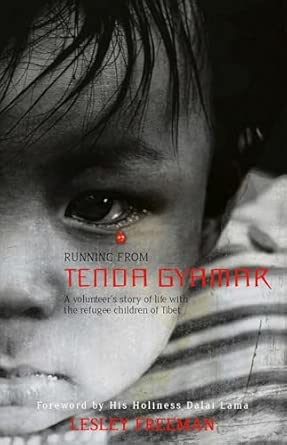
Running from Tenda Gyamar: A volunteer's story of life with the refugee children of Tibet First Edition
Author(s): Lesley Freeman (Author), His Holiness Dalai Lama (Foreword)
- Publisher: Mantra Books
- Publication Date: 26 April 2013
- Edition: First Edition
- Language: English
- Print length: 215 pages
- ISBN-10: 9781780998534
- ISBN-13: 9781780998534
Book Description
Editorial Reviews
Review
About the Author
Excerpt. © Reprinted by permission. All rights reserved.
Running From Tenda Gyamar
A Volunteer’s Story of Life with the Refugee Children of Tibet
By Lesley Freeman
John Hunt Publishing Ltd.
Copyright © 2012 Lesley Freeman
All rights reserved.
ISBN: 978-1-78099-853-4
Contents
Foreword………………………………………………………….1Acknowledgments……………………………………………………3Historical Overview………………………………………………..5Prologue………………………………………………………….9Part One………………………………………………………….1 Tibetan Children’s Villages (TCV)………………………………….162 Myself………………………………………………………….183 My life and work at Selakui……………………………………….394 Meeting Dawa…………………………………………………….695 My life at Rajpur………………………………………………..796 India, through my eyes……………………………………………106Part Two………………………………………………………….7 Dawa Tsering…………………………………………………….1218 Kalsang Tsering………………………………………………….1269 Jampa Yangchen and Pema Yangdon……………………………………13110 Lobsang Khedup and Tenpa…………………………………………13511 Tsering Topgyal…………………………………………………13912 Tsedon…………………………………………………………14313 Tashi Gonpo…………………………………………………….14514 Sonam Rinchen…………………………………………………..14815 Tashi Tsering…………………………………………………..15316 Pema Namkha…………………………………………………….15717 Tashi Lhamo…………………………………………………….16118 Lhakpa Tsering………………………………………………….16419 Jamyang Tsomo…………………………………………………..16820 Gyedon Tso and Yetam Tso…………………………………………17021 Karma Tsegyal…………………………………………………..17222 Jampa Tenzin and Thakla………………………………………….17623 Kunga Yangtso and Ngawang Choedon…………………………………18124 Dorje Tsering…………………………………………………..18425 Sonam Yangzom and Ngawang Choezom…………………………………18626 Nyinkar………………………………………………………..19027 Dhondup Tsering…………………………………………………19428 Choeney Dolma…………………………………………………..19829 Choengya Tsering………………………………………………..20130 Tsering Yangzom…………………………………………………20431 Reflections…………………………………………………….208Letters from our friends in Rajpur…………………………………..210Epilogue………………………………………………………….214Glossary………………………………………………………….218Useful Addresses…………………………………………………..219
Excerpt
CHAPTER 1
Tibetan Children’s Villages (TCV)
Tibetan Children’s Villages (TCV) was set up in 1960 by HisHoliness the 14th Dalai Lama. Subsequent to the invasion of Tibetand violation of the Tibetan people by the Chinese in 1950, HisHoliness escaped from Tibet through the Himalayan Mountainsto face uncertainty in India. Thousands of Tibetans – men,women and children – followed their temporal and spiritualleader to begin a new life in exile as refugees in India.
The massive influx of Tibetan refugees caused a huge problemregarding the welfare and educational needs of these children.His Holiness, being aware that they were the future of Tibet,decided to establish an organisation that would save them fromthe desolate circumstances and terrible conditions they faced. HisHoliness’s Sister, Madam Tsering Dolma Takla, agreed to takecharge of the children, who began to arrive at the centre daily.
Most of the children came from road workers’ camps, as thiswas the only work available to the uneducated Tibetans. Men,women and children lived and worked in appalling conditions,many of them afflicted by diseases such as tuberculosis, andstomach and skin problems caused by exposure to the harshenvironment and climate they had faced during their journey.The children were sick and there was a desperate shortage of thebasic necessities such as food, clothing and medicines. Everyeffort was made to find carers who would give these children thelove and attention they needed. As time went by international aidorganisations, pressure groups and individuals learnt of theTibetans’ sad plight and began to support TVC.
Tragically, in 1964, Madam Tsering Dolma Takla died, so heryounger Sister, Madam Jetsun Pema, took over as director. Sincethen, due to Madam Pema’s determination, dedication andtenacity, TCV has expanded and has many branches, caring forover 11,000 Tibetan refugee children. In 1972, TCV was officiallyregistered as Tibetan Children’s Village and became a member ofSOS Kinderdorf International in Vienna.
With their support TCV continues to expand and in 1973 asponsorship fund was created to secure sponsors for thechildren’s welfare and education. The sponsorship providesfood, clothing, medical expenses, school uniforms, books andstationery.
There are now children’s villages, residential schools, TCVday schools, day care centres, vocational training centres, youthcentres, outreach programmes and old people’s homes that aresupported by TCV, SOS and sponsors from across the world.
Details of the charity can be found in the ‘Useful Addresses’section at the back of this book.
CHAPTER 2
Myself
My initial vision and objective in writing this book was to tell thestories of Tibetan refugee children and hopefully, throughpeople’s increased or newfound awareness, to secure financialsupport for them. However, since working at Selakui, moving toRajpur and witnessing for myself the children’s educational andemotional welfare needs, I decided that not only financial helpwas required, but also a huge increase in volunteers. Therefore, itis also my hope that this book will inspire others to do as I didand to consider volunteering. A Tibetan once said to me, “Lesley,there’s nothing stronger, or more sincere, than the heart of avolunteer.”
For that reason, before you begin reading the children’sstories, I want to tell you about myself and how I became avolunteer for Tibetan refugees. I want to share with you some ofmy experiences, to help you build an image and have someinsight into my thoughts and feelings, the obstacles leading up tomy departure from England and what my life was like when Ireturned to India.
I want you to get to know me and understand why I chose tomake such sacrifices. I didn’t realise my life would change inways beyond anything I could have imagined. I believe this to bevaluable background for anyone who has yearned to make asimilar journey but, for whatever reason, procrastinates.
People consider me to be frank, compassionate, empathic,tenacious, romantic, stubborn and kind, but much too sensitiveand emotional. I speak from the heart and I am true to myself,even if it means hurting others in the process. What I mean to sayis that, since 1998, I have lived by my belief that: ‘I don’t have togive up myself to please others. I am free to do as I want.’ This hasgiven me the courage and motivation to begin living my life inthe way that my soul needs and, furthermore, I believe thatliving with this conviction has helped bring me where I amtoday.
I was born in St Mary’s Hospital, Islington, North London in1959. I have three sisters, one of whom is my non-identical twin,and two brothers. Most of my childhood years were spent first inWiltshire and then in Essex. I had a miserable childhood, livingin constant fear that my mother would kill me, which she tried todo on more than one occasion, and that my father would leaveus, as he often did when they fought. I needed protection fromMum, but Dad was unable to provide it.
From the age of eight, every night before I went to bed, Iwould hide any matches, knives or other objects that I thoughtMum would use to hurt or kill me. After several years ofarguments, hostility, and witnessing things that little girls nevershould, things that fill people with horror when I tell them, Mumand Dad, thankfully, divorced. I was eleven. Mum is an alcoholic,she has epilepsy and suffers from ‘nervous problems’; we havenot seen each other for many years. I had nightmares about herfor such a long time, waking covered in sweat and crying, whichonly ceased after I received counselling.
Following a year’s intense and arduous therapy with Eva, mycounsellor, I was finally able to forgive Mum and write a lettertelling her so. Writing that letter was prompted by a Denise Lintape that I had bought, which motivated me to forgive myparents. She advises us to “Look at your mum and dad as small,frightened children themselves, and know that they, too, were hurtwhen they were young”. She says, “Find a place in your heart whereyou can keep a vision of your mother as a scared little girl, or yourfather as a frightened little boy.”
I desperately wanted Mum to take responsibility for heractions, but eventually faced the sad fact that she would beunable even to comprehend what I was saying to her, let aloneaccept that responsibility.
I sobbed as I read out the letter during my therapy session.Every word was painful to say but, at the same time, broughtrelief. When I finished I looked up and saw that Eva was alsocrying. She told me she had never heard such beautiful words ina letter and that these had come from deep within my soul.
I regret never keeping a copy of that letter, as I would like toread it now and again. The enormous sense of relief at letting thepast hurt go and to say, “Mum, I forgive you,” catapulted me intoa new beginning; a new acceptance of her, my past and myself.
My next task was to visit Dad and ask him to take responsibilityfor not protecting me from Mum. He, like the rest of myfamily, knew I had been going through many ‘transformations’since my therapy and I think they were all a little wary of me,even afraid. They repeatedly complained that they didn’t knowwho I was anymore. I responded energetically by saying, “Nordo I, but I soon will and so will you, and we will like who I am.”
I believe that each member of my family, including myself,were like cogs. We all needed to keep to our unconsciouslyallotted roles within the family structure to keep the wheelsturning. The wheels stopped turning when I no longer wished tobe just another ‘cog’: I had changed my mind and I wanted to dosomething else with my life, to find a new role that would feedand nurture my heart and soul. This upset my family because myself-development and the improvements in my life had the effectof forcing them to look at their own lives, which made themuncomfortable. There are particular members of my family whowere terrified of facing certain issues, because they were eitherunwilling or unable to do so, and this is why I felt different.Unless I faced what was given to me, how on earth could Idevelop and learn about myself?
Dad was shocked at my appearance: “Lesley, you lookterrible!” he said. He was scared to confront the reasons why Ihad visited him and tried to change the subject. He couldn’t evenlook at me. After several hours of talking, crying and hugging, heuttered the words I had been so desperate to hear: “Lesley, I takeresponsibility for not protecting you from your mum, and I’msorry.” At that moment it was evident that both of us had takenhuge steps in our own ways. From then on my relationship withDad improved.
Dad provided well for us. He worked hard to give us ascomfortable a life as he possibly could. Although we weren’twell-off by any means, we always wore smart, clean clothes andthe cupboards were always full of food. Yet he was a difficultman to live with: he had a violent temper, which he often tookout on us and we lived in fear of him, which is how, wediscovered, he had lived with his own father. As I grew older Iyearned for him not just to listen to me, but to hear me – mythoughts, feelings and opinions – but he could only hear his own.
The one thing about him that affected me more than anythingelse was that he never allowed me to complete a sentence. Hecontinually interrupted me and was unable to hear and understandwhat I wanted to say. He took away my power of speech,which was a dreadful feeling. However, things have improvedand now it feels good to sit and talk to him.
My working life in England was spent mostly as a personalassistant and secretary in various companies in the City ofLondon with a break of two years during which I opened and ranmy own tea and coffee house. This was without doubt, in myopinion and that of my bank manager, the worst decision I evermade. Although I was creative, excited, motivated and had firmideas about what I wanted for my business, I was, unfortunately,also inexperienced in keeping accounts and supervisingemployees.
After selling my business a year later (for a very good profit,I might add, which eventually drew a smile of relief from mybank manager) and divorcing my husband, I returned to the City,resuming my role as a secretary. I soon felt demoralised andwondered if this was all there was to the rest of my life. I spentmore time talking to colleagues and friends about their problemsand endeavouring to work them out than sitting at my deskdoing my job. Riskily, I decided to leave paid employment andreturn to school to study for a diploma in psychology. I wanted tobecome a ‘therapeutic counsellor’. I wanted to help people: this,I knew, would feed my soul. I was confident it would lead tomany new opportunities, though not the kind that it eventuallydid.
Part of the training course curriculum required all students toundertake their own personal counselling sessions. Although thisproved to be the most difficult part of the course for me, iteventually helped me realise that I wanted to do somethingdifferent and meaningful with my life. I needed to make somedrastic changes, which meant making some big sacrifices andtaking some big risks. I explained to Eva that I wanted to givesomething of myself to others in the world that would, hopefully,benefit their lives. I was determined to leave this world havingdone something useful and worthwhile for humanity.
I am by no means gifted academically and I possess nooutstanding skills or qualifications, apart from my counselling.There is only me, my life experiences and an abundance of love,along with the need to care for and help others, and give themwhat I feel I missed out on in my own past. I knew I didn’t wanta life where I just woke up every day to live the same ‘nine to fiveroutine’ only to return home again to an empty house with noone to share my evenings. I needed more than that: I neededsomething to feed my mind, body, heart and soul. However, I hadno idea what that was, or how I could find it.
Eva mentioned an ex-student of hers whose parents worked ina hospital in Kolkata, India. They were looking for volunteers tosupport their HIV patients. Although I expressed great enthusiasmfor this work, after a few weeks of waiting, nothing materialisedso I carried on dutifully with my studies and therapy.However, Eva and I did not realise that she had unwittingly’planted a seed’ in me, which had begun to grow. I’m the kind ofperson who, once something penetrates their soul, does everythingin their power to achieve it.
At the time of my therapy I was undergoing sessions ofcolonic hydrotherapy. For those of you who are innocent of thisuncomfortable, distasteful and somewhat embarrassing practice,a tube is inserted into the rectum and cleanses the colon withpurified water. This not only improved my physical health, butalso improved my psychological state of mind. I will expand onthis. A small part of the tube is clear. Therefore, one can see, ifone so desires, the built-up waste leaving the body. I would forcemyself to look at this and surprisingly (and somewhat disconcertingly),I soon began to envisage the bad feelings and hurt Ihad suffered in the past leaving my body. This visualisationworked extremely well with regard to people who had affectedme negatively!
My ‘bottom’ therapist was interested in my ‘spiritual path’and, having never before had this question set before me, Ibecame quite stimulated, as it gave me yet another opportunityto analyse myself, which I am prone to do much too often. Sixyears previously I had been confirmed into the Catholic faith, butI remained unsure if this was, in fact the correct and appropriatereligion for me. She began to tell me how the Buddhistphilosophy had greatly improved her life. She enthusiasticallyproceeded to share her many personal stories and by the time Ileft the clinic I was eager to read more about Buddhism. Walkingas fast as my short legs would carry me, my brain directed me tothe nearest bookshop. This surely must have been the quickest Ihave ever parted with my hard-earned cash, buying severalbooks written by His Holiness the 14th Dalai Lama as if theywere going out of print.
I feel ashamed to admit that before that moment I had nevertaken much notice of the Dalai Lama, his people or Tibet. In fact,I knew nothing at all. I didn’t even know where Tibet was. As Iread, I was appalled by how the Tibetans had suffered andcontinued to suffer at the hands of the Chinese. I was ashamedthat I had been too selfish and preoccupied with my own life tonotice or learn anything about these people and their plight.
It also made me think of the people who were toleratinghardships in my own country and how, in the past, I had ignoredpleas for help from people, regardless of whether I knew them ornot. The words of His Holiness made me look at and reflect moredeeply on myself, questioning my past motives, morals, valuesand actions. For the first time in my life I came face to face withthe ‘real me’ and I didn’t like what I saw. I disliked how I felt andhow I thought even more. I realised that much of what I hadsuffered in this life had been of my own making. I used to believestrongly in destiny and fate, but this has been replaced with aneven stronger belief in karma, the cause and effect of one’sactions.
As a result of my own actions I make my own destiny, no oneelse. I am responsible for the way I live and the person I am. Upuntil that moment I had blamed others for my often lonely andmiserable existence. I had failed to take responsibility for myown life. At my following session with Eva I explained to her,with surprising clarity, my ‘new awareness’. She suddenlyjumped and whooped with joy! She said I had made remarkableprogress by finally admitting this to myself, and this was whatshe had been waiting for.
With her help and the support of my children, closest friends,tutors and group members at college, I worked tirelessly to revisethe values by which I had previously lived. I knew deep withinmy heart and soul that my ‘new’ values and deepest beliefs mustbe strictly adhered to in order for me to make the true choicesthat would benefit my future.
(Continues…)Excerpted from Running From Tenda Gyamar by Lesley Freeman. Copyright © 2012 by Lesley Freeman. Excerpted by permission of John Hunt Publishing Ltd..
All rights reserved. No part of this excerpt may be reproduced or reprinted without permission in writing from the publisher.
Excerpts are provided by Dial-A-Book Inc. solely for the personal use of visitors to this web site.


