 Wow! eBook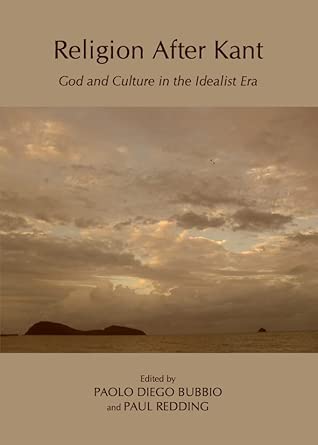
Religion After Kant: God and Culture in the Idealist Era
Author(s): Paolo Diego Bubbio (Author, Editor), Paul Redding (Author, Editor)
- Publisher: Cambridge Scholars Publishing
- Publication Date: 25 April 2012
- Edition: 1st
- Language: English
- Print length: 255 pages
- ISBN-10: 1443835188
- ISBN-13: 9781443835183
Book Description
After a period of neglect, the idealist and romantic philosophies that emerged in the wake of Kant’s revolutionary writings have once more become important foci of philosophical interest, especially in relation to the question of the role of religion in human life. By developing and reinterpreting basic Kantian ideas, an array of thinkers including Schelling, Hegel, Friedrich Schlegel, Hölderlin and Novalis transformed the conceptual framework within which the nature of religion could be considered. Furthermore, in doing so they significantly shaped the philosophical perspectives from within which later thinkers such as Feuerbach, Kierkegaard, Wagner and Nietzsche could re-pose the question of religion. This volume explores the spaces opened during this extended period of post-Kantian thinking for a reconsideration of the place of religion within the project of human self-fashioning.
Editorial Reviews
Review
“. . . German thought from Kant to Nietzsche has had an immense impact on philosophy . . . Its impact on religious practice and theology has probably been even greater. Religion After Kant: God and Culture in the Idealist Era gives us a fresh look at a philosophical movement that has also meant so much to the wide-ranging religious public.”– Terry Pinkard, Georgetown University”In recent decades the relations of religion with politics and philosophy have become more complex and tense than confident Enlightenment triumphalists of the mid-20th century could have imagined. We need better modes of thinking about religion. This volume of essays offers new perspectives on 19th century thinkers such as Hegel, Kant, Nietzsche, Kierkegaard, Wagner, and others. These are serious philosophical and historical essays, but they also give those thinkers a new urgency. In these essays the history of philosophy is not a museum where we can see extinct species, but a resource where we can find unexpected novelty in reading older thinkers and helpful new directions for our own reflections on today’s concerns and tensions.”– David Kolb, Bates College
About the Author
Paolo Diego Bubbio is Postdoctoral Fellow in Philosophy at the University of Sydney and the holder of a Future Fellowship at the University of Western Sydney. He is the author of two monographs in Italian, and the co-editor of The Relationship of Philosophy to Religion Today (2011). Paul Redding is Professor of Philosophy at the University of Sydney and a fellow of the Australian Academy of the Humanities. He is the author of Hegel’s Hermeneutics (1996), The Logic of Affect (1999), Analytic Philosophy and the Return of Hegelian Thought (2007), and Continental Idealism: Leibniz to Nietzsche (2009).


