 Wow! eBook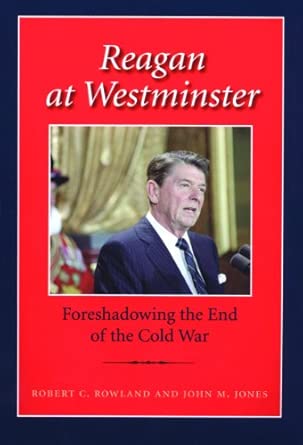
Reagan at Westminster: Foreshadowing the End of the Cold War
Author(s): Robert C. Rowland (Author), John M. Jones (Author)
- Publisher: Texas A & M University Press
- Publication Date: 15 Nov. 2010
- Language: English
- Print length: 160 pages
- ISBN-10: 1603442154
- ISBN-13: 9781603442152
Book Description
Editorial Reviews
Review
“…a valuable rhetorical criticism of Ronald Reagan’s rhetoric…thorough execution of rhetorical criticism…innovative observations…thorough and insightful…an insightful piece of scholarship…written in a clear, concise manner…an excellent choice for a case study…easy for readers to follow…a meaningful experience.”–Valerie Lynn Schrader, Pennsylvania State University, Schuylkill Campus, from Rhetoric and Public Affairs
— (10/19/2011)
“…an excellent contribution to the Reagan historical archives…”–H.H. Gaffney, CNA Corporation, Project MUSE
— (01/27/2012)
“…exemplary in its details…an excellent contribution to the Reagan historical archives.”–H.H. Gaffney, CNA Corporation, former official in the Office of the U.S. Secretary of Defense, Journal of Cold War Studies
— (02/17/2012)
“This book will be of interest to scholars in communication studies, political science, and history. Furthermore, it is written at a level that will allow graduate and undergraduate students to gain a better understanding the importance of presidential speechmaking.” – A.L. Warver, Clemson University, Choice– (05/26/2011)
About the Author
ROBERT C. ROWLAND, professor of communication studies at the University of Kansas, is the author or coauthor of four books, one of which, Shared Land/Conflicting Identity: Trajectories of Israeli and Palestinian Symbol Use, won the Karlyn Kohrs Campbell Prize in Rhetorical Criticism.
JOHN M. JONES, associate professor of communication at Pepperdine University, has focused his research and publication on the rhetoric of Ronald Reagan. He holds a PhD from the University of Kansas.


