Wow! eBook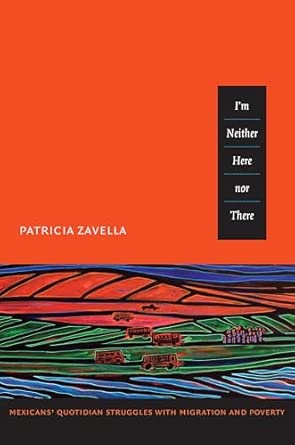
I'm Neither Here nor There: Mexicans’ Quotidian Struggles with Migration and Poverty
Author(s): Patricia Zavella (Author)
- Publisher: Duke University Press
- Publication Date: 13 Jun. 2011
- Language: English
- Print length: 350 pages
- ISBN-10: 0822350351
- ISBN-13: 9780822350354
Book Description
Drawing on close interactions with Mexicans on both sides of the border, Zavella examines migrant journeys to and within the United States, gendered racialization, and exploitation at workplaces, and the challenges that migrants face in forming and maintaining families. As she demonstrates, the desires of migrants to express their identities publicly and to establish a sense of cultural memory are realized partly through Latin American and Chicano protest music, and Mexican and indigenous folks songs played by musicians and cultural activists.
Editorial Reviews
Review
“
I’m Neither Here nor There by Patricia Zavella is impassioned, nuanced, powerful, and politically compelling. Above all, it is stunningly comprehensive in a way that only a senior scholar who has wrestled with her own research and chewed on existing scholarship for years can deliver. In one way or another, I’m Neither Here nor There addresses virtually every issue facing migrants in the U.S. and does so with remarkable sophistication.”–Steve Striffler “International Migration Review”“
I’m Neither Here nor There is a compelling examination of structures of difference, of becoming and belonging, and of forms of border thinking that map spatio-conceptual cosmos and the human integuments that hold them together through ‘transcommunal subjectivity.’… If only every book were as intellectually productive, ethically inspiring, and politically compelling.”–Scott Catey “North American Dialogue”“Patricia Zavella’s timely
I’m Neither Here Nor There serves as an example of a broadly accessible approach to the study of the working poor. Drawing from ethnographic fieldwork in central California, Zavella analyses the daily challenges encountered by Santa Cruz County’s Mexican migrants and Mexican Americans, with an eye towards issues of family, gender, sexuality and legal status.”–Angela S. García “Ethnic and Racial Studies”“The breadth of Patricia Zavella’s
I’m Neither Here Nor There is staggering…. It is undeniable that Zavella is a rigorous, experienced, and sophisticated ethnographer who has made a monumental and original contribution with I’m Neither Here Nor There…. [It] amplifies the words of marginalized people who ‘cannot shout’ (p. xii) yet justifiably ‘eel entitled to dignity in exchange for their labor'(p. xi).”–Chad Broughton “American Journal of Sociology”“With detail and sensitivity, Zavella illustrates how changing gender roles and generational expectations are affecting and transforming Mexican diaspora communities as migrants create inventive strategies for survival…. Theoretically sophisticated yet written in an accessible style, this book is especially apropos for graduate courses dealing with themes of globalization, immigration, transnationalism, and border life and is also recommended for general readers interested in these themes.”–Regina Marchi “American Ethnologist”
“
I’m Neither Here nor There is a powerful, highly original ethnography about the complexities of the Mexican migrant and Mexican American population in the United States. By drawing primarily on work by scholars of color about people of color, Patricia Zavella decenters staid ways of understanding immigration, such as assimilation and the underclass models. Her use of the concepts of peripheral vision, double vision, and border thinking are particularly effective, as is her political-economic analysis of capitalism and neoliberalism in Santa Cruz County, California, and the poverty and challenges that they create for the area’s working poor.”–Lynn Stephen, author of Transborder Lives: Indigenous Oaxacans in Mexico, California, and Oregon“Among the most original and important contributions of
I’m Neither Here nor There are: its focus on one California region, which helps us to see that migrants do not come to an undifferentiated ‘United States, ‘ but rather to specific locations with distinct regional economic and social dynamics; its sensitivity to gender and sexuality as key sites where social change gets registered in the lives of individuals; and its brilliant discussions of the popular music of Los Tigres del Norte, Quetzal, and Lila Downs as repositories of collective memory, sites of moral instruction, and mechanisms for calling old and new communities into being through performance. Patricia Zavella also makes clear the causes and consequences of residential density and overcrowding in immigrant communities, surely one of the most important but least understood features of contemporary immigrant life. I’m Neither Here nor There is an outstanding work that will be welcomed by specialists as well as general readers. It makes unique and valuable contributions to scholarship and civic life and presents an exemplary model of sophisticated and socially engaged research.”–George Lipsitz, author of How Racism Takes Place“This is the way ethnography should be written: with stories that entice, analysis that dazzles, and just the right mix of humor, music, and in-your-face
dignidad. Border and migration studies will never be the same after Patricia Zavella’s impassioned new book, I’m Neither Here nor There.”–Matthew Gutmann, Brown UniversityAbout the Author
Patricia Zavella is Professor of Latin American and Latino Studies at the University of California, Santa Cruz. She is the author of Women’s Work and Chicano Families: Cannery Workers of the Santa Clara Valley and a co-author of Sunbelt Working Mothers: Reconciling Family and Factory. Zavella is a co-editor of Chicana Feminisms: A Critical Reader, Telling to Live: Latina Feminist Testimonios, and Women and Migration in the U.S.-Mexico Borderlands: A Reader all also published by Duke University Press.
Excerpt. © Reprinted by permission. All rights reserved.
I’m Neither Here nor There
Mexicans’ Quotidian Struggles with Migration and PovertyBy PATRICIA ZAVELLA
DUKE UNIVERSITY PRESS
Copyright © 2011 Duke University Press
All right reserved.
ISBN: 978-0-8223-5035-4
Contents
Preface……………………………………………………………ixAcknowledgments…………………………………………………….xvIntroduction. The Mexican Diaspora in the United States…………………11. Crossings……………………………………………………….252. Migrations………………………………………………………553. The Working Poor…………………………………………………894. Migrant Family Formations…………………………………………1235. The Divided Home…………………………………………………1576. Transnational Cultural Memory……………………………………..190Epilogue…………………………………………………………..226Appendix. Research Participants………………………………………233Notes……………………………………………………………..239References…………………………………………………………281Index……………………………………………………………..319
Chapter One
Crossings
During the life histories, focus groups, or field research, migrants repeatedly asked me questions about anti-immigrant discourse: “Why don’t the gringos [North Americans] want us? We only want to do the work Americans don’t like.” The undocumented migrants were more pointed: “Why won’t they let us get a driver’s license? We have to drive to get to work!” Migrants make invaluable contributions to the U.S. economy through their labor, consumption, and uncollected taxes, and, through remittances, they generate the second highest revenue source for the Mexican economy. The intertwined economic practices and policies that link the United States and Mexico form what Saskia Sassen calls “bridges for migration,” structural integration that compels the movement of large numbers of individuals from Mexico to the United States. Historically the United States and Mexico have been intertwined socially and culturally as well, in part because crossing the border—whether with authorization or not—was relatively easy. Yet by the end of the twentieth century, U.S. immigration policies and practices were designed to impede migration from Mexico. Further, in mainstream popular culture Mexican migrants were represented in highly negative terms that hearkened to the racialized nativist discourse of the early twentieth century.
Migration from Mexico has been deeply influenced by the history of relations between Mexico and the United States and in some ways is unique. During the colonial era, Mexicans settled in what is now the Southwest long before the U.S.-Mexico War (1846–48) ceded nearly half of Mexico’s territory to the United States, completing U.S. continental expansion and establishing a common 1,952-mile border and history of cooperation and tension. The Treaty of Guadalupe Hidalgo granted U.S. citizenship to those Mexicans living in what would become the United States and guaranteed to them the right to keep their land and use the Spanish language—rights that directly affected my relatives born in what became northern New Mexico. However, these rights were not honored fully and Mexicans became subordinate through dispossession of landholdings, proletarianization, residential and occupational segregation, and outright prejudice and discrimination. Any discussion of the Mexican diaspora must acknowledge the enduring colonialism in relation to the United States. And while decried as constituting undesirables, migrants from Mexico were not always subject to the same treatment as others. In the late nineteenth and early twentieth centuries, xenophobia led to exclusionary legislation against the Chinese and Japanese, and later immigration reform, designed to curtail large numbers of European migrants from entering the United States, did not include Mexicans.
These contradictory policies and practices toward Mexicans were based in paradoxical racial discourses. On the one hand, “from the turn of the [twentieth] century to World War I, labor flowed more or less freely from Mexico into the United States.” Yet liberalizing immigration laws throughout the twentieth century often concealed significant restrictive features that discouraged migration by Mexicans. Further, restrictive immigration laws purportedly intended to deter migration nonetheless have been instrumental in sustaining migration from Mexico, including those without authorization, by allowing migrants to find work and remain in the United States. Unauthorized Mexicans can experience what Nicholas De Genova calls “illegality”—they are legally defenseless yet socially included “under imposed conditions of enforced and protracted vulnerability.” Latino illegality also includes a spatialized sociopolitical condition caused by ubiquitous immigration sweeps, detainment, interrogation, deportation, or harassment, which pushes the undocumented into clandestine lives. Even those Latinos who are legal citizens are perceived as being unauthorized and subject to substantive curtailment of rights and entitlements, which raises questions about whether they are worthy citizens.
In addition to these racialization processes, scholars generally agree there has been a sharp rise in racial nativism in the United States within the last decades of the twentieth century and the opening decades of the twenty-first century. This “new nativism” views migrants, predominantly from Asia and Latin America, as being different from the Europeans who were denigrated and pressured to assimilate into American society in previous eras. George Sánchez argues persuasively that recent racial nativism is based on the following: extreme antipathy toward languages other than English and fear that linguistic difference will undermine the American nation; beliefs that migrants take advantage of racial “preference” entitlements and worries that multicultural ideology encourages them to retain their distinct racial and ethnic identities; and fear of the drain of public resources by migrants, both authorized and unauthorized, particularly their utilization of welfare, education, and health care services. Racial nativism and downright xenophobia lead to public condemnation of migrants who live in close proximity to Latino U.S. citizens.
There are also close links between racial nativism and nationalism. Often in their zeal to exclude racialized foreigners, nativists base their efforts in hypernationalism, claiming they want to save or purify the nation. In the post-9/11 era, the USA PATRIOT Act (passed in 2001) established a national security regime and further racialized Latinos, making them vulnerable to detentions, interrogations, or deportations without due process. My own son was detained at an airport because his “Latin looks” and passport indicating he has traveled around the world (including Cuba) “didn’t look right.” Since immigration reform in the mid-1960s, illegality has served as a constitutive dimension of the specific racialized inscription of all Latinos in the United States, making international border crossings especially fraught.
I extend critiques of racial nativism by discussing the gendered dimensions of immigration policy and practice toward Mexicans and how migration from Mexico is represented by voices in the public sphere, which are becoming increasingly shrill. This chapter explores how the history of racial nativism has been constructed in the recent past. How does the driver’s license controversy, often viewed as an immigration enforcement problem, illustrate the convergence of policy and representation? This analysis is critical for understanding how Mexicans are interpellated and respond in their daily lives, which I illustrate in subsequent chapters. Racial nativism has many registers in the contemporary era. I will discuss these as well as the meanings embedded in immigration reforms, the series of propositions passed by the California electorate that aimed to restrict the effects of increasing numbers of migrants in California, and antimigrant texts and representations, that is, in archives of feelings, by artists, public intellectuals, and a political pundit. I discuss how these representations become interpretative sites in the public sphere that objectify Mexicans. I argue that in the policies, practices, and representations about migration from Mexico the human costs of crossing the border and establishing new lives have been silenced. Instead, Mexican migrants are represented as risks to the nation and ultimately to whiteness while migrants’ humanity is erased.
Shifting Immigration Policies
Immigration laws in the United States always aimed to exclude the entrance of “inferior” races, the destitute, and those deemed security threats to the nation yet Mexicans have been treated somewhat differently. At times, immediately after the U.S.-Mexico War in 1848 and during twentieth-century labor shortages in the United States, immigration policy has been inclusionary toward Mexicans, turning a blind eye to migrants who entered without authorization in search of work. As Mae Ngai argues, “Illegal alienage is not a natural or fixed condition but the product of positive law; it is contingent and at times it is unstable.” It was not until the Immigration Act of 1917, which doubled the head tax and imposed a literacy test, that Mexicans were subject to the first barriers to immigration. In 1919, Mexicans were required to apply for admission to the United States at ports of entry. Despite efforts to restrict immigration and in deference to agribusinesses’ need for labor and Pan-American and Good Neighbor policies promoted by the State Department, the Immigration Act of 1924 exempted Mexico and other countries from the Western Hemisphere from numerical quotas that were based on racial preferences for those from northern Europe. Further, “Mexicans were also not excluded from immigration on grounds of racial ineligibility [like those from Japan and India] because, for purposes of naturalization, and therefore for immigration, the law deemed Mexicans to be white.” The Border Patrol, housed in the Department of Labor, was not established until 1924.
However, calls for restricting Mexican immigration grew during the 1920s, based on their supposed racial inferiority and indicators of poverty, and Mexicans became subject to baths, inspections by border officials, and luggage fumigation when crossing the border. During this period the Mexican government instituted a voluntary repatriation program and paid for 100,000 people to return to Mexico. In 1929 the U.S. State Department began restricting Mexican immigration through administrative means. “By the 1930s the Immigration Service was apprehending nearly five times as many suspected illegal aliens in the Mexican border area as it did in the Canadian border area.” Moreover, through the 1930s migration from Mexico included women and men, both working in the fields, packing houses, or canneries. During the Great Depression, more than 400,000 Mexicans were repatriated after the Immigration Service conducted a series of raids demanding to see passports, thereby creating a climate of racial animus in which relief workers pressured Mexicans to depart “voluntarily” and thus avoid state dependency. An estimated 60 percent of those deported were U.S. citizens and the vast majority spoke English. Despite the large numbers of migrants from many nations, only Mexicans were repatriated en masse, a process facilitated with the cooperation of the Mexican government. The Immigration and Naturalization Service (INS) suspended the deportation of aliens from 1941 through the late 1950s.
In response to wartime labor shortages and illegal migration during the Second World War, the 1885 ban on contract labor was rescinded by Congress so as to facilitate the importation of Mexican agricultural labor. The ins, Department of Labor, State Department, and Mexican government instituted the Bracero Program (1942–64), an agreement that contracted a total of 4.6 million Mexicans for temporary work in the United States. Hoping that Mexican men would not settle and assimilate in the United States but return to their families in Mexico, the Bracero Program did not recruit women. In the peak year of 1956, 445,000 Mexican braceros (contract workers) were recruited through this program, making up 11 percent of all farm labor and 30 percent of all hired labor in California, including positions in the food processing and meatpacking industries and on the railroads. O Mexico insisted that bracero recruitment centers be located in the interior so as not to deplete labor in northern Mexico and braceros were guaranteed transportation, housing, food, repatriation, and wages set at the prevailing rate in the United States as well as protection from discrimination, including preventing employers in Texas, Arkansas, and Missouri from refusing Mexicans admittance to “white only” public accommodations. With high unemployment and favorable wage differentials because of a devalued peso, braceros received up to ten times the prevailing local wage in Mexico. Yet employers in the United States often paid less than prevailing wages; when farm wages nationally rose by 14 percent they remained stagnant in areas that used bracero labor. Further, the widespread abuses often led men to leave contract labor and find jobs on their own, becoming undocumented workers.
The Bracero Program is widely seen as having established an infrastructure of migration, in that male migrants gained knowledge and social networks so they could migrate on their own without authorization and employers sought out those willing to accept “wetback wages.” The unauthorized and braceros often worked for the same employers and occasionally women migrated to work without authorization as well. The ins selectively enforced immigration law, allowing agricultural employers to hire undocumented workers so they could bring in the harvest and then let them “dry out wetbacks” by allowing them to return to Mexico and reenter as braceros, thus legalizing tens of thousands of unauthorized workers.
The McCarran-Walter Act of 1952 is the foundation of the nation’s immigration law. It retained the national origins system and quotas that gave racial preference to whites of British and northern European descent under the Immigration Act of 1924, preserved the nonquota immigration from countries of the Western Hemisphere, had no provision for admitting refugees, and instituted occupational preferences so as to restrict migration by those without specialized skills. Further, the bill allowed for the reunification of families by allowing the migration of limited numbers of parents of adult U.S. citizens and spouses and children of permanent resident aliens. The McCarran-Walter Act also established thirty-one excludable classes and stiffened deportation policies. In effect, the bill placed a preference for those with more education and desirable skills such as professionals and scientists and familial ties to citizens or permanent residents. The bill passed over Truman’s veto and criticisms about its racist features. Since it did not require quotas for migrants from the Western Hemisphere, Mexicans were not subject to quotas although they were still seen as undesirable entrants. With very limited options for migrating with authorization, many Mexicans crossed the border without it.
In response to increased concerns about the presence of “illegals” in the country, the Commissioner of Immigration launched “Operation Wetback” in 1954 to return undocumented migrants to Mexico. Using military consultants, the Border Patrol targeted those involved in labor organizing or other activities considered subversive. The ins apprehended 1,317,776 Mexicans in 1954 and 1955 and this campaign provided the basis for permanent funding for Border Patrol surveillance and deportation. Knowing those deported could be reprocessed as braceros, the Mexican government cooperated with the repatriations. “‘Operation Wetback’ did not bring an end to illegal immigration from Mexico. It did slow the influx for a short time but it brought no permanent solution to the problem.” As increased technology displaced braceros, many employers began to resort again to using undocumented workers, who were drawn by work opportunities in the United States and displaced by economic crises in Mexico. Significant agitation by labor rights groups in the United States led to termination of the Bracero Program. Within a year after its termination, the United Farm Workers finally was able to solidify unionization of Filipino and Mexican farmworkers.
Not long after the end of the Bracero Program, the Immigration Act of 1965 was passed and it repealed the restrictive system of national origins quotas based on racial desirability and replaced it with a system of quotas that allowed 20,000 immigrants from each country. This law emphasized family reunification by admitting immediate family members and those with desirable occupations. According to this law, “immediate relatives” were defined as spouses, unmarried children under twenty-one, and parents of adult U.S. citizens, excluding queers and distant relatives. The effects were to increase more legal entrants from developing countries and to admit more women and children. Yet with quotas on Western Hemisphere immigration and numerical ceilings, seen at the time as too severe by economists and demographers, the bill was restrictive toward migrants from Mexico. Given that in the early 1960s, authorized migration from Mexico included 200,000 braceros and 35,000 admissions for permanent residency annually, the quota of 20,000 was small. Not surprisingly, the number of unauthorized Mexican migrants continued to grow.
(Continues…)
Excerpted from I’m Neither Here nor Thereby PATRICIA ZAVELLA Copyright © 2011 by Duke University Press. Excerpted by permission of DUKE UNIVERSITY PRESS. All rights reserved. No part of this excerpt may be reproduced or reprinted without permission in writing from the publisher.
Excerpts are provided by Dial-A-Book Inc. solely for the personal use of visitors to this web site.