Wow! eBook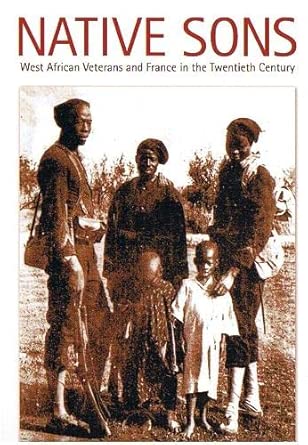
Native Sons: West African Veterans and France in the Twentieth Century
Author(s): Gregory Mann (Author)
- Publisher: Duke University Press Books
- Publication Date: 19 July 2006
- Language: English
- Print length: 344 pages
- ISBN-10: 082233755X
- ISBN-13: 9780822337553
Book Description
Focusing on the period between World War I and 1968, Mann draws on archival research and extensive interviews with surviving Malian veterans of French wars to explore the experiences of the African soldiers. He describes the effects their long absences and infrequent homecomings had on these men and their communities, he considers the veterans’ status within contemporary Malian society, and he examines their efforts to claim recognition and pensions from France. Mann contends that Mali is as much a postslavery society as it is a postcolonial one, and that specific ideas about reciprocity, mutual obligation, and uneven exchange that had developed during the era of slavery remain influential today, informing Malians’ conviction that France owes them a “blood debt” for the military service of African soldiers in French wars.
Editorial Reviews
Review
“Gregory Mann, in this thoughtfully argued and deeply researched book, shows how West Africans who served the French empire in their military careers and in both world wars developed a language of mutual obligation in relation to the state with which the French government had to engage. Following this history of claim-making to the present day, Mann forces us to rethink how we understand such concepts as state, nation, colony, empire, citizenship, welfare, and immigration.”—Frederick Cooper, author of
Colonialism in Question: Theory, Knowledge, History“In his lucid new study of Malian veterans of the French colonial army, Gregory Mann raises provocative new themes for writing conjoined local, colonial, and postcolonial histories. He has elegantly captured the dense web of human relations, discourses of obligation, and reconfigured social ties that link the dusty town of San (Mali) to the many other outposts of the republican imperial state as well as the postcolonial capitals of Paris and Bamako.”—Alice L. Conklin, author of
A Mission to Civilize: The Republican Idea of Empire in France and West Africa, 1895–1930“[T]his book is a major contribution to the history of French military recruitment in West Africa. In Mann’s fidelity to his subject, and in reminding us of the connections between the grievances first voiced by anciens combatants and those of African migrants in Europe today, he places us, as with the obligation France owes to the veterans he describes, deeply in his debt.” — Joe Lunn ―
Africa Today“In this exhaustively researched, meticulously documented, and elegantly written study, Gregory Mann offers a much more nuanced and richly textured history of the numerous, complex, and fluid relationships between West African soldiers and the French, both military and civilian, throughout the twentieth century.” — Andrew F. Clark ―
American Historical Review“The publication of . . . Mann’s studies suggest new directions in the fields of French colonial history, African studies, and twentieth-century military history. By bringing to light important and overlooked aspects of the imperial dynamic . . . . Mann [has] made meaningful contributions to our understanding of the connections between Europe and Africa and of the legacies of the colonial encounters for both regions.” — James E. Genova ―
International History Review“This elegantly written study of the complex pattern of ambiguous relationships between France and the West African veterans of the French army is as much about the present as the past. . . . An engaging and compelling history and it leaves the reader with some intriguing issues to chew on.” — Ineke van Kessel ―
Leeds African Studies BulletinFrom the Back Cover
About the Author
Gregory Mann is Assistant Professor of History at Columbia University.
Excerpt. © Reprinted by permission. All rights reserved.
NATIVE SONS
West African Veterans and France in the Twentieth CenturyBy Gregory Mann
DUKE UNIVERSITY PRESS
Copyright © 2006 Duke University Press
All right reserved.
ISBN: 978-0-8223-3755-3
Contents
Acknowledgments………………………………………………………………………………viiINTRODUCTION…………………………………………………………………………………11 SOLDIER FAMILIES AND SLAVERY’S ECHOES…………………………………………………………292 EX-SOLDIERS AS UNRULY CLIENTS, 1914-40………………………………………………………..633 VETERANS AND THE POLITICAL WARS OF 1940-60…………………………………………………….1084 A MILITARY CULTURE ON THE MOVE: TIRAILLEURS SNGALAIS IN FRANCE, AFRICA, AND ASIA…………………1465 BLOOD DEBT, IMMIGRANTS, AND ARGUMENTS…………………………………………………………183CONCLUSION…………………………………………………………………………………..210Appendix: Interviews………………………………………………………………………….217Abbreviations………………………………………………………………………………..221Notes……………………………………………………………………………………….225References…………………………………………………………………………………..295Index……………………………………………………………………………………….321
Chapter One
Soldier Families and Slavery’s Echoes
IN TWENTIETH-CENTURY MALI, colonial military service was a crucial component of the dynamism of social life, and it opened up radical possibilities to soldiers’ families, particularly for their sons. What held for short-term conscripts was all the more true for career soldiers. Yet since so many tirailleurs were of slave status, the practice and consequences of soldiering cannot easily be disentangled from the social aftermath of slavery and subordination. In the Sahel, the repercussions of widespread slavery affected social relations throughout the colonial period and well after independence. Indeed, like many of its neighbors, contemporary Mali is as much a post-slavery society as it is a postcolonial one. By honing in on one particular family of soldiers, this chapter listens to slavery’s echoes and attempts to interpret their meaning in colonial and postcolonial contexts, as well as for veterans’ politics. It locates social struggles and state policies, clumsy politics and savvy clientage in the history of two brothers and of a father and a son. Finally, it introduces the reader unfamiliar with Sudanic West Africa to a certain perspective on the region’s recent history, from the nineteenth century through the 1960s.
Slavery and Post-slavery
In the decades before the colonial conquest, neighboring slave and free villages dotted the rolling plains between Segu and San. The rulers of the expanding empire of Segu had installed slave (vassal) villages to act as both military outposts and farming settlements. Those villages offered support for the kingdom’s campaigning armies, helped secure and cultivate productive agricultural land, and acted as a potential buffer against invasion. Many such villages were occupied by former tonjonw, as the slave soldiers of Segu’s army were known, and they benefited from the protection of Segu even as they endured its demands. However, after al-Hajj Umar Tal’s invading jihadist army broke the back of that kingdom and its vassal states in the early 1860s, insecurity grew. Tal and his successors destroyed Segu, but they could neither replace it nor entirely subdue the surviving elements of its army, even as they sought to incorporate these men into their own ranks. Vicious cycles of raiding and small-scale warfare that had begun under Bamana Segu were merely interrupted by the passage of Tal’s forces. For armed bandits and tonjon, kidnapping became a very lucrative enterprise, and their violent skills grew ever more valuable. Inhabitants of some of the villages west of San recount their ancestors’ ordeals with a clarity born of dread.
Although these raids were novel in their intensity, slavery as an institution had a long and complex history in the Western Sudan. The commercial and ritual exchange of people was ancient, if uncommon, before the seventeenth century, when, as Paul Lovejoy has argued, Euro-American and Maghrebian demand and African economic strategies began to transform slavery into a key political, social, and economic institution in much of West Africa. The spread of firearms and stronger horses accompanied and enabled the escalation of slave raiding and trading in the savannah and the Sahel. By the eighteenth century, the economies of such states as Bamana Segu relied largely on slave labor, regional trade in slaves, and various forms of debt bondage. In a region undergoing a rapid and intense commercial transition as the trans-Atlantic trade declined from early in the nineteenth century, merchants and rulers sought ever more slaves to produce agricultural commodities such as grain and to satisfy the Senegambian, desert-edge, and trans-Saharan trades.
Even in the context of the commercial transition, a logic of gradual incorporation of slaves-rather than their continued alienation-continued to dominate. It had long been common for slaves and slaveholders to live together and share many of the same tasks, but in the nineteenth-century Western Sudan, owners began to live and work apart from their slaves, whose chances of emancipation or integration decreased accordingly. Yet where slaves and masters did live together, women and (less frequently) men often entered slowly into the domestic life of slave-holding families. The gradual consumption of slaves and their children by slave-holding families was neither as benevolent nor as benign as has been suggested. The children of female slaves were generally considered to belong to the owner and his or her family, regardless of who the father was. Such children and adults composed the category of servants known as wolosow, or those born in the house. They were commonly understood not to be subject to sale on the open market. Across much of Sudanic Africa, a sharp distinction existed between such wolosow and slaves obtained by trade or capture (jonw), on whom the most onerous demands were made. The commercial transition on which the conquering French armies would eventually rely for grain and other agricultural commodities largely took place on the backs of the jonw, while the French themselves depended on the labor of runaways and captives.
French military men like Captain Monteil were portrayed as agents of mercy for imposing French rule and bringing an end to slavery and raiding, but talk of abolition was meant for metropolitan and civilian consumption. It was not a directive for action on the ground. Slavery continued under French military rule, even if the commercial trade in slaves may have declined considerably. Only under a civilian administration in the first years of the twentieth century did the government of the newly formed federation of French West Africa (AOF) formally instruct its agents to cease recognizing the legal category of slaves and to reject all claims for compensation by owners. In 1905, a presidential decree “abolished enslavement and the sale, gift, or exchange of persons.” Governor-General Ernest Roume published the new decree from Dakar, but he could not end slavery with a signature. Roume could only refuse to recognize legally the existence of the institution, while the lieutenant-governors whom he supervised essentially did as they chose.
Even so, Roume’s hand had been forced by jonw who were fleeing slaveholders around the important Soudanese market town of Banamba. The French administration sought to force a “reconciliation” between slaves and slaveholders, but slaves would have none of it. Many simply walked away, and some fought o slaveholders who tried to stop them. Historians seeking to emphasize the agency of Africans date the “end of slavery” in the Western Sudan to the years between 1905 and 1911, when many jonw left for home. Offering a contrary view in an influential essay on the end of slavery across the continent, Ivor Kopyto emphasized structure over agency to argue that abolition was “smooth” and conflict minimal, as an “African” logic of assimilation and absorption took hold. Here academic and local historiographies part ways and regional differences come to the fore, since elders around San talk about slavery, and especially the slow untying of woloso bonds, as postwar phenomena. For wolosow, there was no ready exit. It appears that at least in this corner of the Western Sudan, the process of disentanglement was neither as smooth as Kopyto portrays nor as abrupt as Roberts found it to be in Gumbu and Banamba. As Frederick Cooper, Thomas Holt, and Rebecca Scott have pointed out, whether process or event, slave emancipation was as much a beginning as an end.
This chapter argues that the social fact of slavery remained important in the societies of the Western Sudan at least into the 1960s. When in 1932 the commandant of Bafoulab lamented that “the status of slave (captif) continues to be passed from father and mother to son with the greater part of its obligations”-including the loss of children to the families of former masters-one can only wonder if his colleagues considered him conscientious or nave. In the late 1940s around San, the families of former owners often determined whom woloso women could marry, and when. There and elsewhere, these women often struggled to control their property and their ability to inherit. In Segu in 1963, the machinations of a family of former owners stripped a woloso widow of an ex-tirailleur’s pension, and the issue became political when progressive veterans intervened. Both the original scheme against the widow and veterans’ defense of her interests offered a sign of the times. Six years earlier, it was reported that the staunchly conservative chef de canton and man of letters Fily Dabo Sissoko had sworn on the floor of the territorial assembly “that his deputy’s chair would never be occupied (and dirtied) by a ‘bilali,'” or person of slave status. Although such vocal prejudice would gradually become marginalized in the public life of the capital, it continued to be a major force in much of the country. In the decade following independence, the fact of having been born a slave or to a slave family had diverse consequences for men and women alike. These ranged from enduring a griot‘s jibes in Bamako to the practice of working without pay on the fields of former owners in western Mali-or giving them a portion of the proceeds of migrant labor or of a harvest.
Although historical understanding of the processes and events surrounding the abolition of slavery has advanced greatly in the last decade, knowledge of slavery’s lingering social effects-such as the memory of relations of slavery in popular consciousness-remains sketchy at best. Long led astray by colonial euphemisms for slavery, by their own reliance on the administration’s archives, and by local silences, historians have only begun to recognize that “slavery … still lives in a discourse that shapes the lives of those descended from both slaves and masters.” Such a discourse is powerful in Saharan societies, but its presence south of the desert is rarely acknowledged. Yet the memory of slavery remains alive in Bamana villages around San, and it was important in the town of San at least through the 1960s. Such memories are quite complex, and regional variation is crucial. Thirty years ago, Olivier de Sardan reported that in a Songhay village of Niger settled by ex-slaves, people whose immediate ancestors were captured as slaves denied that history, while people who were “family captives” (Songhay, horso; apparently equivalent to woloso) were “the only ones who have nothing to hide today, because they are proud of what they were yesterday.” In Mali, I have never heard people claim to be woloso, and few are proud of such a history. Yet pride and memory are not the same.
Slaves, Soldiers, and Possibility
Are these memories of slavery unimportant? If social capital and networks of mutual obligation, not to mention patronage and clientage, are as crucial to sub-Saharan society and politics as many scholars have argued, then the historical depth and specificity of these relationships demand to be explored rather than ignored. Analyses of social life on other parts of the continent may provide needed insight and enable us to break out of the structure-agency dualism. Grounded in Equatorial African societies, Jane Guyer’s explorations of perceptions of wealth, “self-realization,” and value are particularly illuminating in thinking about the past as well as the present. Guyer argued that analyses of social structure that emphasize production, reproductive labor, and slaves’ social alienation do not allow for the idiosyncrasies of individual portfolios of knowledge and skills. She pushed scholars “to think in terms of repertoires of possibility for social mobilization-and I would add contest-rather than in terms of dominant structures.” While Guyer’s argument is set forth in a particular context, her larger point has some portability. Writing on the royal slaves of Kano (northern Nigeria) in the nineteenth century, Sean Stilwell has argued that their relative individual ability to acquire, control, and produce specialized knowledge both offered them “avenues to power [and] secured their subordination by labeling them slaves.” Men of slave status who wound up as tirailleurs came from many different backgrounds, and while some may once have been jon or woloso farmers, others came from families with particular skills in warfare, raiding, and violence. These men were tied to the families of chiefs and other powerful men, even if the hierarchies they participated in were not as elaborate as those at work in places like Kano. Their skills made them valuable clients and allies for both the chiefs and the colonial state, but in contrast with the skills of farmers, for instance, they did not translate to any element of the new economy that was independent of those dual political powers.
Political, economic, and social capital grounded in personal relationships, individual skills, and social networks-including coercive ones-did not readily convert to other currencies when the legal status of slavery was abolished. To collapse the conversion from institutionalized slavery into the time frame of a single generation is too hasty a move, as twining and untwining took much longer than that. Repertoires of social subordination, mastery, and mutual dependence were too deeply engrained and offered too much potential to change so quickly. Moreover, they had a long-running political resonance that historians’ focus on issues of labor and production has obscured. Multiple systems of creating, assigning, and recognizing the value of people remained at work under colonial rule, and they continued to be “worked” by people from across the social spectrum well into the postcolonial period. Recently, Frederick Cooper has made the crucial step of intertwining the histories of slavery, political membership, and forced labor in order to understand how the practice of coercing labor became politically impossible to sustain once African leaders like the Ivorian Parliamentarian Flix Houphout-Boigny made clear its affinities with slavery. Yet while his approach tells us a lot about what the link between forced labor and slavery meant to African and European politicians in the postwar years, it tells us less about what a recent history of slavery meant to the local allegiances and oppositions that made up West African political life in much of the twentieth century. Based on family histories and local pasts, townspeople and villagers had their own understandings of what was politically possible, and party leaders fought to limit or expand those ideas in order to control the meaning of nascent forms of political membership.
Even in the midst of these struggles, slavery’s echoes existed alongside other forms of affiliation and marginality-notably, “casted” professions and joking relationships (senenkunya). While the practice of senenkunya alliances is often seen as a minor anthropological curiosity, the privileging of people of “caste” (nyamakalaw) as an acceptable topic for ethnographic and historical discussion may have helped to relegate the aftereffects of slavery to obscurity. Across twentieth-century West Africa, people of diverse backgrounds and circumstances drew on competing ideas of personal and family worth based on history, lineage, reputation, mystical powers, material skills, and so forth. Each idea offered some possibility for social mobilization, and each was valued and employed in negotiations over status and obligation. As a social marker, however, slavery was distinct because it had legal, political, and even religious implications that nyamakala status did not, and because slave status was recognized as a political category even by the colonial state that sought first to abolish it and later to ignore it.
Perhaps ironically, comparing slavery and its aftereffects with social forms misleadingly identified as caste in the West African context is less illuminating than thinking about the colonial history of caste in India. Nicholas Dirks has demonstrated that in India the British colonial state-an “ethnographic state” par excellence-understood caste as “the single most important trope for Indian society.” In thinking with caste, administrators came to believe that they had hit on a tool through which to govern. Dirks argues that what we now take as caste-and, indeed, the fact that caste remains a primary idiom of politics and governance in postcolonial India-“is, in fact, the precipitate of a history that selected caste as the single and systematic category to name, and thereby contain, the Indian social order.” In West Africa, French administrators never lent slave status such importance, and after the first decade of the twentieth century, they resolutely sought to ignore it. Thus, two different colonial states encountered social forms incongruous to them. One ossified caste; the other buried slavery.
(Continues…)
Excerpted from NATIVE SONSby Gregory Mann Copyright © 2006 by Duke University Press. Excerpted by permission.
All rights reserved. No part of this excerpt may be reproduced or reprinted without permission in writing from the publisher.
Excerpts are provided by Dial-A-Book Inc. solely for the personal use of visitors to this web site.