 Wow! eBook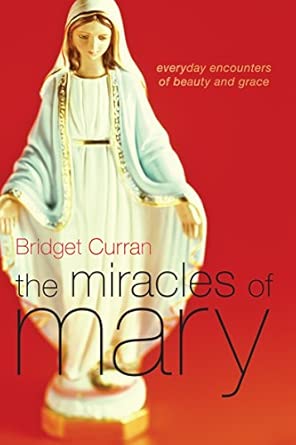
The Miracles of Mary: Everyday encounters of beauty and grace
Author(s): Bridget Curran (Author)
- Publisher: Allen & Unwin Pty LTD
- Publication Date: 1 Oct. 2008
- Language: English
- Print length: 230 pages
- ISBN-10: 174175514X
- ISBN-13: 9781741755145
Book Description
Told simply and honestly these remarkable stories by everyday people allow the reader to experience the beauty and grace of these miraculous events, regardless of their background.
Editorial Reviews
About the Author
Excerpt. © Reprinted by permission. All rights reserved.
The Miracles of Mary
Everyday Encounters of Beauty and Grace
By Bridget Curran
Allen & Unwin
Copyright © 2008 Bridget Curran
All rights reserved.
ISBN: 978-1-74175-514-5
Contents
Preface,
Introduction: Who Is Mary?,
Mary of Matara Sri Lanka,
Mary of Vailankanni India,
Mary of Guadalupe Mexico,
Mary of Walsingham England,
Mary of Le Puy France,
Mary, Kazanskaya Russia,
The Virgin of the Snakes Greece,
The Madonna of Monte Vergine Italy,
The Holy Mountain of Mary Greece,
The Madonna of Montallegro Italy,
Mary of Montserrat Spain,
Mary of La Salette France,
Mary’s Perpetual Help Italy,
Mary of the Desert Kuwait,
The Lady of the Stars France,
Mary of Knock Ireland,
The Black Madonna of Czestochowa Poland,
The Miraculous Medal of Mary France,
The Madonna of the Miracle France,
Mary of Light Egypt,
Mary of Lourdes France,
Mary of the Word Rwanda,
Mary of Fátima Portugal,
Mother of Hope Poland,
The Weeping Statue of Akita Japan,
Mary of Dong Lu China,
Mary of La Vang Vietnam,
Mother of the Faithful China,
The Lady with the Golden Heart Belgium,
The Virgin of the Poor Belgium,
Mary of the Snows Italy,
Mary, Queen of Arabia Kuwait,
Conclusion,
Acknowledgements,
Photo Acknowledgements,
Further Reading,
CHAPTER 1
Mary of Matara — Sri Lanka —
* * *
In the early morning of 26 December 2004, the seaside city of Matara, in Sri Lanka, was struck by a tsunami that claimed the lives of thousands of people. Father Charles Hewawasam was in the middle of a service when a woman at the back of the church began shouting. His first impulse was to ignore her. But then, through the window, he saw a van floating by. He scarcely had time to warn everyone before the modest church was flooded. The terrified parishioners fled to the second level of a nearby three-storey building.
The few chaotic moments that followed seemed like an eternity. As the waters began to recede, Father Charles raced to save the Host and a small, treasured statue of the Virgin Mary and the infant Jesus. But he was too late. The statue had been swept away. Father Charles remained where he stood, paralysed with the shock of this loss, until a woman called to him from the choir loft, telling him to save himself while there was still time. With a heavy heart, he turned and ran for the door. Already the waters had receded, leaving behind a 1.5-kilometre strip of sodden earth.
Without delay he rushed towards the parish house, where he had left his mother, family and friends. To his shock the entire building had been submerged. The only thing he could do now was rescue the wounded. Somehow he found the strength to drag the people he found into a newer building where many of his parishioners had taken refuge.
This was only the calm before the storm. Barely fifteen minutes after the first onslaught came a second, even more destructive, wave. Those who had taken shelter in the three-storey building watched in horror as their friends and neighbours were crushed under falling walls and debris or swept away. Then a third wave crashed over them. The terrible screams and desperate prayers were silenced by the roar of the rushing water.
Forty-five parishioners survived, including Father Charles’ family and friends. A further twenty-three parishioners weren’t so fortunate. Sister Bernadette Koolmeyer, who less than an hour earlier had been by Father Charles’ side assisting at Mass, also died. All that Father Charles owned had been washed away. He had no money, no clothes, not even his cassock.
Adding to the tragedy of the tsunami was the loss of the parish’s beloved Lady of Matara. All that remained was the small pedestal on which this lovely statue had stood for many years. As he stared in dismay at the empty pedestal, Father Charles was surprised to see that the glass which had protected the priceless statue was intact. It looked as if Mary had simply vanished. The statue’s valuable jewellery was also missing. Almost a hundred years old, it had been used to decorate the statue during its annual festival celebrations.
Gloomily, Father Charles returned to his church with a group of helpers to assess the damage. On the road, he met a young man. Remarkably, there in his shoulder bag was the antique jewellery belonging to Our Lady of Matara. This was a wonderful sign, but the real miracle was yet to come.
The next few days were exhausting. Father Charles spent them finding bodies, identifying and burying the dead, consoling the parishioners. Every night he prayed for strength with a group of the faithful who gathered around an old picture of Our Lady of Matara found in the rubble in his room.
Then, early on the morning of 29 December, two men rushed into Father Charles’ temporary home. ‘Father!’ they cried excitedly. ‘We have found Our Mother of Matara.’ Four hundred metres away, the statue had washed onto a sandy shore. Attracted by a glittering object among the trees, the caretaker of the land had found it.
The discovery was miraculous on so many levels. The tiny, fragile crown of the infant Jesus was intact. The hands, part of the foot and a gold chain were missing, but even those small pieces were soon found amid the rubble. The Lady of Matara had returned to the shores where she had first appeared many years ago.
Centuries before, a group of fishermen dragged in a huge crate from the ocean, caught in their nets off the coast of Matara. Inside was a small wooden statue of the Virgin Mary holding the child Jesus. Although they had been in the salt water for some time, both figures were unharmed. The statue was given to the parish priest of Matara.
Some years later, a cholera epidemic swept the land. Hundreds died. Desperate people of many faiths prayed to Our Lady of Matara and took her on a solemn procession among their disease-ravaged homes. Remarkably, within days the area was declared safe. There were no new cases of cholera, no further deaths. The Lady had saved her people.
Worn by centuries of tears, kisses and caresses from Mary’s grateful devotees, the statue began to fade. In 1911 the local bishop, Joseph Van Reeth, decided to send it to Belgium for restoration. For the first time in 300 years, Our Lady of Matara left Sri Lankan shores. As befits Mary’s title Star of the Sea, the statue travelled by ship. The repairs were successfully completed, but the ship carrying the statue home again was caught in two fierce storms and nearly shipwrecked. Much of the cargo had to be thrown overboard, including the statue.
After a thorough search throughout Europe and Asia, the statue was found in the possession of a man who refused to hand it over without a large payment. When his demands were refused, he smashed the face of the statue with a hammer and threw it away. It was recovered and sent back to Belgium for more repairs. After another tempestuous journey home, Our Lady of Matara settled in her parish in relative peace, until the tsunami.
Nestled on the shores of the Indian Ocean, Matara is not a large city. The Nilwala River winds through it, nourishing fields of rice, tea and spices. But the sea and fishing are also important to Matarans. It seems hardly surprising that in a town where water brings life and death, a patroness should have emerged from the waves, her history as changeable and unpredictable as the sea itself.
Little is known of the origins of the Lady of Matara, except that she is carved in a Portuguese style and is thought to be at least 300 years old. The tiny statue was hewn from a piece of ash — a wood associated in earlier times with the gods of ancient Europe and prediction of the weather. The ash was also connected with thunderstorms, which water and fertilise the earth. As a ‘water’ plant, the ash was believed to have command over the four elements. It could be used for protection, prosperity, prophecy, health, and rituals involving water and the sea. It is curious that Our Lady of Matara, crafted from a material long associated with water, came so mysteriously from the waves. What is most wonderful is that she is an important symbol of love, hope and healing to the local people, Buddhists, Muslims and Christians, in Matara.
The story of Our Lady of Matara reminds us of Mary’s enduring care for human beings over several centuries, and in some of the most traumatic events imaginable. Mary always seems to be there for us, a strong yet gentle presence to those who know her, a more mysterious figure to those who do not.
CHAPTER 2
Mary of Vailankanni — India —
* * *
In ancient times, Vailankanni, in southern India, was a stop on the trade route to Rome and Greece. As time passed, its great history as a port city was forgotten. Today just a small town on the Bay of Bengal, it harbours a deep and ancient devotion.
On a warm, sunny day in the 16th century, a young Hindu shepherd boy was going about his daily business. As he walked down Anna Pillai Street on his way to deliver some buttermilk, he found the searing heat more oppressive than usual. Resting under a banyan tree beside a pond, the exhausted boy fell into a deep sleep. With a sudden strong gust of wind, he woke as a woman bathed in light appeared. She was holding a child. There was something about these two strangers that seemed unusual to him. Their faces shone softly with golden light. Smiling, the lady asked for some milk for her son.
The astonished boy leapt to his feet and offered the milk. Once the child had drunk his fill, he and his mother smiled in gratitude, and the shepherd boy happily continued on his way.
As he approached his destination, he had the sudden, terrible realisation that the milk he had given away was not his to give. It belonged to his customer, a wealthy landlord who was the sort of man it was unwise to displease. As the poor boy wondered what to do, he knew he must tell the man the truth.
By the time he reached the landlord’s home, the man was angry. His milk was late. The boy explained why he had been delayed, apologising profusely for the missing milk. But as he and the landlord looked at the milk pot, they saw it was filling up. It filled right to the brim and began spilling out. Realising that it was no ordinary woman that the boy had encountered, the landlord set off with the boy to the pond. To their astonishment, the lady appeared once again. If any words were exchanged, they are lost to history. News of the incident soon spread. The excitement of the local people is still remembered, as they praised the strange, lovely woman. The pond became known as Matha Kulam, Our Lady’s Pond.
Another young Vailankanni boy used to sell buttermilk as he lay in the low branches of a banyan tree. Crippled from birth, he lived with his widowed mother in great poverty, and would supplement their meagre income by begging. His mother would carry him to the banyan tree every morning, and pick him up at the end of the day.
One intensely hot day toward the close of the 16th century, the boy was startled by a sudden, bright light. At first he shouted for help. Then he saw a beautiful woman before him. She cradled an infant in her arms with the same tenderness with which his mother would carry him to the banyan tree. The child had an ethereal glow. Both mother and child wore dazzling white clothes. The woman smiled and sweetly asked for a cup of buttermilk for her child.
The boy felt an inexplicable joy as he handed her a cup and watched the child drink. Although he didn’t know these strangers, it was like serving royalty. He was overwhelmed by their appreciation and love.
‘I have chosen this place to favour my people,’ the lady said. She then thanked the boy for his generosity and asked him to go to Nagapattinam, fifteen kilometres away, to visit a particular wealthy man. She wanted the boy to tell him all that had happened, and to ask him to build a chapel at Vailankanni in her honour.
With great sadness the boy explained that he couldn’t help her, as he was a cripple. But the woman simply smiled and told him to walk.
The boy found himself scrambling to his feet and taking a few steps. Suddenly nothing seemed impossible. With excited leaps, he ran all the way to Nagapattinam, brimming with good health.
At Nagapattinam the boy’s task was easy. Mary had visited the rich man in a dream the night before, instructing him to build a chapel in her honour. Now this breathless boy confirmed this mission. Together they went to the place of the boy’s vision, where they helped build a small, thatched chapel in the lady’s honour. Inside, a statue of the woman and her baby — whom they now knew were Mary and Jesus — was placed on the altar.
The local people were amazed at the miraculous healing of the lame boy. News of the story spread, and soon pilgrims of all faiths were flooding to the chapel, seeking peace and healing. Many more miracles were attributed to prayers before the statue of the Holy Mother and Child, which came to be known as Arokia Matha — Our Lady of Good Health.
The third great miracle of Vailankanni took place on its sandy shores a century later, when a Portuguese merchant vessel was caught in a violent storm while sailing from Macau to Ceylon. Furious winds hurled gigantic waves against the helpless ship. Everyone on board fell to their knees and cried to Mary, promising to build a church in her honour wherever they should land.
Suddenly there was silence. The winds ceased, the waves receded, and in no time the sea was calm. In awe and relief, the once terrified sailors coaxed their injured vessel to Vailankanni.
The fishermen of Vailankanni were surprised to see a clutch of battered, exhausted sailors on the beach, kneeling, crying, and praying. Recognising them as Christians, they guided the men to the simple, now very old chapel of Our Lady of Good Health.
There the men continued to give thanks for their lives. As the villagers told them about the miraculous origins of the shrine, they thanked God and Mary, and marvelled at the significance of the date that had brought them all together. It was 8 September, the feast of the birthday of the Virgin Mary.
Mindful of their vow, they set about building a brick church, with a great dome and European windows, on the site of the old thatched chapel. The day the new church was completed was a day of great celebration, as they dedicated the holy place to the nativity of the Virgin Mary. They would often return to the shrine bearing gifts from their travels all over the world. To this day porcelain plates from China depicting scenes from the Bible still adorn the altar of the great basilica.
Today people of all cultures and faiths flock to Vailankanni for the annual novena, a nine-day festival of prayer, in Mary’s honour, to show their devotion to the Lady who brings hope and healing.
CHAPTER 3
Mary of Guadalupe — Mexico —
* * *
A poor man walked along a familiar path through the rocky hills outside Tenochtitlán, Mexico. On a fine early December morning, just before dawn, the soft light of the sun was beginning to emerge on the horizon as he made his way to the city to attend church. He was barefoot and wore only a tilma, or poncho, coarsely woven from cactus fibres.
He had had a hard life, marrying and making a home on a small plot of land, where he laboured in the fields and wove mats. In his fifty-seven years he had witnessed the Spanish invasion of Mexico and its impact on his fellow native Americans. Intrigued by the faith of the Franciscan friars who settled nearby, he and his wife were among the first to be baptised. He took the name of Juan Diego. His wife did not live long after her baptism, so Juan Diego moved to his uncle’s house to be closer to the church.
This day seemed like any other until the silence was broken by a strange, joyful song. As he came to the base of Tepeyac hill, Juan Diego found himself straining to catch the music. It was like a sweet, gentle chorus of many exotic birds. It was so hypnotic he almost felt as if he were dreaming.
The sound came from the east, and as he gazed in its direction it faded to silence. Then a voice echoed from the mountain above, calling him. Without hesitation Juan Diego climbed the short distance to the top of the hill, and saw before him the beaming figure of a beautiful Mexican girl, no more than fourteen years old. Although the sun had not yet fully risen, golden rays shone from her body. It was as though a great light glowed behind her. Light illuminated everything around her. The grey rocks, dry grasses and cacti were brought alive in colours that seemed almost translucent. The girl’s beauty and nobility reminded him of an ancient Aztec princess.
Finally, she spoke to him. ‘Xocoyte, Nopiltzin, campa tiauh?‘ she asked him gently. ‘Juan, smallest and dearest of my little children, where are you going?’
He was still in awe of this radiant figure. ‘Xocoyata,‘ he replied. ‘My lady and my littlest daughter, I was hurrying to Tlaltelolco to see the Mass and hear the Gospel.’
As the Aztec beauty smiled back at him, she explained that she was the Virgin Mary and that she wanted a church to be built at this place, where she would show her compassion to her people and to all who sincerely asked her help. ‘Here, I will see their tears; I will console them and they will be at ease. So run now to Tenochtitlán and tell the lord bishop all that you have seen and heard,’ she told him.
The awestruck man fell on his knees before Mary, vowing to do as she asked. Rising, he left that holy site humbled by all he had experienced. As he set off in the direction of Tenochtitlán, today’s Mexico City, the enormity of his task suddenly hit him. A church! To be built in the middle of nowhere, at the request of a poor old Indian. Even the trip would be a trial, as he had never been to the city before. He would have to walk many miles. It was a tough place. Indians were treated poorly by Spanish soldiers, not to mention any ruffians he might encounter. How could he find the bishop in such a large city, and convince him to follow Mary’s request?
Juan Diego was a brave man and had great faith. He had made his promise, and so he walked to Tenochtitlán. Somehow he found his way to the door of the bishop’s palace. After some manhandling and a very long wait, he was admitted into the presence of Don Fray Juan de Zumáraga, the bishop-elect, a man who was sympathetic to the Aztec Indians.
The bishop had many troubles of his own. Since the conquest of Mexico the king’s administrators had violently oppressed the Aztec Indians. Bishop Zumáraga tried to alert the king, but he had no idea if his message had survived the long sea voyage to Spain. So he prayed to Mary, asking for guidance and a sign: Castilian roses from his native land.
(Continues…)Excerpted from The Miracles of Mary by Bridget Curran. Copyright © 2008 Bridget Curran. Excerpted by permission of Allen & Unwin.
All rights reserved. No part of this excerpt may be reproduced or reprinted without permission in writing from the publisher.
Excerpts are provided by Dial-A-Book Inc. solely for the personal use of visitors to this web site.


