Wow! eBook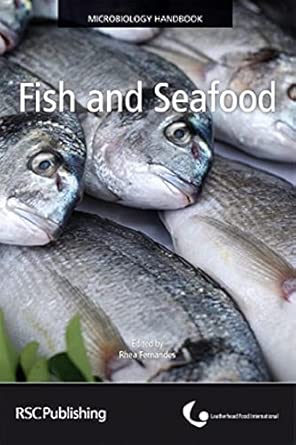
Microbiology Handbook: Fish and Seafood 2nd Edition
Author(s): Rhea Fernandes
- Publisher: Leatherhead Food Research Association
- Publication Date: 12 Jun. 2009
- Edition: 2nd
- Language: English
- Print length: 258 pages
- ISBN-10: 9781905224760
- ISBN-13: 9781905224760
Book Description
Editorial Reviews
Excerpt. © Reprinted by permission. All rights reserved.
Fish and Seafood
By Rhea Fernandes
Leatherhead Publishing and The Royal Society of Chemistry
Copyright © 2009 Leatherhead Food International Ltd
All rights reserved.
ISBN: 978-1-905224-76-0
Contents
CONTRIBUTORS, iii,
FOREWORD, v,
INTRODUCTION, xi,
1. CHILLED AND FROZEN RAW FISH, 1,
2. CHILLED AND FROZEN PREPARED FISH PRODUCTS, 27,
3. MOLLUSCAN SHELLFISH, 53,
4. CRUSTACEAN SHELLFISH, 79,
5. CURED, SMOKED AND DRIED FISH, 93,
6. FERMENTED FISH, 123,
7. FISH AND SHELLFISH TOXINS, 141,
8. HACCP IN FISH AND SEAFOOD PRODUCT MANUFACTURE, 175,
9. EU FOOD HYGIENE LEGISLATION, 189,
10 PATHOGEN PROFILES, 225,
CONTACTS, 241,
INDEX, 247,
CHAPTER 1
CHILLED AND FROZEN RAW FISH
Associate Prof. Covadonga Arias
Department of Fisheries and Allied Aquacultures
Auburn University
Auburn
Alabama 36849
United States of America
1.1 Definitions
Fish are classified as any of the cold-blooded aquatic vertebrates of the super class Pisces typically showing gills, fins and a streamline body. In addition, ‘fish’ also refers to the flesh of such animals used as food. This super class of vertebrates includes all the bony and cartilaginous finfish, and excludes molluscs and Crustacea. However, some regulatory agencies such as the US Food and Drug Administration (FDA) will include molluscan shellfish, crustaceans, and other forms of aquatic animal as part of their ‘fish’ definition. In this chapter, “fish” will be used for fresh and seawater finfish.
Fish are an important part of a healthy diet since they contain high quality protein, but typically present a low fat percent when compared to other meats. In addition, most fish contain omega 3-fatty acids and other essential nutrients.
Although fish is broadly similar in composition and structure to meat there are a number of distinctive features. Protein content in fish fillet varies typically from 16 – 21%. The lipid content, which can be up to 67%, typically fluctuates between 0.2 – 20%, and is mostly interspersed between the muscle fibres. Fish fillets are a poor source of carbohydrates, offering less than 0.5% (1). Fish fillet composition can vary significantly within the same species due to feed intake, migratory patterns, and spawning season. The lipid fraction is the component showing the greatest variation; it shows a typical season pattern especially in migratory species such as herring or mackerel. Fish can be divided into fatty and lean fish; lean fish are those fish that store most of their fat in the liver, while fatty fish have fat cells distributed along their bodies. Muscle composition and structure of fish also differ from those found in other meat. Fish flesh is dominated by the abundance of white muscle in relatively short segments, giving it its characteristically flaky structure. The connective tissue content of fish is also lower than that found in meat, typically 3 and 15% of total weight, respectively (1).
Chilled fish is fish that has been cooled to, and maintained at or below 7 °C, but not below 3 °C during storage, transportation and sale.
Controlled-atmosphere packaging (CAP) refers to packaging in an atmosphere where the composition of the gases is continuously controlled during storage. This technique is primarily used for bulk storage.
DMA is dimethyl amine.
Evisceration is the removal of the viscera from a fish.
Fresh fish is raw fish that has not been processed, frozen or preserved.
Frozen fish is fish that has been cooled to, and maintained at or below 2 °C (normally below -12 °C) during storage, transportation and sale.
Modified-atmosphere packaging (MAP) refers to packaging systems in which the natural gaseous environment around the product is intentionally replaced by other gases, usually carbon dioxide (CO2), nitrogen (N2) and oxygen (O2). The proportion of each component is fixed when the mixture is introduced, but no further control is exercised during storage.
Organoleptic refers to qualities such as appearance, colour, odour and texture.
Quality refers to palatability and organoleptic characteristics such as tenderness, juiciness, and flavour based on the maturity, marbling, colour, firmness, and texture of the fish.
Raw fish refers to fish that has not been cooked but excludes fish treated with curing salts and/or subjected to fermentation.
Shelf life is defined as the time of storage before microbial spoilage of a fish is evident.
Spoilage describes changes that render fish objectionable to consumers; hence, spoilage microflora describes an association of microorganisms that, through their development on fish, renders that fish objectionable to consumers.
Spoilage potential is a measure of the propensity of microorganisms to render fish objectionable to consumers through the production of offensive metabolic by-products.
Superchilled fish is fish that has been cooled to, and maintained at temperatures just below the freezing point, at -2 to -4 °C, during storage, transportation and sale.
Vacuum packaging (VP) refers to packaging systems in which the air is evacuated and the package sealed.
1.2 Initial Microflora
The subsurface flesh of live, healthy fish is considered sterile and should not present any bacteria or other microorganisms. On the contrary, as with other vertebrates, microorganisms colonise the skin, gills and the gastrointestinal tract of fish. The number and diversity of microbes associated with fish depend on the geographical location, the season and the method of harvest. In general, the natural fish microflora tends to reflect the microbial communities of the surrounding waters. It is difficult to estimate how many microorganisms are typically associated with fish, since they heavily depend on the type of sample analysed and the protocol used for isolation. In fact, standard culture-dependent methods can only recover between 1 to 10% of total bacteria present in any given sample. More accurate, molecular-based methods have not yet been used to address this issue. Gastrointestinal tracts and gills typically yield high bacteria numbers, although these are influenced by water quality and feed. Fish harvested from clean and cold waters will present lower bacterial numbers than fish from eutrophic and/or warm waters. However, potential human pathogens may be present in both scenarios.
The autochthonous bacterial flora of fish is dominated by Gram-negative genera including: Acinetobacter, Flavobacterium, Moraxella, Shewanella and Pseudomonas. Members of the families Vibrionaceae (Vibrio and Photobacterium) and the Aeromonadaceae (Aeromonas spp.) are also common aquatic bacteria, and typical of the fish flora. Gram-positive organisms such as Bacillus,Micrococcus, Clostridium, Lactobacillus and coryneforms can also be found in varying proportions (1). It is crucial to mimic the environmental physico-chemical parameters when isolating bacteria from fish. For example, some species (most Vibrios) require sodium chloride for growth; whenever possible, several culture media containing sodium chloride and more than one incubation temperature should be used. It must be noted that mesophilic bacteria can rapidly overgrow psychrotropic organisms.
Human pathogenic bacteria can be part of the initial microflora of fish, posing a concern for seafoodborne illnesses (2). These pathogens can be divided into two groups: organisms naturally present on fish (Table 1.I); and those that although not autochthonous to the aquatic environment, are present there as result of contamination (anthropomorphic origin or other) or are introduced to the fish during harvest, processing or storage (Table 1.II) (3).
It is apparent from the above that there is potentially a very diverse range of organisms present on fish. However, numbers of pathogenic bacteria in raw fish tend to be low, and risk associated with the consumption of seafood is low (2, 4). In addition, during storage indigenous spoilage bacteria tend to outgrow potential pathogenic bacteria.
Shelf life depends on the initial microflora on the fish, potential contaminants added during handling and processing, and conditions of storage.
1.3 Processing and its Effects on the Microflora
1.3.1 Capture, handling and processing
Wild finfish are usually caught by net, hook and line, or traps, with very little control over the condition of the fish at the time of death or the duration of the killing process. This contrasts greatly with the meat industry, in which the health of each animal can be assessed prior to slaughter, and the killing process is designed to minimise stress. However, in recent decades, aquaculture practices have been expanding worldwide, offering better control of fish health prior to, and during harvest.
The length of time that set nets have been in the water or the time trawlers’ nets are towed, has an effect on the amount of stress and physical damage that the fish will suffer during capture. Physical damage such as loss of scales, bruising and bursting of the gut will increase the number of sites open for bacterial attack and spread. In addition, cortisone levels increase during prolonged stress and can alter the fillet quality.
After capture, the fish may be stored in the vessel for periods ranging from just a few hours to several weeks in melting ice, chilled brine or refrigerated seawater at -2 °C. Inadequate circulation of chilled brines may result in localised anaerobic growth of some microorganisms, and spoilage, with the production of off-odours. Used refrigerated brines can be contaminated with high numbers of psychrotrophic spoilage bacteria, and their re-use will increase the cross- contamination of other fish with such microorganisms. Increasingly, and especially when fish is stored on board for longer periods, freezing facilities (-18 °C) may be used to prevent the catch from deteriorating.
Fish may be eviscerated prior to storage at sea – a practice that may have both advantages and disadvantages. The action of intestinal enzymes and activity of the gut bacteria on the flesh around the belly cavity may produce discolouration, digestion and off-flavours in uneviscerated fish. In eviscerated fish, however, the cuttings provide areas of exposed flesh that are open to microbial attack. If evisceration is carried out at sea, care should be taken in removing all the gut contents and washing the carcass thoroughly prior to refrigerating, icing or freezing. The decision to eviscerate the catch at sea will depend greatly on the size of the fish and the duration of storage at sea, with fish such as tuna and cod being more commonly eviscerated than sardines, mackerel or herring.
During capture and storage, finfish will almost invariably come into contact with nets, decks, ropes, boxes and/or baskets, human hands and clothing. These contacts will not only increase the bacterial cross-contamination between fish batches but will introduce microorganisms from other sources such as humans, birds and soil. Of particular concern is the use of wooden or soiled plastic containers for storage and unloading at the quayside, in which the bacterial load can be substantial. These containers are also used for displaying the fish during auction at the quayside, often in the absence of adequate refrigeration.
As with all foods, careful and sanitary handling during processing is required to reduce the risk of contamination with potential human pathogens, and to limit the loss of quality (5). Good Manufacturing Practice (GMP) and control of the sanitary conditions of the transport and processing environments are essential to limit additional risk of disease caused by fish consumption (6, 7). Monitoring of the seawater for algal growth in order to limit the risk of algal toxin ingestion, and of the quality of the water used for ice and to wash fish, cleaning of the work environment, use of effective detergents and disinfectants, and minimising handling will all reduce microbial cross-contamination.
1.3.2 Modified-atmosphere packaging
A natural atmosphere rich in oxygen (21%) is responsible for oxidative processes and for all aerobic respiratory life. Low oxygen levels have been shown to substantially prolong the freshness and quality life of refrigerated seafood products. MAP extends the shelf life of most fishery products by inhibiting bacterial growth and autoxidation.
In MAP, the natural atmosphere is replaced with a controlled gas mixture (carbon dioxide, nitrogen, oxygen etc.). Carbon dioxide is the most important gas in MAP of fish because of its bacteriostatic and fungistatic properties. In the absence of oxygen, partial fermentation of sugars occur leading to lower pH. Both carbon dioxide and low pH inhibit the growth of the typical spoilage bacteria such as Pseudomonas and Shewanella. Bacterial composition under MAP shifts from mostly Gram-negative to predominantly Grampositive (lactic) bacteria. Brochothrix thermosphacta and psychrotrophic lactic acid bacteria (LAB) can produce spoilage characteristics; however, they are usually process contaminants, not part of the normal flora of the meat animals (8). Anaerobic atmospheres have less effect on fresh fish shelf life; fish have a higher post mortem pH, and specific spoilage organisms may use other terminal electron acceptors naturally present in the fish (trimethylamine-N-oxide (TMAO), ferric ion (Fe3+)). What is more, potential spoilage bacteria are among the psychrophilic and psychrotrophic flora present on temperate-water fish before death (9).
Packaging changes the intrinsic and extrinsic parameters affecting a product, from water activity (aw) through to physical damage. These changes can be deleterious, allowing more growth of spoilage organisms, for example, but if applied properly should extend the life of the product. Physical barriers not only protect from physical damage, but isolate the food in an environment different from the bulk atmosphere.
The atmospheric conditions surrounding a product may be passively or actively altered. By vacuum packing foods, a reduction in the oxygen tension is achieved which, in time, if there is some oxygen demand from the product, will result in fully anoxic conditions. However, by actively altering the composition of the surrounding gas, a modified-atmosphere may contain any gas necessary for the desired effect.
Modified-atmosphere preservation of fish was first reported in the 1930s, but only in recent years has it seen a marked expansion in use and market share. This has been driven partly by increased consumer demand for fresh and chilled convenience foods containing fewer chemical preservatives. MAP has been applied to fresh meat and fish with a resulting commercially viable extension in shelf life (10). The microflora of meat is not the same as that of whole, gutted or filleted fish, and the MAP of fish has more challenges to overcome as a result of: a comparatively large initial load of bacteria present, which are able to grow rapidly at low temperature; the higher pH and reduction potential (Eh) of the fish muscle; the pathogens that may be able to grow before spoilage occurs; and the problems of muscle structure damage by the modified-atmosphere (11).
VP is one of the oldest forms of altering the interior gaseous environment of a pack, but residual oxygen and other electron acceptors may be sufficient to allow oxidative spoilage of fish (12).
The principal effect of raised carbon dioxide-MAP is an extension of the ‘lag’ phase of the growth of the bacteria on the fish, the inhibition of common ‘spoilage’ bacteria (Pseudomonas, Flavobacterium,Micrococcus and Moraxella), and the promotion of a predominantly Gram-positive, slower-growing flora (11).
Many additives have been tried in conjunction with changed atmosphere, including salt, phosphates, sorbates and chelating agents such as ethylenediaminetetraacetic acid (EDTA) (11). The products, after additive application, may not be considered ‘fresh’ fish.
Gases used in MAP of fish most commonly include carbon dioxide and nitrogen. High concentrations of carbon dioxide have the most pronounced microbial effect, but can dissolve into fish liquids and deform packages, discolour pigmented fish (11), and increase in-pack drip (12). Replacement of oxygen with nitrogen, an inert and odourless gas, does inhibit some aerobic bacteria and reduce the rate of oxidative rancidity. Sulphur dioxide, nitrous oxide and carbon monoxide have also been suggested as possible replacement gases in trace amounts for MAP/CAP, although less information on their effectiveness is available.
The single most important concern with respect to the use of MAP is the potential for outgrowth and toxin production by C. botulinum. Of particular concern are the psychrotrophic type E and non-proteolytic type B and F strains, as they are able to grow at temperatures as low as 3.3 °C and produce toxins, without overt signs of spoilage. Growth and toxin production have been detected in artificially contaminated packs of whole trout after 1 week’s incubation at 10 °C (13).
The (International) Codex Committee has published a Code of Practice for Fish and Fishery Products (CAC/RCP 52-2003), which provides guidance relating to vacuum or modified-atmosphere packaging for specific fish products (14).
(Continues…)Excerpted from Fish and Seafood by Rhea Fernandes. Copyright © 2009 Leatherhead Food International Ltd. Excerpted by permission of Leatherhead Publishing and The Royal Society of Chemistry.
All rights reserved. No part of this excerpt may be reproduced or reprinted without permission in writing from the publisher.
Excerpts are provided by Dial-A-Book Inc. solely for the personal use of visitors to this web site.