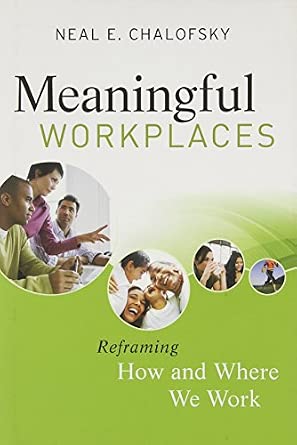
Meaningful Workplaces
The "traditionalist" generation came out of WW II, moved to the suburbs, and pursued jobs and careers that promised a "good living." The Baby Boomers jumped on the same path until they reached midlife and started questioning whether a good living equated with a "good life." Their children, Generation X, Y, and the Millennials, are questioning whether they even want to start down the path their parents and grandparents took, career-wise, and are making different choices about the role of work in their lives.
Drawing from a multiyear study of how a strong and responsive HR function can influence organizational effectiveness, Meaningful Workplaces provides guidelines to build an employee-engaged, high-performance, community-based culture a place where people want to work. The book addresses the changed nature of work, what constitutes meaningful work, and explores the three key elements of meaningful work: the self, the work, and a sense of life balance and integration. It then explores what organizations need to do to become meaningful workplaces. "First of all, it's not about the perks, it's about the culture," says Neal Chalofsky. Employees of humane organizations are not there just because they have great benefits. The benefits are a result of the work-life culture, because the culture values employees. In turn, employees have an overwhelming commitment to their organizations. In addition, the organization supports the whole person, and the whole person is engaged in the organization. While no organization can be all things to all people, these organizations work hard to recognize and support employees' work, family, leisure, personal, and community needs. Finally, the organization is truly a community. When employees go to work each day knowing that what they do makes a difference, that their voice is heard, that their work is meaningful, and that they enjoy the company of their colleagues, then employees are truly part of a workplace community.
Meaningful Workplaces focuses on building a humane workplace, one that is values-based, employee-focused, creating a workplace community within organizations and it lays out ways HR professionals can build organizations that align employees' personal values and purpose, the work, and the workplace.
Praise for Meaningful Workplaces
Meaningful Workplaces is a must-read for today's workforce. It sagely advises organizations how to create cultures that provide a sense of belonging, a feeling of trust, caring, and shared celebration. Dr. Peggy Dolet, Director of Human Resources, American Society for Engineering Education
Chalofsky's Meaningful Workplaces models do a great job of reframing the discussion about work and values. He provides excellent examples of organizations that have made measurable and sustainable strides in achieving "integrated wholeness" in today's competitive environment. I found it both practical and insightful. Kimo Kippen former Vice President, Center of Excellence, Marriott International, former Chair, ASTD Board of Governors, and Executive in Residence at Catholic University
Dr. Chalofsky captures the essence of what motivates people to work beyond material gain. Grounded in decades of organizational research and practice, it is a source that can be trusted. I highly recommend this book to students of organizational studies, company leaders, and people seeking answers to the questions of what it takes to create and sustain meaningful work and humane workplaces. Dr. Susan Gayle, Chief Administrative Officer, Promontory Interfinancial Network, LLC
Chalofsky's experience and expertise shine through as he takes readers on a journey about how?humanistic organizations lead to increased joy, passion, learning, personal growth, high performance, and bottom-line success. This excellent text ties years of concepts into a coordinated whole culture, learning, engagement, motivation, community, and work-life integration. Chalofsky provides concepts, practical approaches, and realistic examples for?students, leaders, practitioners, and educators. Dr. Virginia Bianco-Mathis Chair, Department of Management, School of Business, Marymount University, Managing Partner, Strategic Performance Group
About the Author
Neal E. Chalofsky, Ph.D., is a professor and director of the Human and Organizational Learning Graduate Program at the George Washington University. He is also an independent consultant and has worked with a variety of organizations including Mobil Oil, the Organization of American States, U.S. Department of Education, Computer Sciences Corporation, U.S. Chamber of Commerce, the Smithsonian Institution, Ernst & Young, Inc., the World Bank, and Verizon. He is recognized worldwide as an expert in work-life issues and is a regular presenter at national and international conferences.
 Wow! eBook