 Wow! eBook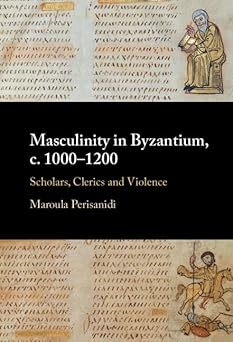
Masculinity in Byzantium, c. 1000–1200: Scholars, Clerics and Violence
by: Maroula Perisanidi (Author)
Publisher: Cambridge University Press
Publication Date: 2024-11-21
Language: English
Print Length: 206 pages
ISBN-10: 1009499793
ISBN-13: 9781009499798
Book Description
What does it mean to be a man? What makes one effeminate or manly? What renders a man ‘Byzantine’? Drawing from theories of gender, posthumanism and disability, this book explores the role of learning, violence and animals in the construction of Byzantine masculinities. It foregrounds scholars and clerics, two groups who negotiated the hegemonic ideal of male violence in contrasting and unexpected ways. By flaunting their learning, scholars accumulated enough masculine capital to present more “feminine” emotional dispositions and to reject hunting and fighting without compromising their masculinity. Clerics often appear less peaceable. Some were deposed for fighting, while many others seem to have abandoned their roles to pursue warfare, demonstrating the fluidity of religious and gender identity. For both clerics and scholars, much of this gender-work depended on animals, whose entanglements with humans ranged from domination to mutual transformation.
Editorial Reviews
What does it mean to be a man? What makes one effeminate or manly? What renders a man ‘Byzantine’? Drawing from theories of gender, posthumanism and disability, this book explores the role of learning, violence and animals in the construction of Byzantine masculinities. It foregrounds scholars and clerics, two groups who negotiated the hegemonic ideal of male violence in contrasting and unexpected ways. By flaunting their learning, scholars accumulated enough masculine capital to present more “feminine” emotional dispositions and to reject hunting and fighting without compromising their masculinity. Clerics often appear less peaceable. Some were deposed for fighting, while many others seem to have abandoned their roles to pursue warfare, demonstrating the fluidity of religious and gender identity. For both clerics and scholars, much of this gender-work depended on animals, whose entanglements with humans ranged from domination to mutual transformation.


