Wow! eBook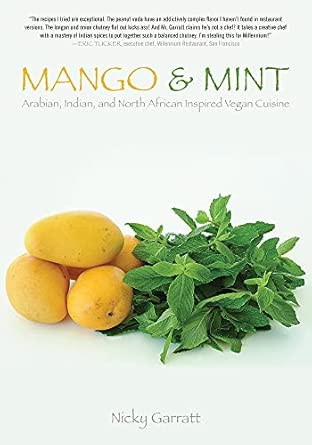
Mango & Mint: Arabian, Indian, and North African Inspired Vegan Cuisine
Author(s): Nicky Garratt (Author)
- Publisher: PM PRESS
- Publication Date: 20 Jun. 2013
- Language: English
- Print length: 256 pages
- ISBN-10: 1604863234
- ISBN-13: 9781604863239
Book Description
Editorial Reviews
Review
About the Author
Nicky Garratt is an internationally recognized guitar player and vegetarian chef. In 1977 he released his first recording with his punk rock band UK Subs and 30 years later the band won a BBC poll as the world&;s best punk rock band. Over the past 40 years he has been an outspoken advocate for science and animal rights, and is active on the lecture circuit on science advocacy topics. He divides his time between San Francisco and Quedlinburg, Germany.
Excerpt. © Reprinted by permission. All rights reserved.
Mango and Mint
Arabian, Indian, and North African Inspired Vegan Cuisine
By Nicky Garratt, Lena Tsakmaki
PM Press
Copyright © 2013 Nicky Garratt
All rights reserved.
ISBN: 978-1-60486-323-9
Contents
Ganging Up,
Breads & Pies,
Soups,
Starters & Side Dishes,
Main Courses,
Grains,
Salads & Dressings,
Pickles & Chutney,
Desserts,
Sample Menus,
Drinks,
Recycled,
CHAPTER 1
Ganging Up
Almond Syrup
Masalas
Sambar Powder
Moong Dal Base
North Indian Base Sauce
Orange Flower Syrup
Rutabaga Base Sauce
White Nut Sauce
Many recipes require soak time, shelling, or boiling. Perhaps ingredients are simply not available and the thought of seeking out dried apricots in the evening or firing up the barbecue before you can even start on the dish simply steers one toward a grilled sandwich. But really a sandwich is just assembling parts prepared in advance, and you can adopt this idea to maintain a more compelling diet. In fact, with improved planning, you can make the choice to jump in and cook much less intimidating.
Strategic forethought will undoubtedly reap benefits in time management and flexibility and save a lot of money, particularly when buying produce in season at a farmers’ market or buying in bulk. Most fresh ingredients such as tomatoes, greens, citrus, and eggplants are best processed immediately before storing. For example, greens can be quickly boiled, drained, then frozen. A good tip is to freeze provisions like methi or spinach in premeasured amounts and labeled accordingly. About a cup is the optimum size for this type of ingredient. Using this method avoids having to hack through frozen blocks to comply with a recipe on short notice. Tomatoes are perfect candidates for planning ahead. In season, full-flavored, vine-ripe tomatoes are a steal at the farmers’ market. I buy 20 pounds or so, peel, chop, stew, and freeze them for later use. There is no comparison between a pasta sauce made from this vibrant fruit and the lackluster supermarket alternative. Orange juice can be also harvested when citrus is inexpensive and then frozen. Eggplants should be snapped up when the price drops, fire roasted, bled, and the pulp frozen.
A similar tactic can be employed in the garden. Often, particularly in California and Florida, people have more lemons than they know what to do with and will happily let you pick some. A neat trick is to freeze lemon juice in an ice cube tray, then the next day remove and stack the cubes into a plastic container. If you can judge the size of the tray to equal the juice from one lemon per cube, then you will always have a source of lemon juice. For hummus, simply defrost two cubes. While you’re at it, make a jar of Preserved Lemons (page 165) for later use. When labeling frozen provisions, remember to indicate along with the contents, the amount, and date processed.
Some dishes require the same starting ingredients so it’s useful to save time by “ganging up” on prep work. Of course you can prepare or even buy chopped onion or garlic for a head start, but you can go much further than that. Indian food can be thought of as modular in a way. For example the warming spice blend garam masala has a lot of ground, roasted ingredients, making it impractical to prepare each time you need it. Instead you would make or buy a batch to be readily available when needed. As with all spices, particularly when ground, it’s best to store them in airtight containers away from direct light.
The idea of pre-prepared elements is apparent in the North Indian-style takeaway, where an order of alou matter or mixed vegetable curry can be rapidly completed. To achieve this efficiency, a base sauce is prepared ahead of time in great quantities. This idea is also very useful in the home. Keeping a base sauce or two in the freezer enables one to quickly throw together an impressive meal when combined with rice and chutney.
The Barbecue
Some vegetables used in these recipes are first baked over an open flame. I built a brick oven for this purpose, but a commercial barbecue would work as long as you use charcoal and not gas. When you fire up the barbecue, think ahead to which other dishes you might want to make another time and plan accordingly, because once the fire is going you want to maximize it.
Squash
I usually roast a couple of acorn or butternut squash when I’m using my outside charcoal oven. They are the first thing to go in and the last to come out. You don’t need to wrap them in foil or any such thing, but remember they are very dense. To cook them through without charring deep into the flesh, you want to keep them out of the direct flame as much as you can. In my oven I built rounded ledges in the corners for just that purpose, otherwise a couple of layers of foil under each squash will protect it. As the fire dies down you can remove that. When you can easily poke a fork deep into the squash, it should be ready. (In particular, try not to overcook spaghetti squash.) Let them cool before scraping out the pulp into a plastic container. Store it in the freezer.
Uses: Butternut Squash Soup (page 46), Base Sauce (page 24, replacing the rutabaga), and Spaghetti Squash with Peanuts (page 83).
Onions and Garlic
Like squash, large onions and garlic bulbs will need to go into the oven early, again avoiding the direct flame. Leave the skin on because it will give some protection to the usable layers.
Uses: Fire-roasted onions can replace fried onions on burgers or in falafel sandwiches. They are more flavorful and less oily. You can also chop them and use them for a garnish on Chana Masala (page 98) or simply add them to a salad.
Eggplants
Buy large, dense, unblemished eggplants. Don’t use the Japanese or Thai varieties for this roasting procedure. They — like the small, white, egg-shaped ones — are often fried directly. Eggplants, like tomatoes, are fruit and do not have, as some people believe, a gender. The idea of the “male” eggplant, with the smaller navel having less seeds and being sweeter is more likely due to its timely harvesting. Nevertheless, the bleeding process will make either sweet enough, just make sure it is not bruised or discolored. Eggplants go on the fire once the flames have died down a little in the middle of proceedings. This prevents the flesh turning to ash, but fully blackens the skin at a rate that allows the inside to cook and then collapse. Start by pricking the eggplant around with a fork. Place them over the flame so the fire barely kisses the skin. You will need to rotate the fruit so it is evenly blackened. Use blunt, perhaps wooden, utensils to avoid breaking them up. Make sure the stem end is well targeted. Once each one is fully collapsed remove them carefully and stand them upright in a colander inside a bowl. They will be leaking juice. If you need to, pour away the juice as it collects in the bottom of the bowl to avoid the eggplants sitting in the liquid.
Wait for the eggplants to cool while bleeding away the liquid. You can leave them like that for an hour or so. Now separate the blackened skin, scraping all of the flesh into a container. Discard the stem and all the small flecks of blacked skin, but include any darkened flesh, which will provide the smoked flavor.
In the container the pulp will continue to expel liquid. Keep pouring that away, as that juice is culprit for the rubbery effect sometimes present in supermarket baba ghanoush. Without it, your eggplant dish will be sweeter.
Once a reasonable amount of juice has been drained, store the pulp in sealed plastic containers in the freezer. Again, store in measured amounts marked on the lids. For example 1% cups for one portion of baba ghanoush or 2½ cups for baingan bharta. Once you’ve tried charcoal-roasted baba ghanoush you will not be able to go back to the bland supermarket variety.
Uses: Ajvar (page 137) Baba Ghanoush (page 58) and Baingan Bharta (page 94).
Chestnuts
Seek out the Italian chestnuts, not the Korean variety, which are much less expensive but have little taste. Roast the chestnuts on the fire’s middle to late stages, when it is still hot with a nice glow. Pierce both sides of each with a sharp knife and lay out the nuts on the grill — though first make sure they don’t fall through. Keep rotating them to evenly blacken the shells. They should not be completely black, more charred in patches. Roast too quickly and the insides will be raw, too long at high heat and the inside will be burnt, too slowly and the inside will dry out. Practice makes perfect.
Uses: There’s not many a better snack than hot chestnuts. I also like to drop them whole into spaghetti sauce.
Corn on the Cob
Select corn that has no discolored or rotten kernels and husk. Place the corn directly above the fire, without wrapping in foil, but quite late so the kernels get lightly charred, not burnt. Using your hand, coat the corn with the grilling sauce (page 138). It takes only a couple of minutes to roll corn on the grill and cook it so it is still crisp but the sauce has cooked. Serve hot. Refrigerate the leftover ears for a couple of days or freeze them for later use.
Uses: Black Vegetable Medley (page 223).
Bananas/Plantains
Bananas or Plantains can be roasted in the skin and turned so they are evenly blackened. If you want to add some grilling sauce or flavoring, simply cut them in half lengthwise when they are almost ready and add the seasoning. Close them up and return to the heat to finish.
Peppers
All colors of bell peppers are candidates for the barbecue. There is probably no vegetable whose flavor is more enhanced by fire roasting. Place the peppers over the flame toward the end of the charcoal burn when an even flame is achieved. Too aggressive a flame will turn the whole wall of the pepper to ash. Turn the peppers over the flame until they are completely blackened and no patches of color remain. Let them cool a little and then put them in a plastic bag for a quarter of an hour. The skins should easily slip away. You can also run them under cold water and ease away the skins. Leave them in a bowl and let the liquid drain. Pat the peppers dry, remove the stalk end and seeds, and then cut into strips.
Uses: Roasted Red Pepper Bulgur Salad (page 144), Ajvar (page 137), Muhammara (page 73), Red Pepper and Tomato Pilaf (page 130), and Pepper Sauce (page 143).
Cooking in Batches
Another way to gang up is soaking or cooking various legumes and grains in bulk. Chickpeas are already quite inexpensive and when you cook a huge pot of them in one go and use them for various dishes — such as Hummus (page 70), Persimmons and Chickpeas with Anise (page 117), or Chana Masala with Chiles (page 98) — it becomes very economical. They can be frozen with the cooking water as well. You can also make a double or triple batch of moong dal and simply temper with flavored oil as needed.
Fresh Herb Cheat
It’s not always possible to get every fresh herb — like cilantro (coriander), basil, or mint — when you need them. If you tend a kitchen herb patch it alleviates this problem, but it is easy to get caught between the annual herbs like basil or parsley. A trick to cover any lapse is to chop and pack herbs into an ice cube tray and freeze them. You can mark each slot with a felt pen. Then if you need to add some fresh cilantro to finish a dal for instance, just pop a “cube” out of the tray. Make sure it is fully defrosted before serving the dal, of course. This does not really work for fresh garnish though.
Vegetable Stock
An excellent way to make a vegetable stock is to use the solids from your juicer. Make sure all of the vegetables are washed before proceeding. Any combination of carrots, beets, celery, and garlic solids are boiled in a large saucepan of water for about half an hour. Strain the liquid through a fine sieve into a plastic bowl, cool, and then store in a plastic container in the refrigerator if you are using it in the next couple of days or in the freezer for later use. This stock is a perfect starter for soups like Lentil Soup (page 49) or Butternut Squash Soup (page 46).
Deep Frying
Deep frying can be messy. Oil can spit out or drip, and your hands can be covered with flour or batter. Therefore when you are set up to make Pakoras (page 232) or koftas it’s a good idea to maximize the process and minimize the clean-up. Certain deep-fried food items freeze very well, so by setting aside a couple of hours you can stock the freezer with Samosas (page 39) and a variety of koftas. Pakoras don’t freeze well, so perhaps if they are on your menu for the evening, you could utilize the hot oil and make a batch of Split Pea Koftas (page 85) as well for storage.
Sometimes the frying process imparts flavor to the oil, rendering it unsuitable to be shared for some dishes.
Here is a list of suitable savory recipes that do freeze well and are candidates for ganging up: bananas (for Bananas in Nut Sauce, page 93), Red Cabbage Koftas, (page 119), Falafel (page 101), Lotus Root Koftas (page 110), Fried Onion Garnish (page 153), Samosas, (page 39), Split Pea Koftas (page 85), and Savory Indian Snack (page 80).
These are sweet deep-fried recipes that can share the oil: Donuts in Syrup (page 178) and Deep-Fried Batter (Jalebi) in Kewra Syrup (page 177).
Almond Syrup
Type: Indian
Preparation: Overnight soaking
Speed: Fast
Notes: This syrup can be used as a refreshing drink to accompany an Indian meal.
¼ pound raw almonds
Seeds from 10 green cardamom pods
3 cups water
1 cup sugar
Soak the almonds overnight, then rinse them in clean water and remove the skins (they should easily pinch off with your fingers). Crush the cardamom seeds in a mortar, then process them with the almonds and a cup of water in a food processor until you have a smooth milk. Strain the milk through cheesecloth into a bowl, squeeze out as much liquid as you can, and return the pulp to the processor. Process the pulp again with another cup of water, then strain into the same bowl. Repeat the last step once more.
Pour the almond milk into a saucepan and bring to a boil. Add the sugar and simmer for 15 minutes to reduce the liquid a little. The syrup can now be stored in the refrigerator.
Uses: Kumquat Coffee Dessert (page 180), Almond Drink (page 209), Mango Lassi (page 211), and Carrot Desert (page 173).
Tip: You can buy a nylon extra-fine straining stocking, which is reusable. I find this easier than cheesecloth.
Masalas
If you choose to grind your own masala powders, here are three useful blends.
Garam Masala
Type: Indian
Speed: Fast
Notes: Garam masala is a warming, thickening spice blend that is usually added to Indian dishes toward the end of cooking. Here is a basic mix, but there are many slightly different variations.
2 tablespoons cardamom pods
5 tablespoons coriander seeds
5 tablespoons cumin seeds
2 tablespoons black peppercorns
2 tablespoons whole cloves
1 whole nutmeg, grated
2 3-inch cinnamon sticks, broken into pieces
5 bay leaves
Remove the cardamom seeds from their pods and discard the pods. Dry roast the ingredients over low heat while shaking them for about 10 minutes. The spices will start to release their aroma. Do not burn. Grind the mixture in a spice grinder to a fine powder. Store the garam masala in an airtight container away from the light.
Chaat Masala
Type: Indian
Speed: Fast
Notes: Use to sprinkle on Indian fruit salad.
1 ½ teaspoons cumin seeds
2 black peppercorns
1/8 teaspoon carom seeds
¼ teaspoon dried mint
1 teaspoon mango powder
½ teaspoon black salt
¼ teaspoon asafetida
½ teaspoon cayenne pepper
1/8 teaspoon powdered ginger
¾ teaspoon salt
Dry roast the cumin, pepper, and carom. Grind to a fine powder in a spice grinder with the mint and then mix with the other ingredients. Store the masala in an airtight container away from the light.
Sambar Powder
Type: South Indian
Speed: Fast
Notes: This is a kind of southern-style curry powder in which the coriander is dominant over the cumin. It also thickens a sauce, as it contains powdered dal.
¾ cup coriander seeds
¾ cup chana dal
1/3 cup grated desiccated coconut
¼ cup fenugreek seeds
¼ cup cumin seeds
¼ cup black mustard seeds
30 dried curry leaves
2 tablespoons urad dal
2 tablespoons black peppercorns
15 dry red chile peppers
3 tablespoons turmeric powder
1 tablespoon ginger powder
1 tablespoon asafetida
Dry roast the first 10 ingredients on low heat until they release their aroma, the chana dal starts to darken, and the coconut is a cinnamon color. Remove from the heat into a bowl, then add the turmeric, ginger, and asafetida. Grind in a spice grinder until you have a fine powder. Store in an airtight container away from sunlight.
Moong Dal Base
Type: Indian
Speed: Fast
(Continues…)Excerpted from Mango and Mint by Nicky Garratt, Lena Tsakmaki. Copyright © 2013 Nicky Garratt. Excerpted by permission of PM Press.
All rights reserved. No part of this excerpt may be reproduced or reprinted without permission in writing from the publisher.
Excerpts are provided by Dial-A-Book Inc. solely for the personal use of visitors to this web site.