 Wow! eBook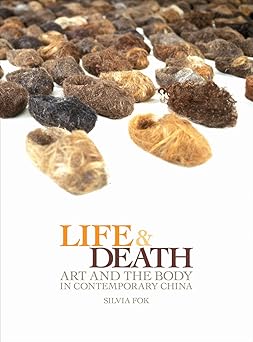
Life and Death – Art and the Body in Contemporary China
Author(s): Silvia Fok (Author)
- Publisher: University of Chicago Press
- Publication Date: 22 Mar. 2013
- Edition: Illustrated
- Language: English
- Print length: 176 pages
- ISBN-10: 1841506265
- ISBN-13: 9781841506265
Book Description
Fok focuses on the ways in which these artists use their own bodies, animals’ bodies and other corporeal substances to represent life and death in performance art, installations, and photography. Over the course of her investigations, corporeality emerges as a common means of highlighting the social and cultural issues that surround these life and death. By assessing its effectiveness in the expression of these themes, Fok ultimately illuminates the extent to which we can see corporeality as a significant trend in the history of contemporary art in China. Her conclusions will fascinate scholars of performance and installation art, photography and contemporary Chinese art.
Editorial Reviews
Review
‘This useful and concise review of Chinese art of the 1980s and ’90s analyzes the use of human and/or animal bodies or body parts as material elements in artistic creation and exhibition, primarily in performance and installation art.’
— The China Journal, Carolyn M. Bloomer
‘Fok’s obvious and sincere effort to bring the artists’ intentions to the fore, and her inclusion of several lesser-known performance and conceptual works are a welcome addition to the field.’
— Asian Studies Review,Elizabeth Emrich
About the Author
Silvia Fok teaches at Hong Kong Polytechnic University. She is the author of two books in Chinese, most recently Performance Art in China: Site and the Body.
Excerpt. © Reprinted by permission. All rights reserved.
Life and Death: Art and the Body in Contemporary China
By Silvia Fok
Intellect Ltd
Copyright © 2013 Silvia Fok
All rights reserved.
ISBN: 978-1-84150-626-5
Contents
List of Illustrations,
Acknowledgements,
Preface,
Chapter 1: Life, Death and the Body in Art in the PRC,
Chapter 2: The Role of the Body in Representing Death in Art: Simulation of Death versus,
Chapter 3: Animal Body in Art,
Chapter 4: Corporeal Materials in Art,
Chapter 5: Transformative Roles of the Body in Art,
CHAPTER 1
Life, Death and the Body in Art in the PRC
The production and reception of contemporary Chinese art
The first unofficial “Stars Exhibition” (Xingxing meizhan) held in the garden outside the National Art Museum of China in September 1979, with the unexpected demonstration on National Day of 1979 drawing much local and international media attention, marks the beginning of contemporary art in the People’s Republic of China (PRC). Their pursuit of autonomy of art and freedom of expression is not yet realised under the Chinese Communist Party regime. Nevertheless, contemporary Chinese art, both in the PRC and abroad, has caught much western attention in the past two decades. A number of large-scale contemporary Chinese art exhibitions have been organised in different places outside the PRC. Chinese curators and overseas galleries have collaborated in mounting art exhibitions and introducing the works of Chinese artists. At the same time, a lot of small-scale experimental art exhibitions have been made possible in the PRC despite being frequently intervened in and closed down by the authorities. All public events, including cultural and art-related conferences, performances and tours involving foreigners must seek approval from the Ministry of Culture. If they find it subversive, they would close it down. Different forms of exhibitions, whether they are held in the artist’s apartment or studio, in the gallery or outdoors, have emerged in the PRC. Some Chinese artists were invited to take part in the “45th Venice Art Biennale” in 1993. “It was a starting point for them to be subsumed and included in the western art world even though they were still inexperienced at exhibiting internationally at that time. The “48th Venice Art Biennale” (1999) allocated different exhibition pavilions for Chinese artists. For instance, in the Aperto section, there were 19 Chinese artists, including Cai Guoqiang, Chen Zhen and Wang Du who have been living abroad, mostly in the United States and in France; Zhang Huan who commutes between New York and Beijing; and others who are based in the PRC. Taiwanese artists also showed their works in their national pavilion. In addition, six Chinese artists living in Europe were invited to exhibit in another pavilion.
The growing interest in contemporary Chinese art has certainly been linked to the growing art market both abroad and in the PRC since the 1979 “Stars Exhibition.” Collectors of contemporary Chinese art are mostly foreigners. The discourse and writings on contemporary Chinese art by foreign and local art critics accompanying exhibition catalogues have helped promote and activate the field. Debate on hot issues such as the indecent, violent and provocative trends in the PRC also arises. Some Chinese artists have started to critically explore different media such as human bodies, corpses and animal bodies to raise various issues about life and death. For instance, Sheng Qi hacked off his little finger to show his indignation at the Tiananmen crackdown in 1989 and created the four-digit handprint as his signature in his Aids series in 2000. Like Sheng Qi, Zhang Huan explores his relationship with the environment directly through his own bodily experience. In the work 65 Kg (1994), Zhang’s naked body is hung horizontally by iron chains along the iron beam at the ceiling in his studio. Blood (250ml) drips down from his body into the big medical bowl connected to a heater next to the bed underneath him on the floor. As a consequence, Zhang experiences his own endurance for an hour. Different e-galleries and e-publications such as redgate.com and chinese-art.com have been launched in the late 1990s, which promulgate news about contemporary Chinese art and provide alternative space for understanding current work and issues. All the above phenomena prove that contemporary Chinese art is developing rapidly in parallel to its western counterpart, albeit under the continuing authoritarianism of China’s ruling Communist Party.
The artist’s body as a revolutionary tool in contemporary Chinese art: Somatic perception and criticism
Since the mid-1980s, the body has been used as an art medium and a key theme in contemporary Chinese art, including painting, sculpture, photography, performance art and video. After the Tiananmen incident in June 1989, all artistic activities stopped. Only in the early 1990s did artists start to portray themselves by different means. For instance, Fang Lijun made paintings of himself with a bald head. Zhang Xiaogang and Wang Jinsong portrayed the family in PRC by addressing the one-child policy via painting and photography respectively. Yue Minjun made an installation of multiple sculptures representing himself with blank grins. The body has frequently been used in performance art. Some forms of installation art and performing arts share with performance art the time-based, site-specific and body-centric characteristics. Performance art is not strictly “scripted” like the other art forms are. There are seldom rehearsals prior to the live performance even though some artists claim that they would test the effect of the properties or equipment beforehand. As the performance goes on, unexpected things may come up leading to different improvisations on site; this is what distinguishes it from other art forms. In addition, the body in a performance is dependent upon and at the same time limited by elements of the site. Both the body and site are constitutive of each other in conveying a message. The role of the artist’s body is to inspire and draw the spectators to reflect upon the message and meaning of the performance. The more explicit the body language, the more effective the message that is conveyed in a performance.
Performance art is not accepted in official venues. It is hard for an audience to watch performance work live in the PRC because most of them are made in remote sites to avoid police intervention and surveillance. Therefore, performance art has mostly been disseminated through performance photography, a new mode of consumption in the art market since the mid-1990s.
Compared with their western counterparts, who started to explore the body in art in the early twentieth century, which climaxed in the late 1960s and 1970s, Chinese artists began to employ their bodies in art quite late, since the mid-1980s. Amelia Jones in 1998 provided a comprehensive study and theorisation of body art in the West by means of “an instantiation (both an articulation and a reflection) of profound shifts in the notion and experience of subjectivity over the past thirty to forty years,” highlighting the masculine, modernist artistic subject in light of a performative conception of the artist/self as art object, and intersubjectivity concerning the relationship between artist and audience/interpreter. On the other hand, Lea Vergine in 2000 summarises the use of the body as a language in art in the West as “triumphant, immolated, diffused, propagated, dramatic and tragic – the political, social, and mystical body. The body is the site of the extreme – the body as humanity’s most ancient instrument for speaking hic et nunc.” The growing interest in employing the body in art in contemporary China might be attributed to the awareness that the body is effective not just as a form of self-expression as it is in consumer culture, but also as an effective means for open and private confrontation – about self-empowerment and symbolic resistance against the suppressed state of existence in the PRC.
The ways in which Chinese artists have started to explore the use of the body in art is worth examining even though they are quite loose. This fragmented historical transformation and artistic context has laid the foundation for the use of the artist’s body in art. It helps to consolidate my theorisation in this book that the use or appropriation of corporeality, including human and animal bodies, in the production of contemporary art within the PRC has become an ultimate strategy and tendency in addressing issues related to life and death, and its significance lies in its usage in relation to contemporary Chinese society in the past two decades.
Chen Shisen (San Mu), a Chinese performance artist living in Hong Kong, states that artists of the Southern Artists Salon chanced upon a photo of Yves Klein’s performance in a French magazine brought by a friend studying French at that time. These artists thought they could also make one by themselves. Thus, they organised the “First Experimental Exhibition of the Southern Artists Salon” in Zhongshan University in Guangzhou in September 1986. Chen mentions that only professors in the academy had access to overseas magazines and books in the academy in their times. The materials about art in the 1980s were scarce. They did not know who the artist in the French magazine was at that time. Chen got to know the artist in the French magazine only when he moved to Japan in 1988. In the “First Experimental Exhibition of the Southern Artists Salon,” the artists designed the stage, music, graphic design and sculptures. They themselves did not perform, rather they invited dancers and fashion models to do an integrated performance. The audiences were mainly students of Zhongshan University and Guangzhou Academy of Fine Arts. Chen recalled that the artists were extremely excited but the audience seemed puzzled. There was no communication among the artists and audience. An old artist Wang Shaowen accompanied by his daughter viewed this performance and was impressed by its novelty. He said, “The meaning is above all more important than anything else.” Chen states that he himself was not quite sure of its meaning; at that time he did not have any idea of performance art. Lin Yilin, a key member of the Southern Artists Salon, states that they emphasised group activities such as organising exhibitions and seminars at that time and were not concerned with individuals. The audience members were students and people of artistic and cultural circles. He claims that they had little support in the 1980s but it was a good experience for him. Their group performance was inspired by an image of Yves Klein’s performance, which is very likely to be Anthropometries of the Blue Period (1960), even though they were not sure how the performance work could be made. In Anthropometries, Klein “directed several nude women to cover themselves with YKB (Yves Klein Blue) coloured paint and to stain canvases with their paint-smeared bodies.” Similar to Klein, these artists in Guangzhou acted as art directors in manipulating a performance event that did not involve their own bodily participation. It seems that these artists were not aware that Klein was deploying the nameless nude women as painting brushes; they were not certain about the roles of their bodies in performance art at that stage. As Judith Butler puts it, “sex is both produced and destabilised in the course of its reiteration.” Nevertheless, this artistic phenomenon exemplifies Chinese artists’ superficial fascination with the use of the body in art. At this stage in the PRC, the number of artworks made by male artists with their bodies outnumbered those by female artists.
Ding Yi, an artist living in Shanghai, recalled that the body was not used in artistic creation in the mid-1980s. The youths were enthusiastic about breaking away from static things. Influenced by Christo’s art of wrapping, Ding Yi with Qin Yifeng and Zhang Guoliang, having wrapped their bodies with yellow fabric, performed on the street downtown and in a remote site in Shanghai in September 1986. The idea of wrapping the artist’s body had become dominant in the artistic vocabulary of the 1980s China. Not addressing the specific role their bodies played in these performances, the artists were exploring the different forms created through their bodies in a direct manner, similar to the case of the Song brothers.
Song Yongping and Song Yonghong performed with their bodies in red and white fabric and their faces painted with respective colours in an installation of pottery and other objects in a gallery of the Workers Cultural Palace in Taiyuan, Shanxi on 4 November 1986. Song Yongping states that he was conscious of using his body to intervene in this performance. It was the starting point of this work. To him this performance was a new form of expression, a breakthrough from two-dimensional artworks. He was satisfied with it and found it liberating even though other people did not accept this work at that time.The younger brother, Song Yonghong, states that an impulse urged him to perform without a plan in mind of when to start or stop. He had a motive for performing. While Song Yongping was conscious of the central role of his body, Song Yonghong emphasised the unconscious impulse of his body in this performance. The unplanned nature of these early Chinese performance artworks highlights their improvisational and unscripted characteristics.
Similar to the Song brothers, Zhang Peili and Geng Jianyi wrapped their bodies from head to toe with old newspapers and experienced a bound state for approximately one hour in Hangzhou in November 1986. Zhang Peili states that they simulated a state where their bodies became materialised after being packed by newspapers. Their bodily characteristics had disappeared. They wanted to experience such a process. In contrast to the free and improvisational characteristics of the Song brothers’ performance, Zhang and Geng’s performance emphasised the endurance of their bodies in such a bound state. Even though Zhang and Geng did not articulate how they perceived their bodies in this performance, their aim of experiencing bodily endurance seemed to be met. Most of the artworks concerning the body in contemporary China in the 1980s focused on what Maurice Merleau-Ponty has theorised as the experience of the body and how the body shapes experience. Merleau-Ponty stated:
The presence and absence of external objects are only variations within a field of primordial presence, a perceptual domain over which my body exercises power. Not only is the permanence of my body not a particular case of the permanence of external objects in the world, but the second cannot be understood except through the first … Thus the permanence of one’s own body, if only classical psychology had analysed it, might have led it to the body no longer conceived as an object of the world, but as our means of communication with it, to the world no longer conceived as a collection of determinate objects, but as the horizon latent in all our experience and itself ever-present and anterior to every determining thought.
The experience of the body is thus fundamental because the body is the vehicle shaping its perspective. Time is an indispensable component in art that reflects the artist’s bodily experience and endurance under different circumstances. Only through and with his/her own body can the artist address his/her experience of the process of creation.
J. J. Xi, a member of the group Concept 21, claims that he had read some introduction to western performance art in magazines and found that in China the body was not used directly in art in the mid-1980s. The first group performance they did was to bind each of their naked bodies with a white cloth, then splash colours on it, and run to and fro on the Peking University campus in the cold on 23 December 1986. Another member of the group Sheng Qi states that the group performance of putting up with the cold was to him a way to defy nature with a motive of venting his emotions. Apart from the notion of endurance, there seems to be a sense of confrontation and resistance against the adverse environment, signified by the cold weather, embedded in this work through the use of the artist’s body, in particular the naked body. Sheng Qi also claims that he had read a lot of books on western contemporary art in the library at that time. Nevertheless, how specifically they perceived their bodies was not made clear. At this stage artists were unclear of the role of the body even though they had already started to use their bodies in performances.
(Continues…)Excerpted from Life and Death: Art and the Body in Contemporary China by Silvia Fok. Copyright © 2013 Silvia Fok. Excerpted by permission of Intellect Ltd.
All rights reserved. No part of this excerpt may be reproduced or reprinted without permission in writing from the publisher.
Excerpts are provided by Dial-A-Book Inc. solely for the personal use of visitors to this web site.


