Wow! eBook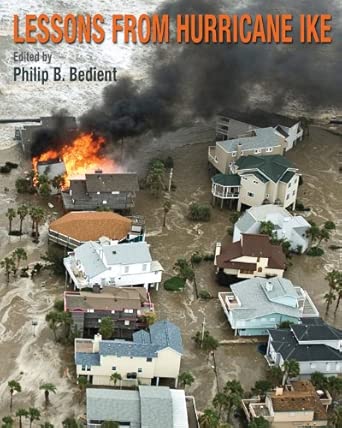
Lessons from Hurricane Ike
Author(s): Philip B. Bedient (Author, Editor), James B. Blackburn Jr. (Contributor), Shannon S. Van Zandt (Contributor), Samuel D. Brody (Contributor), Thomas Colbert (Contributor), Clint Dawson (Contributor), Nick Fang (Contributor), Himanshu Grover (Contributor), Dustin Henry (Contributor), Wesley Highfield (Contributor), Carol Abel Lewis (Contributor), Jeff Lindner (Contributor), Jamie E. Padgett (Contributor), Walter Gillis Peacock (Contributor), Jennifer Proft (Contributor), Hanadi Rifai (Contributor), David C. Schwertz (Contributor), Antonia Sebastian (Contributor), Kevin Shanley (Contributor), Matthew Stearns (Contributor)
- Publisher: Texas A & M University Press
- Publication Date: 15 Jun. 2012
- Edition: Illustrated
- Language: English
- Print length: 224 pages
- ISBN-10: 1603445889
- ISBN-13: 9781603445887
Book Description
Editorial Reviews
Review
“This collection of essays summarizes the science and impacts of hurricanes impinging on the Texas Coast. The book is thoughtful, accessible, and potentially useful to the policy maker and the public alike. It is beautifully and provocatively illustrated with numerous color photographs and diagrams. The collection is up to date including the most recent deadly storms to affect Texas.”–Gerald North, University Distinguished Professor of Atmospheric Sciences and Oceanography, Texas A&M University
–Gerald R. North “Distinguished Professor of Atmospheric Sciences and Oceanography at TAMU” (5/23/2011 12:00:00 AM)
“Three storms from the first decade of the new millennium, Allison, Rita, and Ike, exposed vulnerabilities to the highly developed upper Texas Gulf Coast from the impacts of tropical cyclones. Lessons from Hurricane Ike provides an excellent overview of the scientific, societal, and economic challenges facing our area as a result of Ike. This book should be read by anyone in an official capacity who desires a deeper understanding of the complexities of developing in the hurricane impact zone. Particular attention should be paid to Chapter 12, Steps to the Future, which I found very insightful in addressing the daunting task before the next ‘Big One’ impacts the Texas Gulf Coast.”– Bill Read, director, National Hurricane Center
–Bill Read “Director, National Hurricane Center” (11/2/2011 12:00:00 AM)
“Lessons from Hurricane Ike is different in that it really offers lessons, not just sensational photographs of wreckage and stories of heroism and tragedy, the usual gist of hurricane books.”–statesman.com– “statesman.com” (8/25/2012 12:00:00 AM)
About the Author
Philip Bedient is Herman Brown Professor of Engineering at Rice University, where he also directs the sspeed Center, a multi-university–based research and education institute. Specializing in surface and groundwater hydrology and flood prediction systems, he has written more than 180 articles and is co-author of two textbooks (on hydrology and floodplain analysis and on groundwater contamination). He received his PhD in environmental engineering sciences from the University of Florida.