 Wow! eBook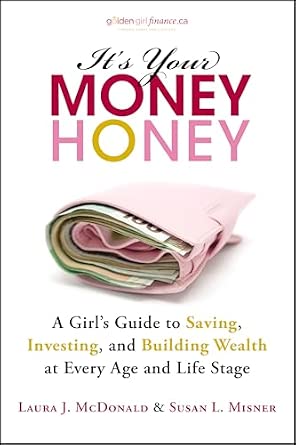
It's Your Money, Honey: A Girl's Guide to Saving, Investing, and Building Wealth at Every Age and Life Stage
Author(s): Laura J. McDonald (Author)
- Publisher: Wiley
- Publication Date: 6 Feb. 2012
- Edition: 1st
- Language: English
- Print length: 304 pages
- ISBN-10: 1118133285
- ISBN-13: 9781118133286
Book Description
Rebranding finance with a feminine spin, It’s Your Money, Honey is designed to encourage women of all ages to take a greater interest―and play a greater role―in the financial issues that affect their everyday lives and financial futures. Conversational, irreverent, and intelligent, this guide to wealth creation, wealth management, and financial protection as it relates to women and their families provides exactly the kind of advice that smart women today need to know in order to take charge of their finances.
Organized by decade and the events―from childrearing to retirement―that need to be planned for, presently enjoyed, or recovered from, It’s Your Money, Honey is packed with expert information in the no-nonsense style of a girlfriend who knows her stuff. Finances aren’t that hard, you just have to deal with them yourself.
- Finally, a book that understand that every woman needs to make time for a personal finance education
- Highly accessible, the book is designed to be read whenever you find yourself with a spare second, providing important information in bite sized chunks
- Helps women prepare for major life events with the help of real life stories, helpful checklists, and easy-to-apply Golden Rules
Born out of the notion that too many smart women let their financial situations be ignored, swept under the rug, or dictated by others, It’s Your Money, Honey is everything you need to know about money but were too busy to ask.
Editorial Reviews
From the Inside Flap
Turning Smart Girls Golden
Because your finances are your finances, It’s Your Money, Honey encourages women of all ages to take a greater interestand play a greater rolein those financial issues that affect their everyday lives and financial futures. Conversational, irreverent, and intelligent, this guide to wealth creation, wealth management, and financial protection provides the advice that smart women today need to know to take charge of their finances and family legacies.
Organized by the events that shape our financial and emotional livesincluding marriage, raising children, divorce, and retirementIt’s Your Money, Honey is packed with expert information in the no-nonsense style of a girlfriend who’s got her financial stars aligned and is happy to share her secrets.
Money Honey…
understands that women are looking for a fresh approach to finance, one that will act as a catalyst for change in their busy lives;
believes that the basics of personal finance and investing are not gender specific, though effective ways to communicate these principles definitely are;
is accessible, designed to be read whenever you find yourself with a spare moment, providing important information in bite-sized chunks;
will empower you to prepare for major life events with the help of real-life stories, helpful checklists, and easy-to-apply Golden Rules.
Born of the idea that too many smart women ignore their finances, sweep them under the rug, or allow them to be dictated by others, It’s Your Money, Honey makes personal finance engaging, compelling, and relevant for women. It’s everything you need to know about moneybut were just too darn busy to ask!
From the Back Cover
Turning Smart Girls Golden
Because your finances are your finances, It’s Your Money, Honey encourages women of all ages to take a greater interest and play a greater role in those financial issues that affect their everyday lives and financial futures. Conversational, irreverent, and intelligent, this guide to wealth creation, wealth management, and financial protection provides the advice that smart women today need to know to take charge of their finances and family legacies.
Organized by the events that shape our financial and emotional lives including marriage, raising children, divorce, and retirement It’s Your Money, Honey is packed with expert information in the no-nonsense style of a girlfriend who’s got her financial stars aligned and is happy to share her secrets.
Money Honey…
understands that women are looking for a fresh approach to finance, one that will act as a catalyst for change in their busy lives;
believes that the basics of personal finance and investing are not gender specific, though effective ways to communicate these principles definitely are;
is accessible, designed to be read whenever you find yourself with a spare moment, providing important information in bite-sized chunks;
will empower you to prepare for major life events with the help of real-life stories, helpful checklists, and easy-to-apply Golden Rules.
Born of the idea that too many smart women ignore their finances, sweep them under the rug, or allow them to be dictated by others, It’s Your Money, Honey makes personal finance engaging, compelling, and relevant for women. It’s everything you need to know about money but were just too darn busy to ask!
About the Author
Laura J. McDonald and Susan L. Misner are the founders of GoldenGirlFinance.ca. Their mission is to make finance real, relevant, and relatable for women so they are better able to accumulate, grow, and protect their wealth.
Excerpt. © Reprinted by permission. All rights reserved.
It’s Your Money, Honey
A Girl’s Guide to Saving, Investing, and Building Wealth at Every Age and Life StageBy Laura McDonald Susan Misner
John Wiley & Sons
Copyright © 2012 John Wiley & Sons, Ltd
All right reserved.
ISBN: 978-1-1181-3328-6
Chapter One
The First Taste of Freedom
Finance and Starting Out
If the World Is My Oyster, Where Is the Pearl?
Oh, hello, adulthood! Is it every bit as glorious and sophisticated as you dreamed it would be when you were 13?
Let’s take stock. You can wear high heels every day and eat chocolate cake for breakfast (combine the two and you’re on to something). You can leave the dishes in the sink, heap your bedding on the floor, and sip cocktails from fancy glasses (dirty ones, but nonetheless). You can play your music as loud as you wish. You can call a taxi, go to the airport, and fly to Paris. Well, theoretically anyway.
The reality is, you’re probably wearing out your flip-flops, eating cereal for dinner out of a coffee mug, struggling to pay rent, and bemoaning the cost of luxuries, such as lattes, nightclub cover charges, and mobile-phone plans (what an expensive lifeline!).
Yes, the first harsh lesson of adulthood is that nothing is quite as sexy as it once seemed. Perhaps you find yourself longing for the days when all your income was disposable. (There’s a reason you had the designer yoga pants while your mom walked around in the grocery-store knockoffs.) Living at home came with generous perks: a refrigerator full of groceries; unlimited Internet, cable, and phone service; possibly an allowance; and free rein to spend any (and all!) part-time job earnings on clothes, music, movies, and unlimited overpriced coffee treats. You may now start to realize that life under the tyranny of your parents definitely had its benefits.
Don’t fret, sugar. Glory days will come again. You are at a fabulous stage of your life right now, positioning yourself for your place in the world. This is the time to try new things, test out your interests, and gain confidence in your abilities. The question is no longer, “What do I want to be when I grow up?” Rather, the question for you to consider is, “What would I like to try first?”
Gone are the days when a person studied for one trade or career and maintained that occupation for the rest of her life. Nowadays, an educated individual with creativity, resilience, and flexibility can look forward to an evolutionary career, where job opportunities and experience can lead you down exciting (and sometimes meandering) paths to a future you likely never even considered or, dare we say, dreamed possible. (In future years, when you are asked how you knew that meandering path would lead you to prosperity, you can just smile and say that you were being “strategic.”)
And yet, you may actually be so overwhelmed by this multitude of choice that you’re unable to take even one tiny step forward. How to choose a field of study? University or technical college? How do you balance school with real-life work experience? What about taking a gap year? Should you live with a roommate or stay at home a little longer?
The beauty of your life at this stage is that you really can’t make a mistake. The goal now is to learn more about yourself and your values: what you can and cannot tolerate, what you excel at doing, and what you would definitely not enjoy doing over the long term.
Life is young, so enjoy it! But at the risk of sounding like old hags trying to rain on your parade, take it from us: the days may pass slowly, but the years move quickly. Planning for the future—and a financially sound one—is a great thing. Consider yourself lucky: you are in the optimal time of your life to start having a massive impact on your future wealth. Forget waiting for Prince Charming. The fairytale is yours … if you start now. So let’s look at some of the choices and implications of these glory years together, shall we?
Your Own Roof, Your Own Rules
Finally, the days of “as long as you’re living under my roof” are over and you can kick back and enjoy the sweet taste of freedom! Right? Well, almost. Freedom, of course, comes with responsibilities, not the least of which are rent and roomies. Consider the following tips.
Renting Your First Place
Read your lease thoroughly before you sign it. Know what costs you are responsible for covering, when your rent can be changed, how it must be collected, and what happens if payments are late.
Landlords can inquire about your credit rating, so being responsible with your credit can make the difference between scoring a place you love, settling for something less, or finding yourself staying with Mom and Dad longer than you, ahem, hoped.
When renting on campus, many landlords will ask a student’s family to guarantee their debt obligation. This could make it difficult to rent decent accommodations if you can’t provide such a guarantee.
Protect your security deposit. Walk around your rental space before you sign the lease and make sure both you and your landlord record any existing defects before you sign off. You should both initial this list and attach it to each copy of the lease agreement.
Landlords really do check references. By taking good care of a landlord’s property, you can develop a reputation for yourself as a desirable tenant, with the good references to prove it.
Make sure you can afford to pay the rent for your place on campus even if you go back home over the summer. Most landlords will insist on a full-year lease and it can be difficult to sublet when student housing floods the market during school break periods.
Budget for apartment contents insurance, a must for protecting your possessions. Local police departments can vouch that when classes are over, student neighbourhoods are an easy target. Many apartments are empty over the holidays, leaving televisions, gaming equipment, and computers as tempting targets for thieves.
Living with Roommates
Roomies are a whole other concern. On the one hand, they could become your lifelong pals, inspiring annual reunions to reminisce, drink blue martinis, and tell inside jokes for the rest of your lives. On the other hand, they could steal your food, “borrow” your wine, and give their obnoxious boyfriend the spare key. Here are a few tips to keeping peace and financial order with a house-full of roomies:
Not all rooms in an apartment are created equal. Some are larger, sunnier, have better closet space, or an ensuite bathroom. Have a conversation with your potential roommates about this to determine what the priority is for each of you before you set out looking. You can gain flexibility by having a diverse group of roommates—some who can pay more and others who are happier paying less in exchange for smaller digs.
Account for the regular monthly payments together. Think rent, electricity, phone, cable, and Internet, to name a few. For costs that fluctuate, ensure each of you budgets for a monthly average so you don’t find yourself with a shockingly high heating bill in the winter.
Grocery costs have been known to require United Nations intervention among roommates. With a small group of roomies, you may choose to share staples (such as flour, sugar, coffee, tea, rice, pasta, dairy, ketchup, milk, and paper products), allowing each person to select more specific or “splurge” purchases for her own use. In larger groups, many opt for the “every woman for herself” policy, whereby everyone has their own dedicated shelf in the cupboard and refrigerator space.
Read Getting to Yes, by Roger Fisher and William L. Ury, and learn the art of negotiation to keep the peace! This will come in handy when the last drop of communal milk is gone and you haven’t even had your morning coffee yet.
Make the most of parental visits. A trip to the grocery or bulk-food store with Mom or Dad can keep you in peanut butter and drink crystals for months.
The Value of an Education
Strolling across a sun-dappled lawn, a handsome guy offers to help you with your backpack. As you walk toward the library together, he casually asks whether you take a scientific or a Romantic view of the most recent environmental catastrophe. You recite a line from Poe and catch his admiring gaze …
Sounds idyllic, right? Even if your university experience runs more to calculus labs and beer gardens, college offers a rare opportunity to dedicate yourself to the world of ideas and the passion of learning. Post-secondary education gives you a chance to “learn how to learn,” to be exposed to generations of critical thought, to advance your cognitive skills, and to formulate your own opinions in the face of traditional rhetoric.
Once you enter the workforce, you may never have this luxury again. But is it a luxury? Or is it a sensible investment to help you gain higher earning power in the future?
The return on the investment in securing a university degree is hotly debated, and as you can imagine, tough to quantify. A British study declared that a university degree adds, on average, 2,500 ($4,000) per year, or £100,000 ($160,000) over a 40-year career, compared to having no degree.
Meanwhile, a U.S. Census Bureau study concluded that people with a bachelor’s degree could expect to earn an average of $2.1 million throughout a 40-year working life, compared to $1.2 million for high-school graduates, amounting to an estimated premium of $22,500 per year. Those with doctoral and professional degrees fare even better, according to the study, earning an average of $3.4 million and $4.4 million respectively.
Others, such as American political scientist and author Charles Murray, have argued that an undergraduate degree merely lets an employer know that you have perseverance and a certain level of intellectual prowess. (Which is not for nothing, as far as we’re concerned.)
How on Earth Do I Pay for University?
There is no way around it—higher learning is expensive. Tuition and books alone will set you back thousands of dollars, at a time in your life when you’re likely used to earning minimum wage. And the price is rising. By the year 2027, the cost (including living expenses) is estimated to reach more than $110,000 for an average four-year bachelor’s degree. Yikes! Here are some ways to finance your university years.
The Bank of Parents
If you have parents or grandparents willing to bankroll your studies, consider yourself very fortunate. Send these kind benefactors regular reports from school. Call them, often. Invite them to your graduation ceremonies to share in your accomplishment. And even though you might have some grumpy moments in keeping up with their e-mails and phone calls, remember that they care about you enough to invest in your future.
As comedian Amy Poehler said in her commencement address to Harvard graduates in the spring of 2011, “[Your parents] have sacrificed so much for you and all they want you to do is smile and take a picture with your weird cousins. Do that for them. And with less eye-rolling, please.”
Free Money
Whether you have help to pay for school or you are on your own, the best way to reduce the costs is by accessing free money. Yes, that’s right—we’re talking about scholarships, grants, and bursaries. All across your country or region, there are millions and millions (and did we mention, millions?) of dollars just waiting to find clever students like you. Here’s what you need to consider:
A scholarship is an award recognizing academic excellence or other special achievement. In some cases, financial need may also be taken into account. Scholarship funds may cover the cost of tuition, books, as well as living expenses, or they may be a lump-sum payment.
A bursary is an award based on financial need. When applying for a bursary, you typically are required to supply a financial statement indicating your assets and expenses. Usually paid as a lump sum for a defined amount, bursaries often request that applicants meet certain geographic or demographic requirements.
A grant is any kind of financial award beyond scholarships and bursaries and does not require repayment. It may or may not require proof of financial need and may be any kind of cash prize or payment to cover costs.
Elite, high-profile government scholarships tend to be awarded on scholastic merit, athletic ability, or community involvement. There are also thousands, if not millions, of more obscure scholarships, bursaries, and grants offered by associations all over the world that often go unawarded due to a lack of applicants.
Can you call ducks? The Chick and Sophie Major Memorial Duck Calling Contest might have $2,000 for you. Are you over 178 centimetres (5 feet 10 inches)? The Tall Clubs International Student Scholarship could give you $1,000. Are you of Italian descent and living in Quebec? The Canadian-Italian Business and Professional Association of Montreal could have a bursary of more than $3,000 waiting for you!
Of course, you’ve got to play to win. Accessing all this free money requires some patience and diligence in filling out applications and often writing essays about yourself and how you will make the organization proud (you are so worthy!). So, buckle down and start writing.
Once you’ve got one essay down, you can certainly multi-purpose it for other applications. If it takes you 10 hours to write a fantastic essay for use with five applications, even if you only end up scoring one $1,000 award, that would still net you $100 an hour for your efforts. (Hey, no matter what you plan to study at school, it’s going to be a while before you earn that kind of dough just for 60 minutes of your time.) So get busy, honey. Surely there is some free money out there with your name on it!
Borrowed Money
If you can’t get free money, borrowed money is the next best thing. Unfortunately, student or not, a loan is a loan and needs to be repaid at some point. There are two main types of student loans and it is important to know the difference before you sign on the dotted line:
1. Government Loans
These loans usually require that parents either sign off that they won’t help you with your education costs or supply financial statements to demonstrate that they can’t help you. The interest rate is often fairly reasonable and interest typically does not accrue until after you graduate if you’re a full-time student. Depending on your circumstances, you can sometimes qualify for temporary interest relief, but this should be considered only as a last resort. If you can afford a new pair of shoes that you don’t absolutely need, you should not apply for interest relief. That loan balance isn’t going anywhere, so putting off paying it down is only going to make it costlier in the long run.
2. Bank Student Loans and Lines of Credit
Your parents may be required to co-sign with you in order to qualify for this type of financial assistance, and this is no small undertaking. Letting someone co-sign a loan for you is always a big deal and you should offer to sign a private agreement about what would happen if you should ever have trouble making payments. If you are late on a payment or in default, this can seriously damage your parents’ credit rating.
Bank loans are typically stricter than those provided from the government. Often, interest accrues while you are still in school. With student lines of credit, the limit is typically decreased to meet the outstanding balance once you are out of school, so technically it’s no longer a line of credit. This means that if you make a payment of $10,000, both the credit limit and the balance fall by $10,000. But what you really need to watch is the interest rate: if it is a variable rate, it will increase (or decrease) when the prime lending rate moves. Be sure to find out how high the rate is above the prime rate when you sign up and understand how much higher it could go. This is critical for understanding how your payments and loan balance could be affected in the future.
The University of Life
If the thought of staying put in the same small college town day in and day out for the next four years is more than you can handle, consider these options to keep you focused on your studies while adding some adventure, excitement, and real-life experience.
Exchange programs
Most universities have programs that allow you to study at a university abroad for a semester. This is especially appealing to those who have chosen to save expenses by living at home. You get to expand your horizons without taking time off school or incurring the costs of full-time university abroad (not to mention the potential to learn a new language, experience a new culture, and see sights that you might otherwise not be able to experience).
Co-op work programs
It might take you a little longer to graduate, but co-ops are a great way to accumulate work experience and make contacts in your industry. This can be an extraordinary advantage, in terms of helping you to pay for your education as you go, having practical work experience that other students may lack, and scoring a job when you graduate.
(Continues…)
Excerpted from It’s Your Money, Honeyby Laura McDonald Susan Misner Copyright © 2012 by John Wiley & Sons, Ltd. Excerpted by permission of John Wiley & Sons. All rights reserved. No part of this excerpt may be reproduced or reprinted without permission in writing from the publisher.
Excerpts are provided by Dial-A-Book Inc. solely for the personal use of visitors to this web site.


