Wow! eBook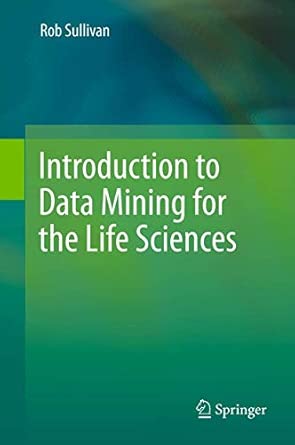
Introduction to Data Mining for the Life Sciences 2012th Edition
Author(s): Rob Sullivan (Author)
- Publisher: Humana
- Publication Date: 26 Dec. 2011
- Edition: 2012th
- Language: English
- Print length: 656 pages
- ISBN-10: 1588299422
- ISBN-13: 9781588299420
Book Description
Editorial Reviews
From the Back Cover
One of the major challenges for the scientific community, a challenge that has been seen in many business disciplines, is the exponential increase in data being generated by new experimental techniques and research. A single microarray experiment, for example, can generate thousands of data points that need to be analyzed, and this problem is predicted to increase. As new techniques in areas such as genomics and proteomics continue to be adopted into the mainstream as the costs fall, the need for effective mechanisms for synthesizing these disparate forms of data together for analysis is of paramount importance. But the sheer volume of data means that traditional techniques need to be augmented by approaches that elicit knowledge from the data, using automated procedures.
Data mining provides a set of such techniques, new techniques to integrate, synthesize, and analyze the data, uncovering the hidden patterns that exist within. Traditionally, techniques such as kernel learning methods, pattern recognition, and data mining, have been the domain of researchers in areas such as artificial intelligence, but leveraging these tools, techniques, and concepts against your data asset to identify problems early, understand interactions that exist and highlight previously unrealized relationships through the combination of these different disciplines can provide significant value for the investigator and her organization.