Wow! eBook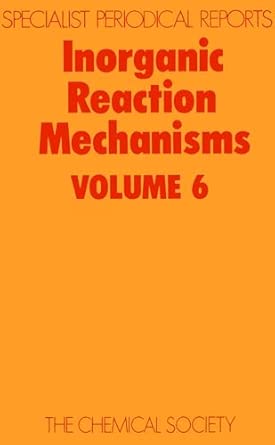
Inorganic Reaction Mechanisms Vol 6: Volume 6 Edition. ed. Edition
Author(s): A McAuley
- Publisher: CRC Press
- Publication Date: 31 July 1988
- Edition: Edition. ed.
- Language: English
- Print length: 440 pages
- ISBN-10: 0851863051
- ISBN-13: 9780851863054
Book Description
Reflecting the growing volume of published work in this field, researchers will find this book an invaluable source of information on current methods and applications.
Editorial Reviews
Excerpt. © Reprinted by permission. All rights reserved.
Inorganic Reaction Mechanisms Volume 6
A Review of the Literature Published Between July 1976 and December 1977
By A. McAuley
The Royal Society of Chemistry
Copyright © 1979 The Chemical Society
All rights reserved.
ISBN: 978-0-85186-305-4
Contents
Part I Electron Transfer Processes,
Introduction, 3,
Chapter 1 Reactions Between Two Metal Complexes By R. D. Cannon, 5,
Chapter 2 Metal Ion–Ligand Redox Reactions By A. G. Lappin and A. McAuley, 69,
Chapter 3 Reactions involving Oxygen and Hydrogen Peroxide By A. McAuley, 115,
Part II Substitution and Related Reactions,
Chapter 1 Non-metallic Elements By G. Stedman, 129,
Chapter 2 Inert Metal Complexes: Co-ordination Numbers Four and Five By J. Burgess, 153,
Chapter 3 Inert Metal Complexes: Co-ordination Number Six and Higher By P. Moore, 174,
Chapter 4 Labile Metal Complexes By D. N. Hague, 265,
Chapter 5 Solvent Effects By J. Burgess, 278,
Part III Reactions of Biochemical Interest By D. N. Hague,
1 Metal Ion Transport through Membranes, 297,
2 Metal Complex Formation: Non-redox Systems, 304,
3 Reactions involving Metals in Porphyrins and Related Ring Systems, 316,
4 Redox Reactions involving Metals in other Biological and Model Systems, 337,
Part IV Organometallic Compounds,
Chapter 1 Substitution By J. L. Davidson, 343,
Chapter 2 Metal–Alkyl, –Aryl, and –Allyl Bond Formation and Cleavage By J. L. Davidson, 370,
Chapter 3 Insertion Reactions By J. L. Davidson, 386,
Chapter 4 Reactions of Co-ordinated Ligands By J. L. Davidson, 394,
Chapter 5 Oxidative Addition and Reductive Elimination By J. L. Davidson, 414,
Chapter 6 Isomerization: Intramolecular Processes By W. E. Lindsell, 425,
Author Index, 457,
CHAPTER 1
Part I
ELECTRON TRANSFER PROCESSES
By
R. D. CANNON
A. G. LAPPIN
A. McAULEY
Introduction
BY A. McAULEY
As with previous volumes of this Report, this introduction is not intended to provide full coverage of all the important developments in the redox area of inorganic mechanisms. It highlights trends and directions in this wide-ranging discipline and leads to a more extensive coverage in the following sections.
Electron transfer between two metal complexes is dominated by several major themes. Whilst the mechanism of transfer through organic structures isstill the subject of interest with CrII, EuII, and VII used as reductants, catalytic sequences in which all steps are outer sphere have been identified. Extension of the in vitro chain to four members by inclusion of catalysts exhibits a combined action far greater than the sum of the individual effects. The mechanisms of more 'classical' outer-sphere systems are also being investigated and rate constants and activation parameters for these reactions have been compared with predictions from the Marcus theory.* Reactions involving metalloproteins are again an active field. In the electron-transfer reactions of blue copper proteins with inorganic oxidants, e.g. [Co(phen)3]3+, there is evidence for initial association prior to the redox step. Of the possible pathways for electron transfer for haem-containing proteins by small-molecule reductants, a recent study suggests that the reaction of metmyoglobin and methaemoglobin by [Cr(H2O)6]2+ proceeds via peripheral rather than anaxial electron transfer.
Two accounts have been presented of the mechanisms of chemical oscillators. The cerium(IV)-catalysed oxidation of malonic acid by bromate serves as a model for a conceptual approach and in the second article other examples involving both homogeneous and heterogeneous processes are described. Two reviews have been published of radiation chemistry of metal ions in aqueous solution. In one article, details are presented of reactions of main-group and first-, second-, and third-row transition metals and lanthanides and actinides. Meyerstein covers somewhat similar ground but deals with complexes in low, intermediate, and high oxidation states. The pulse radiolysis technique has recently been used to provide evidence for the transient σ-bonded Cu — CH2CO2+ complex formed by reaction of copper(II) with the radical CH2CO2-.
The lower valency states of many metal ions and their complexes are oxidized by molecular oxygen. The initial reaction may involve electron transfer to give the superoxide radical anion or co-ordination of the O2, to form a complex. Studies of short-lived species resulting from the former process have been described and extensive investigations continue in the latter area. Synthetic models for oxygen-binding haemoproteins have been reviewed.
1
Reactions Between Two Metal Complexes
BY R. D. CANNON
As in the previous volume, an attempt has been made to include all work on the kinetics or mechanisms of metal–metal electron-transfer reactions published during the period under review, though for reasons of space some of the references are limited to entries in the Tables, which are collected together at the end of the chapter. A few of the journals for 1977 were still not available at the time of writing, but will be dealt with in the next volume.
Books on the kinetics of oxidation–reduction reactions of actinide ions and on the radiation chemistry of metal ions may be mentioned here. Other books and reviews are cited at the appropriate places in the text.
1 General and Theoretical
Volume 82 of the Journal of Electroanalytical Chemistry consists of papers dedicated to Professor V. G. Levich on the occasion of his 60th birthday, prefaced by a short biographical notice. The contributors to the volume express the hope that Professor Levich will soon be able to resume fully his scientific work. Two of the papers are concerned with homogeneous electron-transfer reactions.
Non-adiabaticity. — The period under review has seen renewed interest, both theoretical and experimental, in the problem of determining the probability, as distinct from the activation parameters, of the electron-transfer process. Non-adiabaticity is expressed in the conventional equation of transition-state theory [equation (1)] by means of the transmission coefficient x which is assumed to be temperature independent and therefore appears as a contribution to the entropy of activation. More generally, for a bimolecular reaction, equation (2), it is necessary
[MATHEMATICAL EXPRESSION NOT REPRODUCIBLE IN ASCII] (1)
to take account of the variation of transfer probability with internuclear distance. This leads to expressions of the form (3) where k is the second-order rate constant,
A+ + B -> A + B+ (2)
[MATHEMATICAL EXPRESSION NOT REPRODUCIBLE IN ASCII] (3)
p(r) is the probability per unit time of electron transfer between ions at distance r, and g12(r) is an ion-pair distribution function. Both the transition probability x(r) and the reorganization energy ΔG≠r(r) are contained within p(r):
[MATHEMATICAL EXPRESSION NOT REPRODUCIBLE IN ASCII] (4)
If the functions under the integral are separable equation (3) takes the more familiar form (5), corresponding to formation of precursor complexes [equation (6)]
k = Kipket (5)
with a characteristic mean internuclear distance [??].
[MATHEMATICAL EXPRESSION NOT REPRODUCIBLE IN ASCII] (6)
[MATHEMATICAL EXPRESSION NOT REPRODUCIBLE IN ASCII] (7)
Dolin, Dogonadze, and German have made detailed calculations on the reaction MnO4- + MnO42-, using previously published theory. The matrix elements controlling the reaction probability were obtained using newly calculated wavefunctions. The transition probability p varies sharply with r and the dominant reactant pairs were taken to vary from r = 6.0 Å (the close-contact distance) to r = 6.5 Å. A Coulombic expression was used for g12(r). The calculated rate constant, log(k/l mol-1 s-1) = 3.4 at zero ionic strength and T = 298 K, may be compared with the experimental value, 3.9 at I = 0.16 mol l-1 (NaOH), but agreement of activation energies (calculated by using the temperature dependence of the work term, itself related to the temperature dependence of the dielectric constant) is less satisfactory (5.3 and 8.3 kcal mol-1 respectively).
It has long been known that entropies of activation for second-order electron-transfer reactions tend to be highly negative, and the question is, does this reflect only a negative contribution to ΔS≠r (due to the concentration of ionic charge in the transition state) or is it also due to low transition probability producing a further entropy contribution Rln x? Waisman, Worry, and Marcus have considered the problem for the case of a symmetrical exchange reaction A+ + A. They express the total activation free energy as
[MATHEMATICAL EXPRESSION NOT REPRODUCIBLE IN ASCII] (8)
the first three terms being a translation term, a work term, and the reorganization energy, all calculated for a particular reaction distance r, while [??] is a mean transmission coefficient for this distance and In [??] is a small correction to account for fluctuations in r. Introducing the average collision frequency [MATHEMATICAL EXPRESSION NOT REPRODUCIBLE IN ASCII], this becomes
[MATHEMATICAL EXPRESSION NOT REPRODUCIBLE IN ASCII] (9)
The calculations of x have not been published in detail, but a result is given for the reaction [Fe(H2O)6]3+ + [Fe(H2O)6]2+. The entropies corresponding to the four terms of equation (8) are –10.1, –5.2, +0.5, and –9.2 cal K-1 mol-1, giving ΔS≠ = –24.0 cal K-1 mol-1, compared with the experimental value –25.0 cal K-1 mol-1 at 25 °C, 0.55 mol l-1 HClO4. Another distinctive feature of the treatment is the use of two different approximations to g12(r) in place of the Debye-Hückel treatment.
The entropy problem is greatly simplified when the first-order rate constant ket can be measured directly. Work on this problem is reviewed below, but two recent studies bear directly on the question of non-adiabaticity. Highly negative ΔS≠et values have been recorded for certain complexes of blue copper proteins with inorganic reagents. For example in the complex [Co(edta)]--stellacyanin(I) the reaction CoIII ... Cur -> CoII ... CuII has ΔS≠ = –56 kcal mol-1 and is suggested to be non-adiabatic, while the second-order reaction [Co(phen)3]3+–stellacyanin(I) is taken to be adiabatic, ΔS≠ = – 14 cal K-1 mol-1. This argument should be used with caution, however: for example in the azurin-ferricyanide system [see equation (28) and Table 2c] the activation entropy for the CuIFeIII -> CuIIFeII reaction is highly negative, ΔS≠-3 = –39 cal K-1 mol-1, but the reverse activation entropy is much less negative, ΔS≠3 = –16.6 cal K-1 mol-1. This suggests that other, structural factors are at least as important as non-adiabaticity in determining the activation entropy. This is of course hardly surprising in systems which, although close to the equilibrium point ΔG[??] = 0, are nevertheless highly unsymmetrical, with different metal ions and different co-ordination environments.
Taube and co-workers have attacked the problem using complexes especially synthesized for the purpose. They report rates of electron transfer in the complexes (1), with various bridging groups L — L of the bipyridyl type, and electronic spectra of the similar ruthenium(III)-(II) mixed-valence complexes (2).
[MATHEMATICAL EXPRESSION NOT REPRODUCIBLE IN ASCII] (1)
[MATHEMATICAL EXPRESSION NOT REPRODUCIBLE IN ASCII] (2)
The variations in rate (see Table 1) are not great, but they are paralleled by the intensities of the RuII -> RuIII intervalence charge transfer. Moreover the enthalpies of activation are essentially constant, the rate trend residing in the entropy terms, which are also fairly small, + 2.6 to - 1.9 cal K-1 mol-1. These observations are consistent with weak coupling between the metal centres, the reorganization energy being nearly constant along the series, and being the major contribution to the energy barrier, but the slowest reaction being just non-adiabatic. On the other hand, the energies of the intervalence transitions (which on a simple theory should be given by Lhv = 4ΔH≠ + constant) also vary slightly along the series, implying that the reaction co-ordinate for electron transfer may not be the same in the cobalt–ruthenium and ruthenium-ruthenium systems. Subsequently it has been emphasized that this whole scheme of interpretation is subject to an ambiguity, and the constancy of Δh≠ could be explained in a different way. The overall electron-transfer reaction may be subdivided into two steps, equation (10), in which the states p and s are
[MATHEMATICAL EXPRESSION NOT REPRODUCIBLE IN ASCII] (10)
precursor and successor complexes, and *CoII denotes the low-spin form which is presumably the immediate product on reduction of CoIII. Step 2 may involve a cobalt spin change, a substitution reaction, or both. Depending on which step is rate determining, the observed first-order rate constant may be k1 (as assumed previously), or K1k2 The desired rate constant k1 may be expected to change according to the nature of the central bridging group, but both K1 and k2 would be relatively unchanged. Hence if step 2 is rate determining, this would explain why the observed rates vary so little. However, the authors bring forward a further measurement with L — L = bis-(4-pyridyl)methane, and other arguments which cannot be detailed here, to suggest that the foregoing conclusions are still valid.
Dogonadze et al. have commented on the possibility of obtaining experimental information about the transmission coefficient x [equation (1)]. Referring again to equation (2), if the reactants A and B can be generated suddenly, and if the subsequent electron-transfer reaction is rapid compared with the rate of diffusion (which requires that electron transfer can occur over long distances), then the dependence of reaction rate upon time can be shown to be related to the dependence of transition probability upon distance. So far the detailed calculations have been given only for the case of an electrode reaction, where initiation by a sudden change of applied potential is a relatively simple matter. As regards homogeneous kinetics, this principle has previously been applied to tunnelling of electrons generated by pulse radiolysis in glasses. No experimental method applicable to homogeneous liquid systems has been proposed, however. Conceivably a reaction might be initiated by photochemical electron transfer, as has been done in some biological systems.
Tunnelling. — Several authors have developed theories predicting a non-Arrhenius temperature dependence for the rate of electron transfer. In an early review, Levich distinguished the high-temperature limiting model, in which the transition state is represented by the crossing point of reactants' and products' energy curves, and is reached by thermal activation, and the low-temperature limiting model in which the system 'tunnels' horizontally from reactants to products without thermal activation. Subsequently various groups of workers have given unified treatments in which the activation energy varies in a sigmoid fashion between the two limits. The extent of variation depends, among other things, on the frequency associated with the various modes of vibration. 'Classical' modes with frequency ω [much less than] 4kT/h contribute to the activation energy. 'Quantum' modes, with frequency ω [much greater than] 4kT/h can tunnel without activation. Schmickler and Vielstich have pointed out that frequencies of symmetrical breathing modes of vibration fall in between these two ranges (for a compilation of frequencies see ref. 31) and Schmickler has calculated explicitly the expected temperature dependence of the activation energy for some electrochemical systems. For the homogeneous reaction [Fe(H2O)6]3+ + [Fe(H2O)6]2+, assuming an outer-sphere mechanism, Kestner, Logan, and Jortner predicted only a small effect, a decrease of 1.0 kcal mol-1 on going from room temperature to 100 K, but Jortner has since analysed a much more striking example. In the photosynthetic bacterium chromatium, optical excitation is followed by a rapid reaction, believed to be electron transfer from the cytochrome c to the chlorophyll centre. The activation energy changes quite sharply from 4 kcal mol-1to zero as the temperature is reduced below ca. 80 K. From these data, Jortner deduces the average frequency as [MATHEMATICAL EXPRESSION NOT REPRODUCIBLE IN ASCII], which is reasonable for an inner-sphere metal–ligand vibration, and the value of the electron exchange integral between oxidant and reductant centres, and thence a lower limit for the metal-metal distance, [??] ≥ 12 — 13 Å.
Tunnelling of solvated ('trapped') electrons in frozen systems has been investigated theoretically and reviewed.
The Inverted Region. — The expression (11)for the activation energy as a function of the standard free-energy change is well known. It predicts that when – ΔG[??] >A,
[MATHEMATICAL EXPRESSION NOT REPRODUCIBLE IN ASCII] (11)
ΔG≠ becomes more positive as AG becomes more negative. The range of ΔG[??] values for which this condition holds is variously called the 'abnormal' or 'inverted' region. Arguments for and against this possibility were reviewed in the previous volume of this series. A new theoretical analysis proposes a mechanism whereby the turnover in ΔG≠ can be realized, though not according to the simple equation, and experimental data have been reported which are in qualitative agreement.
In the theory of Fischer and Van Duyne, the different vibrational states{m} of the precursor and {n} of the successor complex are treated as different reactants and products, with rate constants kmn given by equation (12), in which LZ is the binary
[MATHEMATICAL EXPRESSION NOT REPRODUCIBLE IN ASCII] (12)
collision rate constant, ζ is a statistical factor, and Kmn is the Franck–Condon factor related to the overlap of the m and n vibrational wavefunctions. The activation energy is written by analogy with Marcus theory as
[MATHEMATICAL EXPRESSION NOT REPRODUCIBLE IN ASCII] (13)
in which εim and εfn are the vibrational energies of the precursor and successor configurations and Aout is the outer-sphere reorganization energy. A statisticalmechanical argument leads to the result
[MATHEMATICAL EXPRESSION NOT REPRODUCIBLE IN ASCII] (14)
[MATHEMATICAL EXPRESSION NOT REPRODUCIBLE IN ASCII] (15)
where the parameter τ plays the part of the Marcus parameter – m, the abnormal region being defined by τ > 0. The factors Zj are generalized partition functions containing the Franck–Condon factors for each of the normal modes j. In cases where reactants can be represented by harmonic oscillators, Zj can be expressed in terms of the initial and final vibration frequencies. In the absence of the relevant frequency data for inorganic systems, specimen calculations were done for the system (2,3-dimethylnaphthalene)- + (TCNQ). The dependence of logk on logK approximates to a parabola in the normal region and descends again in the abnormal region but more slowly than in the Marcus theory. Also in the abnormal region, the temperature dependence is predicted to be positively exponential, of the form [MATHEMATICAL EXPRESSION NOT REPRODUCIBLE IN ASCII].
(Continues...)Excerpted from Inorganic Reaction Mechanisms Volume 6 by A. McAuley. Copyright © 1979 The Chemical Society. Excerpted by permission of The Royal Society of Chemistry.
All rights reserved. No part of this excerpt may be reproduced or reprinted without permission in writing from the publisher.
Excerpts are provided by Dial-A-Book Inc. solely for the personal use of visitors to this web site.