 Wow! eBook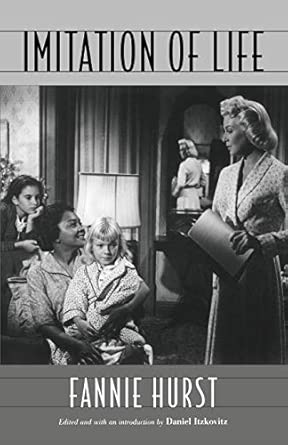
Imitation of Life
Author(s): Fannie Hurst (Author)
- Publisher: Duke University Press
- Publication Date: 7 Dec. 2004
- Edition: Illustrated
- Language: English
- Print length: 346 pages
- ISBN-10: 0822333244
- ISBN-13: 9780822333241
Book Description
The author of numerous bestselling novels, a masterful short story writer, and an outspoken social activist, Fannie Hurst was a major celebrity in the first half of the twentieth century. Daniel Itzkovitz’s introduction situates Imitation of Life in its literary, biographical, and cultural contexts, addressing such topics as the debates over the novel and films, the role of Hurst’s one-time secretary and great friend Zora Neale Hurston in the novel’s development, and the response to the novel by Hurst’s friend Langston Hughes, whose one-act satire, “Limitations of Life” (which reverses the races of Bea and Delilah), played to a raucous Harlem crowd in the late 1930s. This edition brings a classic of popular American literature back into print.
Editorial Reviews
Review
“Daniel Itzkovitz’s brilliant edition of
Imitation of Life places this controversial novel at the center of U.S. literary, cinematic, and social history. Fannie Hurst’s novel deserves to be read in its own right, but here its importance as a register of white anxieties about the ethics of American racism and of consumer fantasies for overcoming the particular body are also showcased richly.”—Lauren Berlant, author of The Queen of America Goes to Washington City: Essays on Sex and Citizenship“This new edition of an influential American classic—one of the first books in twentieth-century popular literature to grapple with issues of gender and race—is reason enough to celebrate, but Daniel Itzkovitz’s splendid and insightful introduction reclaims for Fannie Hurst a preeminent position as an essential American literary figure whose work matters today more than ever.”—Michael Bronski, author of
The Pleasure Principle: Sex, Backlash, and the Struggle for Gay FreedomFrom the Author
Fannie Hurst (1889–1968) was a popular writer of many novels and short stories. Among her best-known works are Back Street (1930) and Lummox (1923).
Daniel Itzkovitz is Associate Professor of English and Director of American Studies at Stonehill College in North Easton, Massachusetts. He is a coeditor of Queer Theory and the Jewish Question.
From the Back Cover
About the Author
Fannie Hurst (1889–1968) was a popular writer of many novels and short stories. Among her best-known works are Back Street (1930) and Lummox (1923).
Daniel Itzkovitz is Associate Professor of English and Director of American Studies at Stonehill College in North Easton, Massachusetts. He is a coeditor of Queer Theory and the Jewish Question.
Excerpt. © Reprinted by permission. All rights reserved.
IMITATION OF LIFE
By FANNIE HURST
Duke University Press
Copyright © 2004 Duke University Press
All right reserved.
ISBN: 978-0-8223-3324-1
Contents
Introduction Daniel Itzkovitz.....................viiImitation of Life.................................1Notes.............................................293
Chapter One
It struck Bea, and for the moment diverted her from grief, that quite the most physical thing she had ever connected with her mother was the fact of her having died.
She found herself, crying there beside the bier, thinking of her mother's legs. Such willing ones. They were locked now, as they lay stretched horizontally down the center of the parlor, in the rigidity of death. The bengaline dress, for which only four dreamlike weeks ago they had shopped together on Atlantic Avenue, now lay decently over those dear legs. Dreadful counterpane to the physical fact that Adelaide Chipley's breasts and loins and femurs lay dead.
There had been so little evidence, during her lifetime, of any aspect of her physical life, other than just the automatic processes of locomotion and eating and sleeping. Mother had never been the one to profess hunger, or fatigue, or warmth, or cold, but how those estates of being in others could concern her! Her legs had just carried her about through being wife to Evans Chipley, and mother to Beatrice Fay Chipley, and all things to the monotonous mosaic of little days in the little household.
True, it had repeatedly occurred to Bea to ask herself, following that day shortly after her fourteenth birthday when the physical fact of her coming of menstrual age had frightened her so terribly that she had sobbed all through her mother's clumsy attempt at explanation, how on earth it was possible to even imagine two such people as her parents ever coming together in a way to conceive her, their child.
Why, it was even difficult to visualize Mother as a young girl (how pretty she was on the old tintype) sitting in the parlor of her little home in Burlington, New Jersey, past which the railroad train thundered, awaiting Father on his Saturday night visits from Philadelphia.
They had always seemed too little acquainted even for that. Too— too remote, for the suggestion of passion. How could those two have begot child! They never even touched, except for the peck of the lips when Father departed and arrived, and Bea came in for that too, of precisely the same quality.
How then ...?
Following her mother's shockingly inadequate explanation shortly after her fourteenth year, she had fleetingly dared to ask herself that question over and over again.
How ...?
What secret and mysterious transformation could come over two such unintimate-appearing people as her father and mother, after they had closed the door of their bedroom nights? How account for their matter-of-fact exit from the quite inexorable matter-of-factness of life as it was lived on Arctic Avenue, between Georgia and Mississippi Avenues, into realms which begot progeny.
It was all immensely reasonable in the stuff of which the books she borrowed from the public library were made. Janice Meredith. When Knighthood Was in Flower. Richard Carvel. Mill on the Floss. But Mother and Father—how? Neither could it have been a matter between them that had solely to do with the first night, or the first months, of marriage. After her fourteenth year, Bea came to recognize, with her logic, that her mother's illness, the year before, had been due to miscarriage.
Almost equally strange was a high-school mate, Ferdie Leigh, getting a baby sister.
The Leighs lived on Mississippi Avenue, and Mr. Leigh, who had a bathing-suit concession on the Boardwalk, was elder in the Presbyterian Church. The Leigh children were not allowed to ride in street cars on Sunday.... Mrs. Leigh was quite old and ugly and narrow ...
How ...?
How in the world did two people like Mr. and Mrs. Leigh, and more especially like her mother and father, ever become sufficiently well acquainted with one another....
Life in the Chipley household was so crammed with just the daylight facts. Setting yeast. Stretching lace curtains. Fancy-work. Pickling. Carpet-beating. Ironing. Nice meals planned by Mother, around everyone's likes and dislikes, except her dear own. "The chicken liver at the end of the platter is for you, Mr. Pullman, knowing you don't eat rabbit." "Take plenty of floating island Bea; it's your favorite dessert." "Mr. Chipley, that is your kind of sweet butter." Life all cluttered like that, with littlenesses. Coming. Going. Sleeping, too, of course, but Mother and Father straight beside one another in bed, like her, Bea, in her own little room. And Mr. Pullman in his.
For a while, after she was fourteen, it had been difficult to keep her mind from sliding around to this mystifying riddle of the intimacies, that must, by very virtue of her own existence, have transpired between her father and mother.
Jeanette Clabby, another schoolmate, and who was a Catholic, would undoubtedly carry such thoughts to confession. If they possessed her. Did they? Nice girls would no more have discussed such things!
But the riddle of her parents would persist, privately.
Goodness! if she so much as entered the bedroom where her mother was dressing, she hastily threw a towel or a wrapper across her breasts. Her father, even in the years before they had moved to Atlantic City, from Philadelphia, and when the asthma was thick upon him, had not liked to appear before the small girl, Bea, in his undershirt.
What mysterious transformation was it could come over two such unintimate people ...?
And now in death, there was at last something physical about her mother.
The awfulness of thinking that thought smote her with something that hurt even more than her grief. How confusing to find ideas that bordered on the forbidden, mingling with the aroma of God which seemed to emanate from a face dead and dear.
How private she had been about her illness, delicate and secretive as she had been about everything else pertaining to what touched her most closely. And what a frightening, hurting illness! ... And now God had folded those mysterious limbs into the sanctuary and still further privacy of death.
And to think that out of those dead loins had sprung life, hers—Beatrice Chipley's! They had been warm, yielding loins, and that crumpled figure over there in the corner of the darkened parlor, his back retching as he cried, had actually committed the act of sex. It made mother's deadness somehow seem so young and inexpressibly heartbreaking.
All mixed up with this death of a mother from whom she had never been separated one full day in her life, was a kind of splendid grief she had experienced once, fleetingly, while reading from a high-school platform:
"I weep for Adonais, he is dead."
The words, as she recited them, had felt like wine, fizzing down into, and exciting and hurting her.
"I weep for Adonais, he is dead ..."
I weep for mamma, she is dead ... her arms and legs and breasts and her loins there, under the bengaline dress, are stiff and dead——
Chapter Two
It was strange that in all the years of living in that small gray board house on Arctic Avenue, with the exterior staircase running down its flank like a ladder, in fact ever since she was six and they had moved from Philadelphia the year of the climax of her father's asthma, the things she, Bea, had taken for granted.
Things such as an always replenished stack of fresh handkerchiefs in her dresser drawer; clam chowder on Fridays; clean top sheets every Monday; face towels when you reached for them; and a winter's supply of coal in the cellar without anyone mentioning or reminding.
Management of even so modest a household as the one on Arctic Avenue was packed with a minutiae of detail, of which, during the lifetime of her mother, she had scarcely been conscious. Then, icepans had never overflowed, nor laundry accumulated, nor windows grown thick with grime. There had been tape hangers always on towels, and unfrayed cuffs on her father's shirts, and new all-over-embroidery corset-covers in her dresser, without anyone seeming to give any apparent thought to them. They were just there, the product of Mother, sitting evening after evening, sometimes on a bench on the Boardwalk, or beside the Welsbach lamp in the sitting-room, at work with her indefatigable fingers.
Less than a month following her death, myriads of these hitherto unrecorded little items were to begin to stand out immensely against the all too brief span of each day.
Housekeeping for Father and Mr. Pullman, now that every detail of it rested suddenly upon her, was filled with tremendous trifles of which heretofore she had not even been aware.
To housekeep, one had to plan ahead and carry items of motley nature around in the mind and at the same time preside, as Mother had, at table, just as if everything, from the liver and bacon, to the succotash, to the French toast and strawberry jam, had not been matters of forethought and speculation.
Since her passing, Evans Chipley was somehow, to his daughter, looking so dwarfed. Almost as if he had shriveled into his clothes and hung in the middle of them like a spider close to the center of his web. Poor Father. Life for him must be made to proceed as closely as possible to the pattern she had woven about his fastidious little needs. There must never be any coffee lap over into his saucer, and his corn must always be cut from the cob for him, and socks must be folded away wrong side out, with the toe indented so he could slide easily into them, and on wet days when Father walked to his headquarters on the Boardwalk Pier, there must be newspaper in his rubbers against possible leak.
If Mother could carry these things around in her head without ever seeming to have them there, surely she, Bea, with her diploma from the Atlantic City High School fresh in its ribboned roll, must be capable of carrying on with at least equal efficiency.
True, during Mother's lifetime, it had been her pride that Bea did not often set her nicely shod young feet into the kitchen.
"Those things will come naturally enough when you get to them. I'd rather you spent the time practicing, or at your painting or burnt wood."
Darling Mother. How spared she, Bea, had been all those years, what with even Mr. Pullman's board money being chiefly diverted to provide all sorts of additional little luxuries for Bea and her father.
And now poor Father, deprived of those blessed first-hand administerings, was looking so dwarfed. This unintimate man, the mystery of whose intimacy with her mother still snagged her shameful curiosity, seemed to have touched life precisely in the manner he now inhabited his neat little dandified clothes; rather suspended in the middle, without contacts.
She must see to it that the taken-for-granted creature comforts of his life went on without the interruption to which hers had been so violently subjected. He had seemed so bewildered, not to say fastidiously offended, that night the little bubbles had appeared along her mother's lips when, without their realizing it, she lay dying. Mother's impulse, as she begged him to leave the room and let her suffer alone, must have been to spare him ugliness. The other evening when the icepan had overflowed and its contents had come creeping into the dining-room to their feet beneath the supper table! The mess of it was easily cleared, but to have had Father see and suffer, was the rub. His voice had actually cried, the morning he had come to her with a rent across his freshly opened pocket handkerchief. Mother had always tended that crying voice as you would a child's.
And now, just one month after she had taken up the reins that had been laid down in death by her mother, came the suggestion from Father as he offendedly, after one spoonful, pushed away his dish of ever-so-slightly scorched corn pudding:
"Bea, better see if we can't get Selene to come by the week."
She had been in the act of helping Mr. Pullman to some of the corn pudding, and now her hand hung with the spoonful over his saucer and made a little trembling motion as if it had been hurt.
And in front of Mr. Pullman, too. She began to press outward with her tonsils, with her whole body, in fact, in an effort not to cry.
"I'm sorry about the scorch, Father. The butcher boy came just as I was about to take it out of the oven."
"It's all right, Rome wasn't built in a day. Bah! bitter!"
Oh, oh, how that ground in! Rome wasn't built in a day. How subtly, and yet with what cruel benignancy, that ejaculation from Father summed up her inadequacies.
"Mr. Pullman and I can walk across the tracks to Selene's house after supper. This kind of thing won't do."
Now Father simply mustn't act like that. To begin with, he knew perfectly well that the black woman, Selene, who had helped Mother twice a week toward the end, had moved to Baltimore. If only he had come right out with, "Bea, child, you've scorched the pudding again."
He had no intention of taking on the additional expense of Selene or anyone like her. Except for the grace of Mr. Pullman's financial contribution, over and above Father's salary, there could never have been a Selene, even those last months of Mother's life.
Mother had once said that as a lad in Leeds, England, Father had seen better days. Perhaps, but certainly Aunt Chipley, the sole relative, who had lived with them in the Philadelphia days until her death, had given little evidence. Aunt Chipley, whose husband had been an iron-monger in Leeds and who, after his death, had followed her brother Evans to America, had drunk coffee from her saucer in great soughing movements and gone stocking-footed about the house. In fact, these constituted Bea's sole memories of her, except the tuberose smell of her parlor funeral, and the time she had yelled at Father that he was born a little dark, was a little dark at heart, and a dark would live and die.
It had worried her at the time because, first of all, you said "clerk," not "dark," and then besides, Father was not a clerk or dark. Even back in those days before the asthma, he had been city salesman for the great pickle-and-relish concern whose interests he now represented in Atlantic City.
Clerks stood behind counters. Father drove a buggy around town to the trade. Father wore spats. True, he drank out of his saucer, too, but without the soughing noise, and with his small white mustache lifted as if it were first fastidiously smelling of what it partook.
How small and neat and right he was. She felt now, with the entire pressing outward of her body, as it seemed to swell to resist all that was unspoken about the scorched corn pudding, the look she had so often seen in her mother's gray eyes. He was quite a relentless pattern of precisions, Father was. Such a little gentleman, that the rebukes lay folded into the custard of his manner. There was something utterly bewildering about the way his capacity for rebukes was whipped into his suavity. No getting at it any more than you could separate the flavor of the vanilla from the custard itself.
Strange that in all those years of seeing her mother's neck drop forward like a tired swan's, to the something that lurked behind the neat privet hedge of her father's mustache, that only now, when it was too late, she should find herself aching to hold her mother understandingly away from his small, scarcely perceptible cruelties.
Did Mr. Pullman, who had resided in the small bosom of that family ever since the move from Philadelphia, fifteen years before, realize any of this? He must know Father so well by now. It was through his business acquaintanceship with him that he had come to board at the house. To be sure, Mr. Pullman's work confined him to the Amusement Pier on the Boardwalk, where he demonstrated the varied uses of the varied relishes and gave out pickle literature and little stone pickles on stickpins, Father's connections, as city salesman, had chiefly to do with the Philadelphia office. Still, the Amusement Pier, jutting from the Boardwalk out into the vast curve of hissing surf which dances in against the flank of Atlantic City as it stretches quite beautifully between Absecon and Great Egg Harbor Inlets, was informal headquarters for every local employee connected with the pickle-and-relish concern.
Lucky for the Chipleys that it was, since it drew to them Mr. Pullman.
(Continues...)
Excerpted from IMITATION OF LIFEby FANNIE HURST Copyright © 2004 by Duke University Press. Excerpted by permission of Duke University Press. All rights reserved. No part of this excerpt may be reproduced or reprinted without permission in writing from the publisher.
Excerpts are provided by Dial-A-Book Inc. solely for the personal use of visitors to this web site.


