“…numerous chapters evaluate the necessity of coupling hydropedology with other related interdisciplinary sciences, such as biogeochemistry and ecohydrology, and discuss technical advances, such as geophysical techniques and digital soil mapping…Recommended. Upper-division undergraduates and above.” —CHOICE April 2013
From the Back Cover
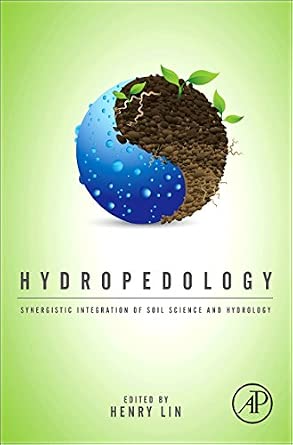
Hydropedology is an emerging interdisciplinary science that integrates soil science and hydrology, along with other related bio- and geosciences. It embraces a holistic study of complex landscape–soil–water-–vegetation relationships across space and time. Hydropedology provides new perspectives to monitor, map, model, and manage precious soil and water resources. This book calls for a new era of soil research to improve the understanding and quantification of soil architecture across scales and its links to soil functions. It also emphasizes in situ soils in the landscape, where distinct pedogenic features, environmental variables, and anthropogenic impacts interact and determine the storages and fluxes of energy and mass in the real world.
Hydropedology is written forresearchers, educators, students, and practitioners who are interested in the interface between pedology, soil physics, hydrology, geomorphology, geology, geophysics, geography, ecology, biogeochemistry, soil biology, and other related sciences. Those in the fields of environmental science, engineering, regulation, policy, and sustainable land use management and planning will find this book relevant to their research and work.
This unique book:
- Explains the fundamental principles of interactive hydrologic and pedologic processes across space and time.
- Includes case studies that demonstrate the need for hydropedology in a variety of environments and practical applications.
- Supports theory and model building for improving predictions and diagnosing problems in complex landscapes across geographic regions.
Henry Lin is a Professor of Hydropedology/Soil Hydrology in the Department of Ecosystem Science and Management at The Pennsylvania State University, USA. He has been active in hydropedology research and education since 2001 and has served as the founding chair of the Hydropedology Working Group of the Soil Science Society of America and of the International Union of Soil Sciences. He organized and chaired the First International Conference on Hydropedology in 2008. He has published over 100 papers and edited six special issues of various scientific journals related to hydropedology. His research interests include fundamental understanding and practical applications of integrated soil and water sciences, soil architecture and preferential flow across scales, complex systems view of soil formation and soil functions, and the holistic understanding of the Earth’s Critical Zone.
About the Author
Ph.D. in Soil Science
 Wow! eBook