Wow! eBook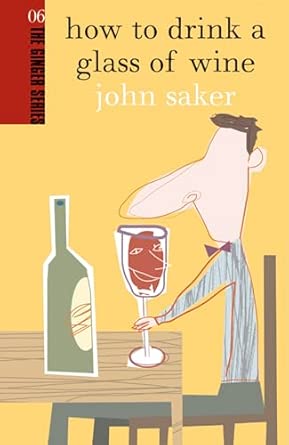
How to Drink a Glass of Wine: No. 5
Author(s): John Saker (author) (Author)
- Publisher: Awa Press
- Publication Date: 1 Aug. 2005
- Language: English
- Print length: 144 pages
- ISBN-10: 095825382X
- ISBN-13: 9780958253826
Book Description
Editorial Reviews
Review
About the Author
Excerpt. © Reprinted by permission. All rights reserved.
How to Drink a Glass of Wine
By John Saker
Awa Press
Copyright © 2005 John Saker
All rights reserved.
ISBN: 978-0-9582538-2-6
CHAPTER 1
In a French vineyard
EVERY TIME I looked up, Marie-Thérèse’s backside eclipsed the view. It was always moving away from me, the pacesetter in a plodding patrol of backsides.
Bending double was the best way – or, more to the point, the least painful way – to attack the stout, un-trellised Provençal vines and strip them of their small dark orbs of juice. ‘Back-breaking work’ was, for once, the perfect description. If I stopped and unfolded I could temporarily tranquillise my angry spine, but I would also fall behind.
Marie-Thérèse and her friends travelled down the vine rows like intent pecking hens among spilled seed. Trying to close the gap if their lead became embarrassing meant really stepping on the gas, and that held the potential for pain of a different sort. My left hand still carries traces of hurried misjudged lunges with those secateurs.
We were a work gang of two hemispheres: six New Zealanders – three young couples not long out of university – and the rest mostly 60- and 70-something women from Flayosc, the nearby village perché that overlooked most of the vineyards in which we worked. The church bells of Flayosc dictated the shape of our working days.
Marie-Thérèse was the grande dame of Flayoscais grape-pickers. Her father had perished in the human abattoir of Verdun over 50 years earlier, and she had probably worked more vintages in these fields than anybody. She was hard-working, and shockingly provincial in outlook. When we shared our enthusiasm for someone we thought was a French cultural treasure, Marie-Thérèse cut the conversation short. ‘Piaf? She was nothing but a prostitute.’
Yet behind the narrowed, assessing gaze and blunt talk she seemed to like us, and made more effort than anyone else to bridge the divide between our group’s Old World old and New World young. She taught me the few lines of Provençal dialect I can still muster, including Fa cao l’estiu, which translates roughly as, ‘She’s hot out here, all right.’
On the stroke of noon we’d stop for lunch, about a dozen of us gathering around rough tables in cool stone huts. We usually brought our own food: baguettes filled with saucisson, the French salami, or camembert cheese. Occasionally, a crop of home-grown pois chiches, or chick-peas, would appear in a huge bowl on the table. We’d help ourselves, adding chopped onion, tomato, cornichon – pickled cucumber – and boiled egg. After a drenching in olive oil, it was ready to eat.
And we drank. How we drank. We glugged down the red wine made the year before with fruit drawn from the same vineyards in which we worked. It was a rough-and-ready blend of the workhorse grape varieties that clothe the southern French littoral – Grenache, Carignan, Cinsault, perhaps a bit of Syrah. It was light – usually only about 11 percent alcohol – simple, and improved by being slightly chilled. The hearty draughts we downed from Arcoroc tumblers barely touched the sides.
We drank for every possible reason: for refreshment; for taste – it was a dependable companion for the simple foods we ate; and for the effect the alcohol had on us. The wine took the edge off our soreness, raised our spirits and emboldened us for the long hot afternoons that lay ahead. It gave us energy. I used to marvel at the ferocity of my post-lunch attack on the vines. At the time I was ignorant of the process that occurs in the liver whereby alcohol is transformed i