Wow! eBook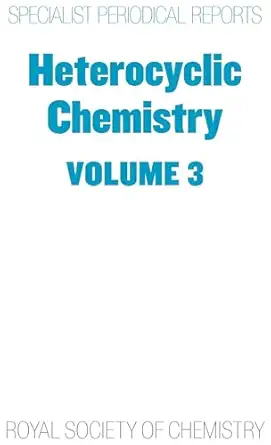
Heterocyclic Chemistry: Volume 3
Author(s): H Suschitzky (Editor), O Meth-Cohn
- Publisher: Royal Society of Chemistry
- Publication Date: December 31, 1982
- Edition: 1st
- Language: English
- Print length: 406 pages
- ISBN-10: 0851868231
- ISBN-13: 9780851868233
Book Description
Specialist Periodical Reports provide systematic and detailed review coverage of progress in the major areas of chemical research. Written by experts in their specialist fields the series creates a unique service for the active research chemist, supplying regular critical in-depth accounts of progress in particular areas of chemistry. For over 80 years the Royal Society of Chemistry and its predecessor, the Chemical Society, have been publishing reports charting developments in chemistry, which originally took the form of Annual Reports. However, by 1967 the whole spectrum of chemistry could no longer be contained within one volume and the series Specialist Periodical Reports was born. The Annual Reports themselves still existed but were divided into two, and subsequently three, volumes covering Inorganic, Organic and Physical Chemistry. For more general coverage of the highlights in chemistry they remain a ‘must’. Since that time the SPR series has altered according to the fluctuating degree of activity in various fields of chemistry. Some titles have remained unchanged, while others have altered their emphasis along with their titles; some have been combined under a new name whereas others have had to be discontinued. The current list of Specialist Periodical Reports can be seen on the inside flap of this volume.
Editorial Reviews
Excerpt. © Reprinted by permission. All rights reserved.
Heterocyclic Chemistry Volume 3
A Review of the Literature Abstracted Between July 1980 and June 1981
By H. Suschitzky, O. Meth-Cohn
The Royal Society of Chemistry
Copyright © 1982 The Royal Society of Chemistry
All rights reserved.
ISBN: 978-0-85186-823-3
Contents
Chapter 1 Three-Membered Ring Systems By T. J. Mason, 1,
Chapter 2 Four-Membered Ring Systems By T. V. Lee, 49,
Chapter 3 Five-Membered Ring Systems By G. V. Boyd, J. de Mendoza, J. Elguero,and S. Gronowitz, 63,
Chapter 4 Six-Membered Ring Systems By S. D. Carter, G, W. H. Cheeseman, and G. P. Niis, 237,
Chapter 5 Seven-Membered Ring Systems By J. T. Sharp, 319,
Chapter 6 Eight-Membered and Larger Ring Systems By G. M. Brooke, 345,
CHAPTER 1
Three-Membered Ring Systems
BY T. J. MASON
1 Reviews
General. — Recent advances in the synthesis of three-membered-ring heterocycles have been reviewed, as have the stability and chemistry of the unsaturated systems oxiren and thiiren together with either azirine or silacyclopropane.
Rings containing Oxygen. — The industrial importance of the oxirans is reflected by the inclusion of two sections in the latest edition of the Kirk-Othmer Encyclopedia of Chemical Technology concerning ethylene oxide and perrluoro-epoxides. The manufacture of ethylene oxide has also been the subject of three consecutive articles in Catalysis Reviews.
General preparative techniques that have been surveyed include synthetic and mechanistic aspects of metal-catalysed epoxidation with hydroperoxides,new epoxidation reagents, and new methods for stereo-controlled epoxidation.
Articles on specific classes of epoxy-compounds have appeared, dealing with allene oxide (vinyloxiran), cyclic poly-epoxides (mainly five-, six-, seven-, and eight-membered systems), long-chain epoxy-acids, and steroid epoxides (their analytical and biological significance).
Rings containing Nitrogen. — Aziridine chemistry has been included in a review of cyclic imines. Reviews on azirines include their reactions with transition metals, their use as synthons for other heterocycles, and the preparations of cyclophanes involving azirine rings.
2 Oxirans
Preparation. — Catalytic Oxidation of Alkenes to Oxirans, using Oxygen or Oxygen-containing Gases. It is possible to catalyse the epoxidation of ethene, using simply powdered silver as a suspension in acetic anhydride. Using a mixed ethene: oxygen : nitrogen feed of 82:4:15 parts, under pressure, and at 180 °C, 90% conversion of oxygen is achieved in 10 minutes.
It has been found that silver carrier catalysts that incorporate a number of combinations of alkali metals (one of which must be caesium) have greater efficiencies for the preparation of ethylene oxide than any such catalyst containing only a single alkali metal. A study of the stereochemistry of the epoxidation of ITL{cis}ITL-1,2-dideuterioethene on various silver catalysts, under differing reaction conditions, revealed equilibrations of the deuterium atoms in the product ranging from 57 to 99% , A possible explanation for this is based upon the extent of oxidation of the catalyst surface under the particular reaction conditions.
The role of the catalyst support in the oxidation of ethene has been investigated by using alumina (α-Al2O3) that is doped with either GeO2 or MgO, making it either an n-type or p-type semiconductor, respectively. Compared with silver catalysts on undoped supports, p-type carriers show enhanced reactivity and selectivity whereas p-type have the opposite effect.
Styrene has been epoxidized in the liquid phase, using titanium carbide and boride. It appears that, during the reaction, an oxygen-containing polymeric film is formed on the catalyst surface which increases its activity but also increases the induction period for the reaction. The latter may be eliminated by the addition of dibenzyl peroxide.
Azibenzil (PhCOCPhN2) reacts readily with O2 in the presence of transition-metal-ion catalysts to give an intermediate (probably a metal-carbene-oxygen complex) which can transfer oxygen to alkenes and yield epoxides under very mild conditions. The reactions are performed at room temperature in CHC1that contains azibenzil, Pd(OAc) 2, and alkene, with oxygen being simply bubbled through the solution during the reaction. Yields of epoxides up to 87% have been reported, together with benzil, which is the by-product of the reaction.
The conversion of cyclic alkenes into epoxy-alcohols may be achieved by using oxygen and the [VO(acac)2]-AIBN catalyst system. With dichloroethane as solvent, the yields of epoxy-alcohol (2) and epoxide (3) that were obtained from cyclopentene (1;n = 1) were 41 and 28% respectively (Scheme 1); for cyclohexene (1;n=2), 10 and 40% were produced, whereas cycloheptene (1; n= 3) gave only the epoxide (3; n = 3) (99%).
Paquette et al., in an ongoing study of electronic control of stereoselectivity, have investigated the direction of addition of singlet oxygen to 1,4-dimethoxy-naphthalene derivatives in which bridged bicyclic systems are fused across C-2 and C-3 (Scheme 2). Using Rose Bengal as the sensitizer, photochemical oxidation of (4; n= 1) gave mainly the endo- epoxide (5) (77%) together with 7% of exo-epoxide (6), whereas for (4; n = 2) the main product was exoepoxide (6) (77%), with only 13% of (5). Each of these epoxidations is the reverse of the stereochemistry that is obtained by using alkaline hydroperoxide as the oxidant. While the direction of epoxidation with hydroperoxide can be rationalized in terms of standard steric and kinetic control factors, the direction of photochemical epoxidation is thought to arise from the effect of σ σ-electrons from the bicyclic systems influencing the π-orbitals of the aromatic part of the molecule.
Scheme 2 also illustrates a number of other photochemical oxidations, accomplished with a range of different sensitizers. In a patented process, trans-3,4-epoxythujane (8) (42%) is produced from α-thujane (7), using biacetal. Tetraphenylporphyrin sensitizer affords a 6:10 ratio of (10): (11) in the oxygena-tion of bicyclopropylidene (9). A porphyrin was also used in the conversion of acetoxycycloheptadiene (12) into a mixture of compounds containing mainly (13) but some diepoxide (14). The yield of (14) can be increased, however, by further irradiation of (13) under argon.
Small quantities of oxirans can be obtained from a number of aromatic alkenes by photo-oxygenation in MeCN, using cyanoanthracene. Thus (16; R = Ph) (15%) is obtained from tetraphenylethene (15; R = Ph). Suspensions of semiconductors (TiO2 or CdS in CH2 Cl2) afford small conversions of aromatic alkenes; for example, of (15; R = Me) into (16; R = Me) (11%).
Irradiation (>200 nm) of a gaseous mixture of hexafluorobenzene in the presence of nitrogen and oxygen rapidly gave Dewar-benzene and, more slowly, yielded the Dewar-benzene oxide (17) (7% after 72 h).
Oxidation of Alkenes to Oxirans by Peroxy-acids. For compounds that contain more than one double-bond, epoxidation can clearly lead to a number of possible epoxides. In the case of dienes such as (18; R = alkyl), the use of one equivalent of peracetic acid gives mainly (19) via preferred attack at the more substituted double-bond. It is somewhat surprising that 3-ClC6H4 CO3H is so discriminating in its oxidation of (20). In this reaction (carried out under nitrogen, at -18 °C, in CH2Cl 2) 47% epoxidation occurs at position (a) and 15% at position (b), with 5% of the corresponding diepoxide being formed.
A co-operative effect by a hydroxyl and ether oxygen has been noted in the stereo-controlled epoxidation of (21) by 3-ClC6H 4CO3H. In the case of (21;R1 = R 2 = H) and (21; R1 = CH2Ph, R2 = H), a better than 25:1 ratio of oxirans (22):(23) is obtained. This ratio is reduced to 6:1 for (21; R1 = H, R2 = CH2Ph) and stereo-control is lost completely for (21 ;R1 = R2 = CH2Ph), where the ratio is 1:1. A change from hydroxyl to benzoate functionality has no effect, however, on the direction of epoxidation of (24). The cis-epoxide (25; R = PhCO) (45%) is produced on treatment of (24; R = PhCO) with CF3CO3H in sulpholane at 80 °C, in the presence of NaHPO4; attack occurs in the same stereochemical sense as that on the parent triol (24; R = H).
The epoxidation of phospholen oxides that are fused to five- and six-membered carbocyclic rings also proceeds stereospecifically. For 3-phospholen oxides, such as (26), the epoxide ring is generated trans to the phosphoryl oxygen (27) whereas for 2-phospholen oxides, such as (28), epoxidation occurs in the other sense (29).
Benzvalene (30) has been converted into the epoxide (31) (54%) directly by reaction with benzoylperoxycarbaminic acid (PhCH2 NHCO3H). This relatively new reagent proved successful where both MeCO3H and 3-ClC6H4CO3 H had failed.
Oxidation of Alkenes to Oxirans, using Peroxides. Two investigations into the mechanism of metal-catalysed epoxidations by hydroperoxides have appeared. In the case of catalysis by molybdenum compounds, the reaction involves the preliminary formation of a complex between the hydroperoxide and catalyst, which then reacts with the alkene. Ligands that are bound to molybdenum have a considerable influence on the rate of epoxidation, as does the particular hydroperoxide (ROOH) that is used. In general, the order of reactivity of peroxides is R = phenylethyl > cumyl > t-butyl > t-amyl, and the reactivities of both hydroperoxide and alkene follow the Taft equation. Mechanisms involved in catalysis by Mo, W, Ti, V, Nb, Ta, and Re have also been described. The oxidations of cholesteryl acetate by various hydroperoxides in the presence of [(Ac2CH2)3Fe] or [Mo(CO)6] in different solvents have been reported. For oxidation by H2O2 in the presence of the iron catalyst, formation of the epimeric 5,6-epoxides predominated; however, when an organic hydroperoxide or the other catalyst was used, allylic oxidation became a more important route.
A Russian group have produced a series of papers dealing with the epoxidation of cyclohexene by organic hydroperoxides, using poly(vinyl alcohol)-supported molybdenum catalysts. It was concluded that the mechanism for the process using poly(vinyl molybdate) did not differ significantly from that using the more traditional unsupported molybdenum catalysts. An alternative polymer-supported catalyst for epoxidation of cyclohexene has been developed from oxobis(pentane-2, 4-dionato)vanadium(iv) on divinylbenzene-cross-linked polystyrene beads. Although initially the unsupported catalyst provides a faster reaction than the polymer catalyst, the latter is more stable to the reaction conditions, giving it a longer lifetime and, in the end, it provides a higher yield of cyclohexene oxide.
For the oxidation of terminal alkenes using hydroperoxides and molybdenum catalysts it has been shown that stabilization of the peroxide by BaO greatly increases the selectivity for epoxidation. In the particular case of the oxidation of oct-1-ene by cumene hydroperoxide, using molybdenum naphthenate, the selectivity for oct-1-ene oxide was increased from 9% to 95% by using BaO.
The epoxidation of aurones, e.g. (32), by means of H2 O2 in the presence of NaOH or KOH affords epoxides in relatively low yields. An improved method of synthesis has been reported in which the base catalyst used is Triton B. With this system, the yield of epoxide from (32) was increased from 25% to 60%. Similar methods were used in the synthesis of thioaurone epoxides.
A number of novel epoxidation systems have been applied to the conversion of 2,3-dimethylbut-2-ene into (33). When H2 O2 is added to a slurry of basic alumina in ether containing the alkene, low yields of (33) (40%) are obtained. This low yield has been attributed to further reaction of the product epoxide on the alumina surface. In the same paper, an epoxidation using crystalline Ph3SiO2H in CH2Cl2 at 25 °C is described which gave a 70% yield in the formation of (33).
The uncatalysed reaction of hydroperoxypyrazole (34; R = OH) with 2,3-dimethylbut-2-ene led to (33) (70%) together with the by-product (34; R = H). The compound (34; R = OH) has increased reactivity toward alkenes (compared to that of alkyl hydroperoxides), and this has been ascribed to intramolecular H-bonding of the peroxo hydrogen to the ring nitrogen atom, together with the slight electron-withdrawing effects of the substituents. A number of α-hydroperoxides of esters, amides, ketones, and nitriles have proved efficient epoxidation reagents; thus (35) provides a quantitative yield of (33) from its parent alkene in CHCl3 at 60 °C for 24 h.
Synthesis of Oxirans by Halohydrin Cyclizations and Related Reactions. One of the mildest techniques for forming a bromohydrin from an alkene is by the use of N-bromosuccinimide (NBS). Epoxide (37) is a cyclic analogue of juvenile hormone II, and it may be prepared by the reaction of the parent triene (36) with NBS in tetrahydrofuran, isolation of the bromohydrin, and subsequent cyclization, using NaOMe in MeOH, in 80% overall yield. Epoxide (38) may be prepared from the parent chromene (a potential agent against insect juvenile hormone) in 77% yield by using NBS in dimethoxyethane followed by NaH-induced cyclization.
The reaction of P(OSiMe3)3 with α-halogenocarbonyl compounds (R1R2 CXCOR3) gives 1:1 adducts (39; R1 R2, R3 = H or Me; X = Cl or Br); these may be treated with base to yield 1,2-epoxyphosphonates (40) (Scheme 3). Such derivatives of 1,2-epoxyphosphonic acid are of interest in connection with their relationship to the wide-spectrum antibiotic phosphomycin.
A new regioselective synthesis of αβ-unsaturated epoxides (43; R = alkyl, cyclohexyl, or aryl) is shown in Scheme 4. Initial reaction of the acid chloride with allyltrimethylsilane (41) yields the intermediate (42), which is subsequently cyclized to vinyloxiran. For (41; R = Ph) the overall yield is about 50%.
A remarkable stereoselective synthesis of (E)– or (Z)-bromo-epoxides from a common starting material, either (E)– or (Z)-pent-3-en-2-ol (44; R1, R2 = H, Me), is shown in Scheme 5. The conversion of (44) into either (45) or (46) depends upon the choice of reaction conditions, but in both cases involves bromination followed by cyclization to the epoxide.
Synthesis of Oxirans via Attack of a Carbanion on the Carbonyl Group of Aldehydes and Ketones. The synthesis of chromone epoxides (48; R1 = Me or Ph, R2 = Ph) from secondary α-bromo-acetophenones has been reported as part of a continuing series of articles on α-halogeno-ketones. The reaction is thought to proceed via an intramolecular Darzens condensation (Scheme 6) after treatment of (47) with base. The reactions of (49) or of (47; R1 = Me, R2 = CH 2OMe) in methanolic base to yield (48; R1 = Me, R2 = CH2OMe) proceed through a similar mechanism.
The ‘octopus’ compound [50; R = SCH2CH2(OCH 2CH2)OMe], which can readily be prepared from (50; R = SH), proved an effective catalyst for the two-phase Darzens condensation of R1COR2R1, R2 = (CH2)5; R1 = R2 = Me, Et, or Ph; or R1,R2 = Me, Ph] with ClCH2CN to afford the oxirans (51) (23 — 70% ).
Two groups, working independently, have simultaneously published descriptions of epoxyannulation procedures, based on intramolecular reactions of sulphur ylides, that are of considerable synthetic importance. Scheme 7 shows the method for converting cyclic ketones (52; n = 1,2, or 3), via keto-sulphides (53), into bicyclic epoxides (54) (66% for n = 2). An alternative starting material is a β-keto-ester (55; acyclic, or n = 1 or 2), which, after reaction with w-halogeno-sulphide and decarboxylation, leads, to keto-sulphides, analogous to (53), which may be cyclized (Scheme 7) to fused cyclopentane oxides. The use of (56) in place of halogeno-sulphide allows for the synthesis of fused cyclohexane oxides; e.g., (57) (50%) from 2-carbethoxycyclohexane (55; n = 2).
The addition of dimethylsulphonium and dimethyloxosulphonium methylides to the derivative (58) of D-glyceraldehyde gives rise to epimeric epoxides with little stereoselectivity. The ratios of (59): (60) that were obtained were 60:40 and 70:30, respectively. In the case of addition of diazomethane, a methyl ketone was formed together with the epoxides.
A selenonium methylide (61), on reaction with aromatic aldehydes ArCHO (Ar = 4-NO2C6H4, Ph, 2-thienyl, 2-furyl, or 2-selenophenyl), gives 27 — 80% of the epoxides (62). In the case of addition to salicylaldehyde, subsequent intramolecular cyclization gave benzofuran (63).
In a reaction which is mechanistically analogous to epoxidations of sulphur ylides, unstabilized arsonium ylides react with aldehydes or ketones to yield epoxides. The advantage provided by this new route is its high degree of stereochemical direction to tran-epoxides (>50:1). In this respect, the addition might be considered to be more nearly analogous to the Wittig reaction. Triphenylarsonium ethylide (64) reacts with octanal to yield a sample of (65) (80%) of which 99% is the trans-isomer.
The Synthesis of Chiral Oxirans. Perhaps the most significant advance in this field for many years has been the development of an efficient chiral epoxidation system for allylic alcohols. The reagent consists of a solution of Ti(OPri)4 and L-(+)- or D-(-)-diethyl tartrate in dry CH2Cl2. To this solution, at -20 °C, is added ButOOH and the allyl alcohol substrate. Normally, after a period in the freezer overnight, the product may be isolated in good yield. The method possesses two striking features, (i) It gives uniformly high asymmetric inductions throughout a range of substitution patterns in the allylic alcohol substrate; thus geraniol (66) with (+)-tartrate gives 77% yield of a sample of (67) which shows a 95% enantiomeric excess (e.e.) of configuration 2S,3S. (ii) Upon use of a given tartrate enantiomer, the system seems obliged to deliver the epoxide oxygen from the same enantioface of the alkene, regardless of the substitution pattern. This latter characteristic is highlighted in (68), which shows that, when the alkene unit is placed in the plane with the CH2 OH substituent on the lower right, the use of (+)-diethyl tartrate leads to epoxidation from below the plane. When (-)-diethyl tartrate is used, the epoxide is formed from above.
(Continues…)Excerpted from Heterocyclic Chemistry Volume 3 by H. Suschitzky, O. Meth-Cohn. Copyright © 1982 The Royal Society of Chemistry. Excerpted by permission of The Royal Society of Chemistry.
All rights reserved. No part of this excerpt may be reproduced or reprinted without permission in writing from the publisher.
Excerpts are provided by Dial-A-Book Inc. solely for the personal use of visitors to this web site.