 Wow! eBook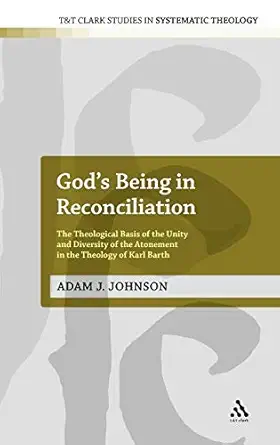
God's Being in Reconciliation: The Theological Basis of the Unity and Diversity of the Atonement in the Theology of Karl Barth
Author(s): Adam J. Johnson (Author), Ian A. McFarland (Series Editor), Ivor J. Davidson (Series Editor), Philip G. Ziegler (Series Editor), John Webster (Series Editor)
- Publisher: T&T Clark
- Publication Date: May 3, 2012
- Language: English
- Print length: 240 pages
- ISBN-10: 0567638332
- ISBN-13: 9780567638335
Book Description
One of the most pressing issues in the doctrine of the atonement today is the question of the unity and diversity of the work of Christ. What are we to make of the diversity within the biblical witness and the history of doctrine when it comes to explanations of the meaning and significance of Jesus’ death and resurrection? Without a grasp of the unity of his work, our understanding and use of the diversity runs the risk of becoming haphazard and disordered. Proposals regarding the unity of Christ’s work today tend to focus on the metaphorical nature of language, the role of culture, and various possible conceptual schemes, rarely reflecting on unity and diversity proper to the being God.
To fill this gap, Johnson draws on Karl Barth’s integrated account of the doctrines of God and reconciliation, harnessing the resources contained within the doctrines of the Trinity and divine perfections to energize a properly theological account of the unity and diversity of the atonement.
Editorial Reviews
About the Author
Ivor J. Davidson is Honorary Professor at the University of Aberdeen, UK. He was previously Professor of Theology at the University of Otago, New Zealand.
Philip G. Ziegler is Chair in Christian Dogmatics at the University of Aberdeen, UK. John Webster was born in c. 1580 to a London coachmaker, and appears to have studied law at the Middle Temple. Although he is recorded as the author of several other works, including a history play, Lady Jane, his only surviving works are Westward Ho! and Northward Ho! (1604-05), written in collaboration with Thomas Dekker, the comedy The Devil’s Law Case (1620), and two tragic masterpieces, The White Devil (1612) and The Duchess of Malfi (1614).
