The Global Pigeon
Author(s): Colin Jerolmack (Author)
- Publisher: University of Chicago Press
- Publication Date: March 20, 2013
- Edition: Illustrated
- Language: English
- Print length: 288 pages
- ISBN-10: 022600208X
- ISBN-13: 9780226002088
Book Description
The pigeon is the quintessential city bird. Domesticated thousands of years ago as a messenger and a source of food, its presence on our sidewalks is so common that people consider the bird a nuisance--if they notice it at all. Yet pigeons are also kept for pleasure, sport, and profit by people all over the world, from the "pigeon wars" waged by breeding enthusiasts in the skies over Brooklyn to the Million Dollar Pigeon Race held every year in South Africa.
Drawing on more than three years of fieldwork across three continents, Colin Jerolmack traces our complex and often contradictory relationship with these versatile animals in public spaces such as Venice's Piazza San Marco and London's Trafalgar Square and in working-class and immigrant communities of pigeon breeders in New York and Berlin. By exploring what he calls "the social experience of animals," Jerolmack shows how our interactions with pigeons offer surprising insights into city life, community, culture, and politics. Theoretically understated and accessible to interested readers of all stripes, The Global Pigeon is one of the best and most original ethnographies to be published in decades.
Editorial Reviews
Review
The Global Pigeon is easily the most surprising and most delightful ethnography of the year: an elegantly written, detailed study of how humans, whether on the Piazza San Marco or Trafalgar Square or in the pigeon lofts of New York and Berlin, contrive to interact with these versatile birds. Its exploration of humanimal interaction provides some wonderfully subtle answers to John Berger's classic essay question "Why look at animals?(Laurie Taylor, host of BBC Radio's "Thinking Aloud," writing in Times Higher Education
Colin Jerolmack's book is a wonderful celebration of the ways some people interact with pigeons...This book brings renewed respect for the different ways people engage with nature.
(Tim Birkhead, Times Higher Education)
In this fascinating examination of people and their relationships with pigeons, he reveals much about our attitudes to animals, to each other and to the society we live in. Like a good field biologist, Jerolmack spent years staking out his subjects and gathering observations. All the while, Jerolmack learns about the shifting shape of communities, the cultures that grow up around pigeon keeping and about pigeon politics.
(Stephanie Pain, New Scientist)
The writing is superb. There were times when reading this book I thought I was reading one of those well-crafted and engaging nonfiction pieces in any number of those periodicals geared toward a culturally informed audience. This book captures a real sense of the sociological imagination, and...it should be given a close read by all who have an interest in promulgating said imagination. This book embodies the themes of the intersection of history and biography, structure and milieu, and troubles and issues.
(Russell R. Chabot, Canadian Journal of Sociology)
The book should be and surely will be read by urbanists, students of community and of human and animal interaction, and those who study culture. Foremost, it is an example of contemporary ethnographic scholarship that, like the best models of urban ethnography, provides a memorable and complex portrait of an oft-hidden facet of urban life, revealing lessons about culture, community, and cities.
(Japonica Brown-Saracino, American Journal of Sociology)
From the Author
Photos from the Author
(Click on Images to Enlarge)
Although many people consider pigeon "rats with wings," in Piazza San Marco (Venice, Italy) they are considered sacred and are well fed by tourists eager to experience local culture. (Photo by the author)
Although Anna lives alone in a walk-up apartment in Manhattan, by feeding pigeons in the park she avoids feelings of social isolation. (Photo by the author)
Carmine has kept domesticated pigeons on his rooftop in Queens for over 75 years. As other Italians moved out of the neighborhood, he began to teach the art of "pigeon flying" to black and Puerto Rican boys who moved in. (Photo by Marcin Szczepanski)
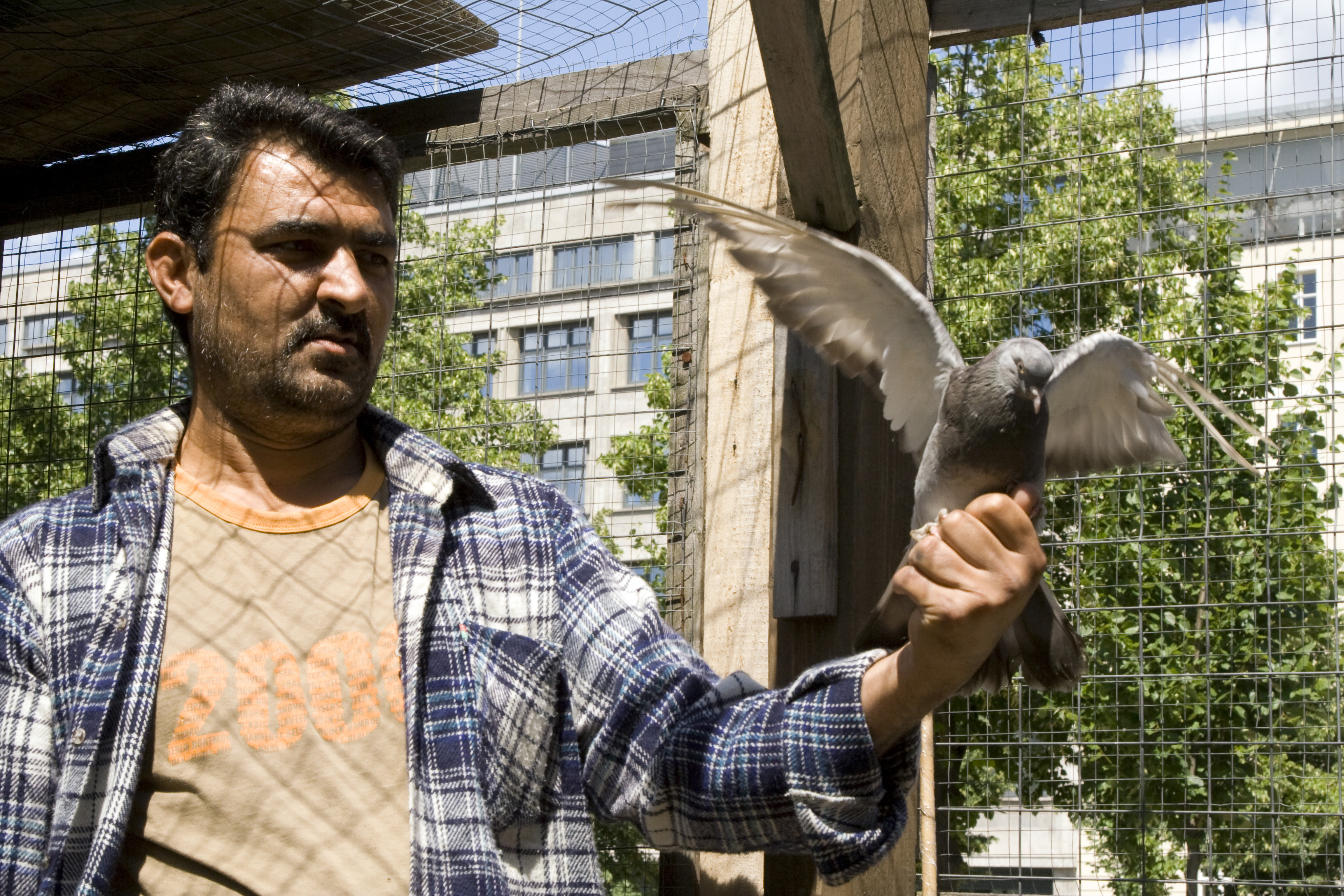
Mehmet, a Turkish immigrant living in Berlin, finds sanctuary and a connection to his homeland in the pigeon coop. (Photo by Oliver Hartung)
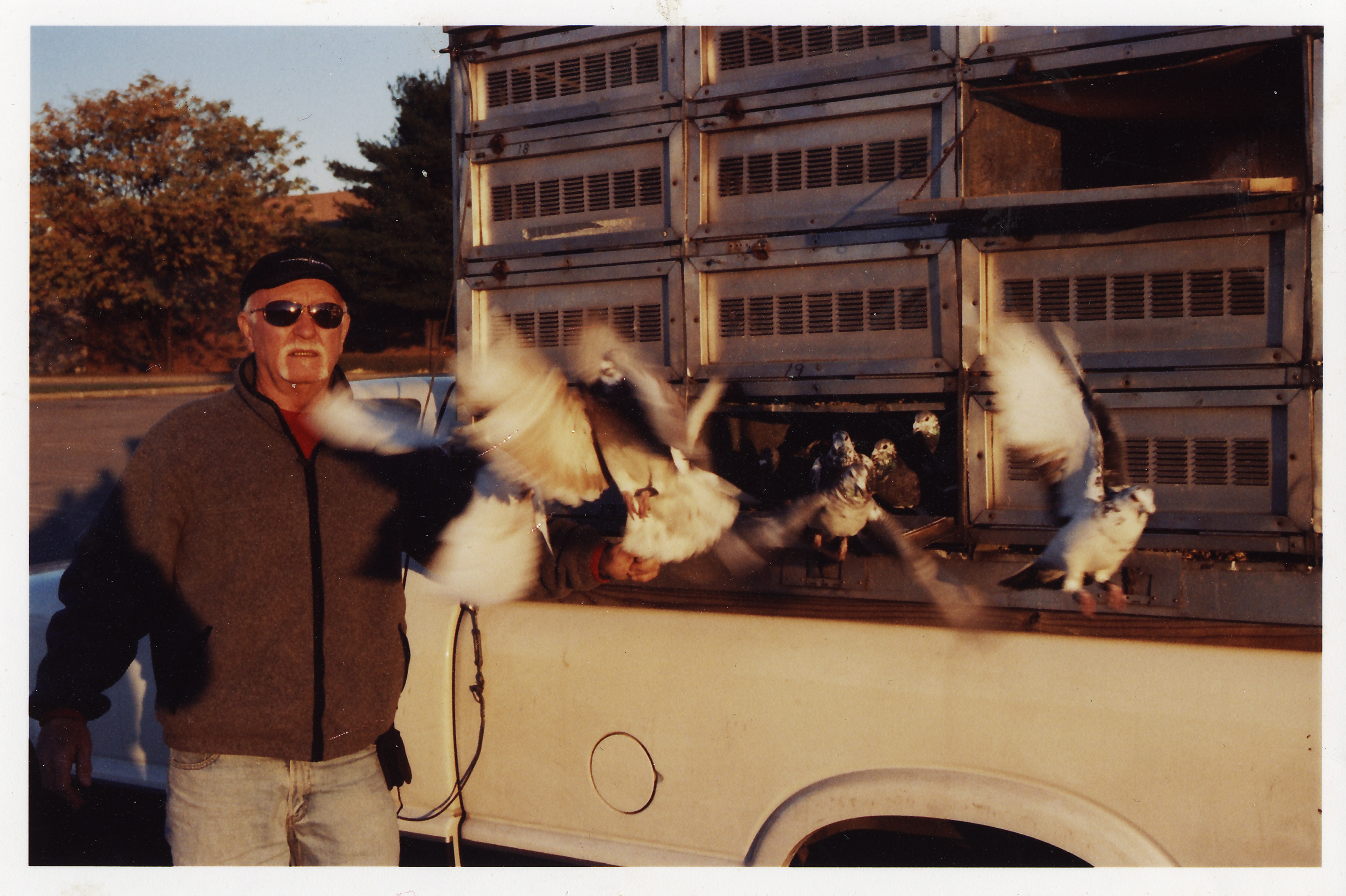
Marty, seen here releasing homing pigeons on a "training toss," says that nothing compares to the thrill of seeing his birds return to his Bronx rooftop after a 400-mile marathon. (Photo by the author)
About the Author
Colin Jerolmack is an assistant professor of sociology and environmental studies at NYU, where he also teaches courses on human-animal relations.
View on Amazon
 Wow! eBook