 Wow! eBook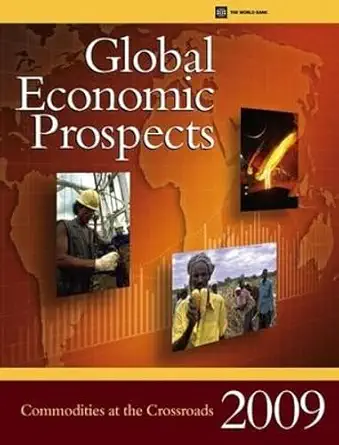
Global Economic Prospects 2009: Commodities at the Crossroads 2009th Edition
Author(s): World Bank (Author)
- Publisher: World Bank Publications
- Publication Date: December 9, 2008
- Edition: 2009th
- Language: English
- Print length: 200 pages
- ISBN-10: 082137799X
- ISBN-13: 9780821377994
Book Description
The eruption of the worldwide financial crisis has radically recast prospects for the world economy. Global Economic Prospects 2009 analyzes the implications of the crisis for low- and middle-income countries, including an in-depth look at long-term prospects for global commodity markets and the policies of both commodity producing and consuming nations. Developing countries face sharply higher borrowing costs and reduced access to capital, cutting into their capacity to finance investment spending. The looming recession presents new risks, coming as it does on the heels of the recent food and fuel crisis. Commodity markets, meanwhile, are at a crossroads. Following decades of low prices and weak investment in supply capacity, commodity prices first spiked and have now plummeted in response to the financial crisis. In the longer run, commodities are not expected to be in short supply. Prices should be higher than they were in the 1990s but much lower than in the recent past. These higher prices should provide producers with sufficient incentive to discover new supplies, improve output from existing resources, and promote greater conservation and substitution with more abundant alternatives. At the same time, slower population growth will ease the pace at which commodity demand grows. Policies to limit carbon emissions and boost agricultural investment, along with the dissemination of efficient techniques, should also contribute to this long-term outcome. This year s Global Economic Prospects also looks at government responses to the recent price boom.
Editorial Reviews
Review
“While developing countries entered this tumultuous period with much improved fundamentals, this crisis is expected to test severely both them and the international financial system. In the longer run, even after developing country growth recovers, commodity supply should keep pace with demand, but policy will need to foster conservation efforts and technological progress. In particular, if poor countries are to maintain domestic food self-sufficiency, governments will need to strengthen investment in rural infrastructure, agricultural research, and technological outreach.” — Justin Yifu Lin, Senior Vice President and Chief Economist, The World Bank


