 Wow! eBook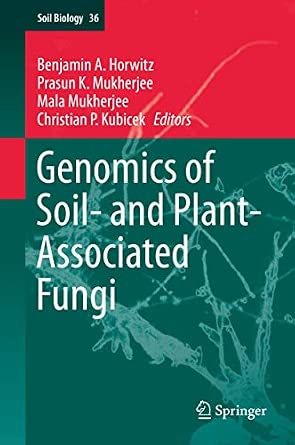
Genomics of Soil- and Plant-Associated Fungi: 36 2013th Edition
Author(s): Benjamin A. Horwitz (Editor), Prasun K. Mukherjee (Editor), Mala Mukherjee (Editor), Christian P. Kubicek (Editor)
- Publisher: Springer
- Publication Date: 12 Sept. 2013
- Edition: 2013th
- Language: English
- Print length: 400 pages
- ISBN-10: 9783642393389
- ISBN-13: 9783642393389
Book Description
This volume addresses the similarities and also the differences in the genomes of soil saprophytes, symbionts, and plant pathogens by using examples of fungal species to illustrate particular principles. It analyzes how the specific interactions with the hosts and the influence of the environment may have shaped genome evolution. The relevance of fungal genetic research and biotechnological applications is shown for areas such as plant pathogenesis, biomass degradation, litter decomposition, nitrogen assimilation, antibiotic production, mycoparasitism, energy, ecology, and also for soil fungi turning to human pathogens.
In addition to the model organisms Neurospora and Aspergillus, the following species are covered providing a view of pathogens and mutualists: Trichoderma, Fusarium oxysporum, Cochliobolus heterostrophus, Penicillium chrysogenum, Rhizopus oryzae, Podospora anserina, and species belonging to Agaricomycetes, Archaeorhizomycetes and Magnaporthaceae. Ecology and potential applications have guided the choice of fungal genes to be studied and it will be fascinating to follow the trends of future sequencing projects.
Editorial Reviews
Review
From the book reviews:
“The book is an outcome of contributions by international experts. It contains 15 chapters with references and an index at the end of the book. … The book is valuable for mycologists and researchers working in the field of genomics, genetics and plant pathology. A requisite guide for students studying fungal biotechnology.” (Melvina D’souza and Kevin D. Hyde, Fungal Diversity, December, 2014)
From the Back Cover
This volume addresses the similarities and also the differences in the genomes of soil saprophytes, symbionts, and plant pathogens by using examples of fungal species to illustrate particular principles. It analyzes how the specific interactions with the hosts and the influence of the environment may have shaped genome evolution. The relevance of fungal genetic research and biotechnological applications is shown for areas such as plant pathogenesis, biomass degradation, litter decomposition, nitrogen assimilation, antibiotic production, mycoparasitism, energy, ecology, and also for soil fungi turning to human pathogens.
In addition to the model organisms Neurospora and Aspergillus, the following species are covered providing a view of pathogens and mutualists: Trichoderma, Fusarium oxysporum, Cochliobolus heterostrophus, Penicillium chrysogenum, Rhizopus oryzae, Podospora anserina, and species belonging to Agaricomycetes, Archaeorhizomycetes and Magnaporthaceae. Ecology and potential applications have guided the choice of fungal genes to be studied and it will be fascinating to follow the trends of future sequencing projects.


