Wow! eBook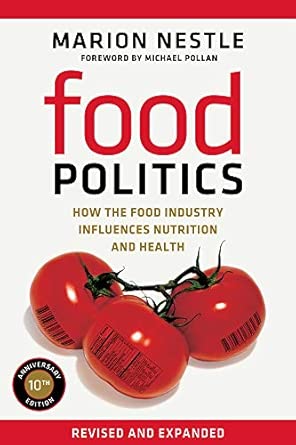
Food Politics: How the Food Industry Influences Nutrition and Health: 3 First Edition, Revised and Expanded Tenth Anniversary ed. Edition
Author(s): Marion Nestle (Author)
- Publisher: University of California Press
- Publication Date: 14 May 2013
- Edition: First Edition, Revised and Expanded Tenth Anniversary ed.
- Language: English
- Print length: 536 pages
- ISBN-10: 0520275969
- ISBN-13: 9780520275966
Book Description
Editorial Reviews
Review
From the Inside Flap
This remarkable book is essential reading for anyone who wishes to understand how it has come to be that the richest nation in the world is eating itself to death…. Straight reporting about the shaping of food policy, as this volume makes clear, is certain to offend some very powerful players.–Joan Dye Gussow, author of
This Organic LifeFood politics underlie all politics in the United States. There is no industry more important to Americans, more fundamentally linked to our well-being and the future well-being of our children. Nestle reveals how corporate control of the nation’s food system limits our choices and threatens our health. If you eat, you should read this book.–Eric Schlosser, author of
Fast Food Nation‘Blockbuster’ is one of the best ways that I could describe this book…. A major contribution to understanding the interaction of politics and science, especially the science of nutrition, it is of extreme value to virtually all policy makers and to everyone concerned with the American diet.–Sheldon Margen, editor of the
Berkeley Wellness LetterA devastating analysis of how the naked self-interest of America’s largest industry influences and compromises nutrition policy and government regulation of food safety. . . . A clear translation of often obscure studies and cases, the writing is accessible and lively.–Warren Belasco, author of
Appetite for ChangeFrom the Back Cover
“This remarkable book is essential reading for anyone who wishes to understand how it has come to be that the richest nation in the world is eating itself to death…. Straight reporting about the shaping of food policy, as this volume makes clear, is certain to offend some very powerful players.”–Joan Dye Gussow, author of
This Organic Life“Food politics underlie all politics in the United States. There is no industry more important to Americans, more fundamentally linked to our well-being and the future well-being of our children. Nestle reveals how corporate control of the nation’s food system limits our choices and threatens our health. If you eat, you should read this book.”–Eric Schlosser, author of
Fast Food Nation“‘Blockbuster’ is one of the best ways that I could describe this book…. A major contribution to understanding the interaction of politics and science, especially the science of nutrition, it is of extreme value to virtually all policy makers and to everyone concerned with the American diet.”–Sheldon Margen, editor of the
Berkeley Wellness Letter“A devastating analysis of how the naked self-interest of America’s largest industry influences and compromises nutrition policy and government regulation of food safety. . . . A clear translation of often obscure studies and cases, the writing is accessible and lively.”–Warren Belasco, author of
Appetite for ChangeAbout the Author
Excerpt. © Reprinted by permission. All rights reserved.
Food Politics
How the Food Industry Influences Nutrition and Health
By Marion Nestle
UNIVERSITY OF CALIFORNIA PRESS
Copyright © 2013 The Regents of the University of California
All rights reserved.
ISBN: 978-0-520-27596-6
Contents
Foreword by Michael Pollan, vii,
Preface to the Tenth Anniversary Edition, xi,
Preface to the First Edition, xiii,
Introduction: The Food Industry and “Eat More”, 1,
PART ONE UNDERMINING DIETARY ADVICE, 29,
1. From “Eat More” to “Eat Less,” 1900–1990, 31,
2. Politics versus Science: Opposing the Food Pyramid, 1991–1992, 51,
3. “Deconstructing” Dietary Advice, 67,
PART TWO WORKING THE SYSTEM, 93,
4. Influencing Government: Food Lobbies and Lobbyists, 95,
5. Co-opting Nutrition Professionals, 111,
6. Winning Friends, Disarming Critics, 137,
7. Playing Hardball: Legal and Not, 159,
PART THREE EXPLOITING KIDS, CORRUPTING SCHOOLS, 173,
8. Starting Early: Underage Consumers, 175,
9. Pushing Soft Drinks: “Pouring Rights”, 197,
PART FOUR DEREGULATING DIETARY SUPPLEMENTS, 219,
10. Science versus Supplements: “A Gulf of Mutual Incomprehension”, 222,
11. Making Health Claims Legal: The Supplement Industry’s War with the FDA, 247,
12. Deregulation and Its Consequences, 272,
PART FIVE INVENTING TECHNO-FOODS, 295,
13. Go Forth and Fortify, 298,
14. Beyond Fortification: Making Foods Functional, 315,
15. Selling the Ultimate Techno-Food: Olestra, 338,
Conclusion: The Politics of Food Choice, 358,
Afterword: Food Politics: Five Years Later and Beyond, 375,
Appendix: Issues in Nutrition and Nutrition Research, 413,
Notes, 425,
List of Tables, 487,
List of Figures, 489,
Index, 491,
CHAPTER 1
FROM “EAT MORE” TO “EAT LESS,” 1900–1990
THE U.S. GOVERNMENT HAS BEEN telling people what to eat for more than a century, and the history of such advice reflects changes in agriculture, food product development, and international trade, as well as in science and medicine. In 1900, for example, the leading causes of death were infectious diseases such as tuberculosis and diphtheria made worse by the nutrient deficiencies and overall malnutrition that were especially prevalent among the poor. Life expectancy at birth for both men and women barely exceeded 47 years. To overcome nutritional deficiencies and related disorders, government nutritionists urged people to eat more of a greater variety of foods. Throughout the twentieth century, an expanding economy led to improvements in housing, sanitation, and nutrition. Diseases resulting from nutritional deficiencies declined, and by 2000 life expectancy had increased to an average of 77 years. Today, the leading causes of death are chronic diseases associated with excessive (or unbalanced) intake of food and nutrients. Table 5 compares the ten leading causes of death in the United States in 1900 and 2000. Despite the great advances in public health during the twentieth century, the leading conditions related to diet—coronary heart disease, cancers at certain sites, diabetes, stroke, and liver cirrhosis, for example—could be reduced in prevalence or delayed until later in life if people ate less of dietary components that increase disease risk. Advice to eat less, however, runs counter to the interests of food producers.
The conflict between more recent ideas about diets that promote health and the interests of the food industry accounts for much of the public confusion about nutrition. As this chapter will explain, dietary advice issued by the government never has been based purely on considerations of public health. The agencies that issue dietary advice inevitably have other constituencies as well as the public, most notably the agricultural and food industries. When the interests of these industries conflict with current thinking about nutrition, as in the examples described here, the result is controversy, confusion, and the invocation of science to support one or another point of view.
EAT MORE”: PREVENTING DIETARY DEFICIENCIES, 1890s TO 1960s
The federal role in promoting food consumption developed as a result of colonial history. As far as one can tell, the diet of the earliest American settlers depended on foods obtained through farming, hunting and gathering, and—to a limited extent—internal and external trade. As trade increased, and as the country became more industrialized and urbanized, methods of food preservation, storage, and distribution improved. What people actually were eating before the twentieth century, however, is known only from anecdotal accounts or small surveys. The U.S. Department of Agriculture (USDA) began collecting information about the supply of basic food commodities in 1909, about household food consumption practices in 1936-37, and about the food intake of individuals only in 1965.1 Earlier dietary practices can only be inferred, and cannot easily be correlated with health status except indirectly through changes in disease rates or life expectancy.
Nevertheless, from the time of its creation in 1862, the USDA was expected to perform two functions. One was to ensure a sufficient and reliable food supply. The other was to “diffuse among the people of the United States useful information on subjects connected with agriculture in the most general and comprehensive sense of that word.” This last was interpreted as a mandate to issue dietary advice. In early years, the two functions seemed perfectly compatible. Both promoted a greater and more varied food supply. By the early 1890s, the USDA began to sponsor studies on the relationship between agriculture and human nutrition, and it appointed W. O. Atwater as the first director of research activities. Atwater published tables that listed the content of calories, protein, carbohydrate, fat, and “mineral matters” in common American foods. He also estimated the amounts of food needed to meet the nutrient requirements of people performing different levels of work. His analysis of the eating habits of New England laborers and professionals, for example, confirmed “the general impression of hygienists that our diet is one-sided and that we eat too much … fat, starch, and sugar. This is due partly to our large consumption of sugar and partly to our use of such large quantities of fat meats…. How much harm is done to health by our one-sided and excessive diet no one can say. Physicians tell us that it is very great.”
Atwater believed that American men required more calories and protein than recommended by European physiologists of that era because people in this country worked harder. He suggested that men doing moderate work required about 3,500 calories daily, with a distribution that calculates to about 15% of calories from protein, 33% from fat, and 52% from carbohydrate. This intake level exceeds current recommendations by about 1,000 daily calories, but Atwater was ahead of his time; the proportions of protein, fat, and carbohydrate are quite similar to those currently advised.
Atwater’s advice said nothing about vitamins. Although classic vitamin-deficiency diseases such as scurvy, beriberi, and pellagra were understood to be associated with diet in some way, their specific causes were unknown and no vitamin had as yet been isolated. Early in the twentieth century, as scientists began to identify the structure and function of one vitamin after another, the USDA immediately translated these scientific advances into advice for consumers. By 1915 or so, the agency had produced at least 30 pamphlets to inform “housekeepers” about the nutritive value of foods, the role of specific foods in the diet, and foods appropriate for young children at home or at school.
Food Groups
In 1917, the USDA issued its first set of overall dietary recommendations as a 14-page pamphlet, titled How to Select Foods. This document is remarkable for establishing precedents to which the agency still firmly adheres. It established the food-group format by organizing the food sources of nutrients then known to be needed for health into five categories: fruits and vegetables; meats and other protein-rich foods (including milk for children); cereals and other starchy foods; sweets; and fatty foods. It also established principles that continue to govern USDA policy on dietary advice. The pamphlet did not “recommend any special foods or combinations of foods. It tells very simply what the body needs to obtain from its food for building its tissues, keeping it in good working order, and providing it with fuel or energy for its muscular work. It shows in a general way how the different food materials meet these needs and groups them according to their uses in the body.” As we shall see, this approach permits all foods to be recommended as part of healthful diets and precludes suggestions to restrict foods in one or another group.
At the time, the USDA ignored Atwater’s advice to limit intake of fat and sugar, and its publications emphasized the newly discovered “micronutrients,” the vitamins and minerals that are essential for life but are needed only in small amounts. Food manufacturers and agricultural producers readily supported this emphasis because they grasped its marketing potential. They knew that the market for their products was limited. Food already was overabundant in the United States and already supplied more than enough calories for the population. Food producers could exploit the discoveries of vitamins and minerals to promote their products as vital for health and longevity. Because all food animals and plants contain vitamins and minerals, all could be promoted on this basis. A 1923 USDA publication emphasized this point: “The number of different food materials available in most parts of the United States is very great and is constantly increasing as a result of improved methods of agriculture…. There is no one of all these many foods that cannot be introduced into the diet in such a way as to contribute to its wholesomeness or its attractiveness.”
During the 1920s, the USDA used five food groups—still including fat and sugar—as the basis of its dietary advice to families, mothers of young children, and teenagers. By the 1930s, the agency had identified certain “protective” foods as especially rich sources of vitamins and minerals. It issued many pamphlets emphasizing the need to prevent deficiencies of essential nutrients by eating more servings from groups of such foods. The number of these groups varied, however, in part because of concerns about the effect of the high cost of “protective” foods on consumer purchases. A Depression-era food guide, for example, explained that food selection has far-reaching implications for agriculture and that producers want “to know how much of different foods may well appear in the diets of different consumer groups, and to what extent consumption may rise or fall as the economic situation changes.” That particular guide increased the number of food groups to 12 and, for the first time, included milk as a separate category.
In 1940, the U.S. National Academy of Sciences established a committee to advise the government about nutrition problems that might affect national defense; this committee became the Food and Nutrition Board in 1941. One of its first tasks was to establish standards for daily nutrient intake for the armed forces and for the general population. The committee suggested Recommended Dietary Allowances (RDAs) for energy and eight nutrients at a conference in May 1941. Beginning in 1943, and continuing to the present day, such committees produced revisions of the RDAs at intervals of five to ten years. The USDA responded to the development of RDAs by making sure that its food guides described a dietary pattern that met those standards.
During World War II, the rationing of meat, sugar, butter, and canned goods inspired various federal agencies to develop food guides based on pragmatic considerations of food availability as well as theoretical considerations of nutrient standards. The result was a bewildering array of food groupings issued by various agencies. In 1942, federal pamphlets instructed Americans to “do your part in the national nutrition program” by eating foods from eight groups every day; four of these groups were milk, meat, eggs, and butter—all sources of fat and cholesterol as well as of essential vitamins and minerals. The following year, the USDA issued the National Wartime Nutrition Guide: “U.S. needs us strong: eat the Basic 7 every day.” This guide combined meat, eggs, fish, and beans into one group, kept milk as a separate category, and retained fats and sugars as separate groups. The changing number of food groups revealed a lack of coordination not only among federal agencies but also within the same agency. In 1943, for example, the USDA published the Basic 7 but also told wartime homemakers how to plan low- and moderate-cost meals based on foods from 11 groups.
Immediately following the end of World War II, USDA publications continued these inconsistencies. In 1946, the agency issued a peacetime version: “This is the Basic 7 guide for well-balanced meals. In time of emergency, you need to eat less of the scarce foods, more of the plentiful. Food is needed to feed the hungry—don’t waste it.” Two months later, it issued Food for Growth: Food for Freedom, targeted to children in the fourth through sixth grades. This publication was the first to recommend selections from just four food groups—milk; vegetables and fruits; eggs, meat, poultry, or fish (sometimes dried beans or peas); and a fourth category that included bread, cereal, cookies, and cakes. These guides actively promoted consumption of fats and sweets, even to children. Together, they continued to promote “eat more.”
Eating more received further support in the early 1950s when USDA nutritionists compared the results of a survey of nationwide food consumption practices to the most recent RDAs, realized that the diets of many Americans were below standard for several nutrients, and decided to construct a new food guide to help “the average person choose his food more wisely.” They simplified the four groups: milk (retaining its position as a separate category); meats (including beans and peas as alternatives); vegetables and fruits; and breads and cereals. To ensure that the guide would describe a diet that met RDA standards they also—for the first time—specified the number and size of servings within each group.
In an effort to achieve consensus on these innovations, the USDA invited leading nutrition authorities in government, research, the food industry, and agricultural commodity groups to review preliminary drafts because it “felt that food industry groups would have a vital interest in any food guide sponsored by the government.” Indeed they did. Dairy producers were pleased with the treatment given to milk and milk products—the guide placed the milk group first. Meat industry groups were said to be “unhappy about the serving size indicated for meat…. They pointed out that this size is smaller than average.” The proposed serving sizes included two daily portions of 2–3 ounces of cooked meat, then (as now) less than what people usually eat at any one time.
Despite the complaints, the USDA incorporated these serving sizes first into a handbook for nutrition professionals and later into a guide for the general public known popularly as the Basic Four. This last is illustrated in Figure 6. Remarkably, the USDA used versions of the Basic Four for the next 22 years, although it continued to base family meal and cost plans on 11 food groups. Except for the concern about portion size (an early warning of battles yet to come) food producer groups supported the USDA’s efforts to promote consumption of more—and more varied—foods.
More “Eat More”: Preventing Hunger
In the late 1960s, support for promoting “eat more” came from an entirely new direction. In 1967, a report of an investigation of hunger and malnutrition among low-income groups in the United States became the subject of a CBS television documentary, Hunger in America. At the time, the idea that people were going hungry in the land of plenty seemed so shocking that the program elicited widespread demands for expansion of federal food assistance programs. As a later report explained, “The failure of federal efforts to feed the poor cannot be divorced from our nation’s agricultural policy, the congressional committees that dictate that policy, and the Department of Agriculture that implements it; for hunger and malnutrition in a country of abundance must be seen as consequences of a political and economic system that spends billions to remove food from the market, to limit production, to retire land from production, to guarantee and sustain profits for large producers of basic crops.”
In July 1968, the Senate responded to the public outcry by appointing George McGovern (Dem-SD) to chair a Select Committee on Nutrition and Human Needs that would lead “the war against hunger among the nation’s young, old and poor.” For the next nine years, McGovern’s committee created laws to expand food assistance for families, children, and the elderly through programs such as Food Stamps that still constitute the basis of the nation’s “safety net” for the poor. Both the public and Congress strongly encouraged these “eat more” activities, giving the McGovern committee license to meddle in other areas of nutrition and health.
(Continues…)Excerpted from Food Politics by Marion Nestle. Copyright © 2013 The Regents of the University of California. Excerpted by permission of UNIVERSITY OF CALIFORNIA PRESS.
All rights reserved. No part of this excerpt may be reproduced or reprinted without permission in writing from the publisher.
Excerpts are provided by Dial-A-Book Inc. solely for the personal use of visitors to this web site.